Patio Pondering The Written Collection
What started as my daily coffee-and-keyboard ritual has grown into a collection of reflections on agriculture, leadership, and rural life.
From quiet mornings on my backyard patio to the lessons learned in barns, fields, and boardrooms — these writings capture the stories, ideas, and questions that keep me curious.
Take a moment to explore, and maybe you’ll find a thought or two that sparks your own reflection.
Clear thinking for complex agriculture. I’ll send a note when it’s worth sharing.
Scroll down to discover the stories and reflections from the patio.

Patio Pondering: Fewer Choices, Fewer Voices
We like to celebrate efficiency in this business. We raise pigs and cattle with fewer inputs than ever before. But efficiency is a two-edged sword. The less we need, the fewer people it takes to get the job done. That can ripple through communities in ways that aren’t always visible at first.
On the heels of my writing about the comparisons between the 1980s and the 2020s for farmers and the ag economy, we get an announcement of a new joint venture in the feed industry. These kinds of moves are often praised for driving efficiency. Yet I can’t help but wonder—what do we lose in terms of diversity of ideas, products, and opportunities when agriculture becomes more consolidated?
Unlike the praise filling social media, my gut reaction was different. This isn’t good for rural America.
It’s not just this joint venture. It is the culmination of decades of consolidation, streamlining products, services, and opportunities. We’ve seen it in equipment, seed genetics, crop inputs, and now feed. The trend leaves fewer choices, fewer openings, and fewer voices in agriculture.
Another area that concerns me is the limiting of hiring opportunities in agriculture as companies consolidate. I regularly hear from AGvocates and universities about the abundance of career opportunities in this field. But if there are fewer companies and fewer production facilities, won’t there inevitably be fewer doors for students to walk through? And what about the unintended consequences of these mergers?
A friend raised a sobering question this morning: what happens if your name lands on a “do not hire” list at one of these giants? As mergers pile on mergers, does that shadow follow you through the entire industry? Could consolidation eventually make some people unemployable in agriculture?
As a scientist, I also worry about the impact on research and innovation. When consolidation limits competition, it often limits curiosity. We’ve already seen research squeezed at land-grant universities through tighter budgets, eliminated positions, and hiring freezes. Fewer paths to discovery mean fewer breakthroughs for agriculture’s future.
We like to celebrate efficiency in this business. We raise pigs and cattle with fewer inputs than ever before. But efficiency is a two-edged sword. The less we need, the fewer people it takes to get the job done. That can ripple through communities in ways that aren’t always visible at first.
Consolidation is not a new thing in agriculture. It has been happening since the start of the industrial revolution with equipment, inputs, and even farms. But at what point do we as an industry say enough is enough? When do we put our foot down to push for diversity of operations and suppliers, and try to keep some semblance of variety in perspectives and thought? I’d love to hear how others see the balance between efficiency and opportunity.

Patio Pondering: Will the 2020s Be a Repeat of the 1980s?
And when the dust settles, it’s usually the same story: the big just keep getting bigger, while the remaining farmers are left to wonder how long they can hold on.
I wrote this on a Sunday morning as the rain tapped around the patio, steady and soft, while my coffee steamed in the cool September air. I’ve been thinking about the American farmer’s place in today’s economy. Everywhere I turn—podcasts, meetings, articles, interviews—the message shifts, but the tone is the same: someone is always to blame.
National ag broadcasters often point at monopolistic suppliers and buyers. Non-farm groups sneer that “stupid farmers” keep planting too much corn and soybeans. Industry experts scold us for not throwing our weight behind new industrial uses. The old “burning food for fuel” argument is raising its ugly head again, with proponents insisting, “If we just had 15% ethanol in gasoline, life would be great.” And in non-ag media, the finger points at politics: “You voted for Trump, so it’s your fault. Go bankrupt. Don’t take government handouts to save your stupid butts.”
The blame lands everywhere: on the farmers, on the politicians, on the multinationals. Yet somehow, it’s the farmer left standing in the middle, catching it from all sides.
Damned If You Do, Damned If You Don’t
Last winter, the experts were unanimous: “Why would anybody plant soybeans? There’s no money in it. Plant corn instead.” Pundits, consultants, and economists showed chart after chart proving how much better the economics looked for planting corn over other crops. So farmers listened. Across the Midwest, fields were planted to corn.
But here’s the kicker: did we really plant as much corn as USDA says we did? Their estimate of 99 million acres has plenty of people inside agriculture waving the BS flag. Pair that with an astronomical yield projection of 186.7 bushels per acre, and you’ve got numbers that feel more like wishful thinking than boots-on-the-ground reality, especially with widespread Southern Rust issues in Iowa and the historic lack of rain across parts of Illinois and much of the Eastern Corn Belt.
Yet those are the numbers the markets react to. Those are the numbers we get judged against. And those numbers drive prices lower, regardless of what’s actually happening in the fields, until the “final” yield numbers are published later and, in many cases, adjusted years afterward when the truth is finally known. By then, the crop has already been priced and sold.
But there’s another reality weighing on corn demand: there are simply fewer mouths to feed. Hog and cattle numbers in the U.S. are down, which means the domestic feed market isn’t pulling corn the way it has in the past. Yes, we may need less corn, but the hard question is, how do we get there? Farmers can’t just flip a switch and walk away from ground they’ve invested in, and the markets don’t exactly reward restraint. After all, the market doesn’t care about your farm, but your banker and your checkbook do.
So not only are farmers chastised for planting corn, but now they’re being buried under estimates many in ag don’t even believe are true. The decisions made in good faith—based on advice, economics, and agronomy—get turned into a double bind.
The System Stacks the Deck
Farmers live in a marketplace where profit margins are razor thin and power is concentrated in a few hands. Input suppliers dictate seed, fertilizer, and equipment costs. Processors and exporters control what we’re paid. Farmers carry the risk, but others set the rules.
And when talk turns to government support, another wave of criticism rolls in. Non-farmers call it welfare. Ag insiders shake their heads, saying the money will only line the pockets of Deere, Bayer, or fertilizer manufacturers, not the farmers themselves. The irony is brutal: when help is offered, we’re told it either proves we’re dependent or proves we’re fools because it only benefits the companies “leeching” off our operations.
Now you start to hear another line: “You voted for this, deal with it.” What’s happening in the ag economy didn’t magically begin on November 5, 2024. The foundations for today’s financial straits started years ago. Many can point to the long fingers of the COVID-19 pandemic as part of the cause.
To add to the challenges, most American farmers followed university advice to specialize and excel. The vast diversity that existed one or two generations ago is gone. Today, you’re either a crop farmer or a cattle rancher, with very little crossover. Few are doing both crops and livestock anymore.
The Harshest Blows Come From Within
Oddly enough, the comments that cut the deepest don’t come from non-ag journalists or political pundits. They come from inside agriculture itself. The advice sounds so matter-of-fact: “Treat it like a business. Make real business decisions.”
That sounds good on paper. But I was taught at Purdue that when you’re in a low- or no-profit situation, the right choice is to plant if you can cover variable costs, and deal with fixed costs later. That’s not sloppy business—it’s survival.
And any banker would say the same thing if a farmer customer walked into the office and said: “Corn and beans don’t pencil this year, so I’m not planting. You’ll just have to wait on my loan payments.” That conversation would go over like a lead balloon.
Then come the suggestions from fellow farmers: build bins (not something you pull off a few weeks before harvest), buy puts and calls (a good idea, but they require cash—something scarce on many farms), or sell excess equipment (a tough sell when the used equipment market is following profitability down, down, down). Unfortunately, these well-meaning suggestions are often unachievable.
The reality is that farmers don’t get the luxury of sitting out a season, nor the ability to quickly implement strategies that require forethought and timely execution.
The Human Cost
Behind all the noise are real families staring down loan payments, shrinking equity, and headlines predicting another wave of farm bankruptcies. Rural America knows too well that financial strain doesn’t just threaten land and equipment—it threatens lives. Suicide rates among farmers remain some of the highest of any profession.
Empathy is scarce in a system where farmers already carry all the risk. Instead of support, they often face ridicule—branded as bad business owners, accused of being nostalgic, or scolded for not following market signals. The 1980s farm crisis is remembered today mostly through old John Mellencamp ballads, Farm Aid concerts, or movies like The River and Country. Fewer and fewer farmers actually lived it as business owners, experienced the hard meetings with bankers and suppliers, anguished over decisions about buying a neighbor’s land, or endured the sleepless nights that defined that sad chapter in U.S. agriculture. Many remember it, but they weren’t the ones making the hard decisions at the kitchen table or facing down their “friend” at the bank.
As an industry, we don’t have the muscle memory of the deaths, auctions, foreclosures, and family breakups that never healed. For many, they’re just stories. With the current financial state of agriculture, we may be on the edge of learning those lessons firsthand again. And when the dust settles, it’s usually the same story: the big just keep getting bigger, while the remaining farmers are left to wonder how long they can hold on.
The question is, how will the U.S. respond if we see a repeat of the 1980s—with bankruptcies, suicides, and heartache in the heartland once again?

Patio Pondering: When Words Don’t Connect
Good transitions aren’t filler; they’re road signs. They prepare the listener for what comes next and give them a chance to adjust their attention.
The sun rose in a clear sky with the promise of another great day here on the patio. My coffee is hot, bold, and satisfying as I watch the morning unfold in the backyard landscaping.
After my comments yesterday about the lack of training or exposure to even the rudimentary rules of parliamentary procedure, I kept thinking about another piece of communication that fell short this week. I watched a press conference, and one thing stuck with me: the lack of transitions.
The prosecutor reading the prepared statement wasn’t the issue — in fact, with the gravity of the topic, a script made sense. What jarred me was how the speaker moved from one section to the next. Instead of giving the listener a signpost, they simply read the title of the next section:
“Evidence.”
And then continued on, as though the audience could seamlessly switch gears without any guidance. To me, that wasn’t unusual. I’ve seen this too often in meetings, speeches, and classrooms. It makes me wonder — do we still teach the basics of speaking?
Good transitions aren’t filler; they’re road signs. They prepare the listener for what comes next and give them a chance to adjust their attention. Think of how much clearer the message would have been with a simple phrase like:
“Now I’ll share the evidence we’ve collected.”
The content is identical, but the presentation is worlds apart. One respects the listener’s time and comprehension. The other assumes they’ll keep up, no matter how abruptly the road turns.
We should expect more from our speakers — especially when the message is important. Words matter. So do the bridges between them. Without those bridges, even the strongest ideas risk getting lost in the gaps.

Patio Pondering: Who Is Robert and Why Do His Rules Matter?
Maybe I’m too much of a rule follower. But when the small rules fall by the wayside, so does trust in the process.
What a beautiful morning off the patio here in NE Indiana. I wish I could say the same about many public meetings I’ve attended or watched over the past few years. While enjoying my coffee, I listened to the Drainage Board meeting from a neighboring county, and what I heard several times took me back to my childhood.
As a youngster in 4-H, we were taught parliamentary procedure and exposed to Robert’s Rules of Order. One lesson stayed with me: words matter. When offering a motion, the proper phrasing was, “Mr. Chairman, I move…” That small phrase carried weight. It showed respect for the process and the people gathered.
What I heard at the Drainage Board meeting, and in just about every other meeting recently, instead was, “I make a motion…” Casual, common, and technically incorrect. It may sound harmless, but to me it signals how far we’ve drifted from discipline and decorum in public meetings.
The same disregard shows up with time limits. Public comment is often capped at three minutes, yet I’ve watched it stretch to ten. Maybe it’s because officials don’t want to seem rude or risk criticism by cutting someone off. But those limits usually don’t silence anyone. They exist for fairness. For citizens, they encourage getting to the heart of an issue, focusing on what matters most rather than distracting with background or emotional baggage. For officials, they ensure more people can speak and that meetings don’t get bogged down.
I don’t think most elected officials today could tell you much about Robert’s Rules of Order or why they matter. That frustrates me. Those rules aren’t relics; they are what keep meetings civil, efficient, and fair. They keep us from mob rule and majority bullying.
Maybe I’m too much of a rule follower. But when the small rules fall by the wayside, so does trust in the process.

Patio Pondering: Mist on the Patio, Fog in the Meeting Hall
Then again, maybe I do need to stop. Maybe the taxpayer doesn’t care—or has become numb—to the mismanagement of THEIR funds. Maybe they’re too tired of the lies, too ready to move on, just wanting this to be over so they can turn their attention back to easier things, like the next football game.
This morning it is really foggy off the patio. We have plans to bale hay, but with all the moisture in the air I don’t know if that will happen. For now, I’ll enjoy a hot cup of coffee and watch the mist drift across the yard. Last night’s township meeting felt a lot the same: thick with fog, not from weather but from words.
As I drove to and from the school drop-off line, I replayed the meeting in my head. I sat there silently, taking notes, absorbing words and attitudes. What struck me most was the playbook: bait-and-switch tactics, falsehoods shouted loudly, mottos repeated like magic spells, and the tired performance of martyrdom, painting themselves as victims while shouting about how they fixed all the problems. The trouble is, those “fixes” look a lot like mismanaging millions in taxpayer dollars to me and others.
In situations like that, when loud falsehoods go unanswered, they harden into “truth.” Throwing shade at dead officials, making baseless accusations about staff who aren’t allowed to defend themselves—it all becomes truth when shouted by the loudest, largest person in the room. It’s a strategy as old as time: distract with slogans and half-truths, drown out facts, twist silence into agreement.
I had questions. I had facts. I wanted clarification. But I also knew that speaking up in that room wouldn’t bring more facts, only more distortion. So I sat quietly, listening, absorbing. I thought my campaign to pull back the curtains on mismanagement had run its course. After last night’s theater, I know I was wrong.
Then again, maybe I do need to stop. Maybe the taxpayer doesn’t care—or has become numb—to the mismanagement of THEIR funds. Maybe they’re too tired of the lies, too ready to move on, just wanting this to be over so they can turn their attention back to easier things, like the next football game.
The fog on the patio will lift by midday. The fog of half-truths and shouted lies will only lift when enough people are willing to face it.

Patio Pondering: Tweet With Your Feet!
The hypocrisy was hard to miss. After hearing Theo, that NPR segment felt hollow. Tone-deaf. Patronizing to the very people it claimed to analyze. The contrast couldn’t have been clearer: agenda-driven reporting versus raw, unscripted words from someone simply speaking what he felt.
This morning my head is buzzing after a weekend of work, football, and too much scrolling. But one thought keeps circling back.
I had a conversation with a fellow Swine Nutritionist last Friday afternoon, and one of his comments is still bouncing around in my head: “Keep going with your writing and podcasting.” That “keep going” hit me because it lined up with where I want to take this — not just cranking out words or podcasts, but carving out a space that feels different. I’ve said more than once that I want to be the Theo Von of Ag Podcasting. There’s something about his interviews that sticks with me — whether he’s talking with Lainey Wilson, President Trump, Katt Williams, or one of those “He got them on his podcast?” surprise guests. It’s not polished or scripted; it’s raw, unpredictable, and real.
That hit me again on Saturday. I was switching implements on our skid loader when my feed pulled up a seventeen-minute solo from Theo. I shut the machine down and just sat there listening. He spent the time reflecting on last week’s events and the impact of Charlie Kirk’s assassination. One part of his opening stuck with me all weekend:
“I, you know, I I I wasn't in his world a lot. Um, but I admired that he was brave. He went out and uh had conversations in, you know, he kind of like like he tweeted with his feet, you know, he went in instead of just yelling from, you know, from a desk or something or, you know, like most podcasters were sitting in a room saying stuff and and then putting it out. He went out into the world. Uh, and I really admired that.”
Charlie Kirk tweeted with his feet. He didn’t sit behind a desk telling the world what it should think — he showed up. He debated. He walked into the fire instead of shouting from the sidelines. Even after he was unplugged at one of my alma maters, he still went out to listen, debate, and share. And it makes me wonder: how many of us are guilty of doing the opposite, hiding behind screens and microphones instead of stepping out into the world?
Earlier that day I listened to the NPR Politics Podcast. One commentator lamented what they called the “whitewashing” of Charlie Kirk’s life by right-wing media, then turned around and did the same thing in reverse — cherry-picking inflammatory lines to impugn his actions. The hypocrisy was hard to miss. After hearing Theo, that NPR segment felt hollow. Tone-deaf. Patronizing to the very people it claimed to analyze. The contrast couldn’t have been clearer: agenda-driven reporting versus raw, unscripted words from someone simply speaking what he felt.
Toward the end of his podcast Theo said, “So, uh, yeah, I'm okay. I want to say that and I hope you are, too. And yeah, I don't even know why I wanted to come say something.” That’s what struck me most. He showed up because he wanted to share, to be raw, because he knew he wasn’t the only one feeling it.
Maybe that’s the real challenge for the rest of us. Stop waiting until we have the perfect words. Stop hiding behind desks, microphones, and screens. Step out. Show up. Tweet with your feet.

Patio Pondering: Witnessing Influence Close to Home
This morning’s coffee is hot and strong, and the view from the patio is a mix of mist and sunshine—a promise of a good day here in NE Indiana.
My social media and podcast feeds are full of Charlie Kirk. Some posts reminisce about his influence, others speculate about the circumstances of his death. Truth be told, I didn’t know much about him beyond the occasional clip on television or online. I’m old enough to be his father, and I was never his target audience.
What struck me yesterday, though, was how many young people in my own life—including my children—posted about him. Some celebrated his work, others grieved his loss. Until then, I had no idea how much his voice had mattered right here, close to home.
In recent months I’ve attended funerals that spanned generations: the heartbreak of a teenager’s life cut short, the celebration of a centenarian who began life with a horse and buggy. Each left me reflecting on influence, legacy, and what we leave behind. Charlie’s passing is different for me—not because I knew him, but because I didn’t, and yet I’m now seeing the echoes of his influence in the people around me.
I may never fully understand why his voice carried so much weight for the young people in my life, but I cannot ignore the depth of their reaction. His passing reminds me that influence is not always visible until it is gone. Perhaps this is one of those moments that will nudge them to stand taller, to seek what is steady and true in a world that often chases noise. I’ll be watching with curiosity—and maybe even hope—to see what comes of it.

Patio Pondering: Resolve Belongs to Today
Today asks us to hold two things at once: grief for what was lost and determination for what lies ahead. The way we live, work, and press forward becomes a memorial of its own.
This morning I was struck with the mass and beauty of the sunflowers in our backyard landscaping. What inspires me is that the plant was blown over during a storm this summer. The main stem now lies on the ground, but instead of withering, it adapted by sending up new shoots and producing a cluster of bright yellow blooms. Sometimes resilience isn’t shown by standing tall, but in finding new ways to grow and thrive.
As I sit here drinking my coffee, the weight of this date presses in. Twenty-four years ago, we were stunned by the senseless attacks on our nation. Yesterday brought another senseless act, the murder of a rising conservative voice, someone many thought had a bright future. Violence once again took away lives and potential, leaving grief and unanswered questions.
And yet, life presses forward. Here I sit at the computer, working on promotions for my consulting and speaking venture. Part of me feels selfish focusing on myself today. But perhaps the sunflower offers the reminder: life adapts, even after being knocked flat.
As I drove back from the school drop-off line, I tried to find a topic to reflect on, but nothing broke through the memories of 2001 and this morning’s headlines. Today asks us to hold two things at once: grief for what was lost and determination for what lies ahead. The way we live, work, and press forward becomes a memorial of its own. Evil only wins when we stop pushing, stop growing, even when knocked down. Critiques and complaints can wait. Resolve belongs to today.

Patio Pondering: Hiding in Plain Sight — Pork, the Best Value in the Meat Case
This morning I stepped out onto the patio to enjoy my coffee and the fall-like chill in the air, only to find part of our flock of sheep grazing in the backyard. They weren’t supposed to be there. My morning plans changed before the day even started.
Earlier this morning, when returning from the school drop-off line, my mind returned to a recent shopping trip to Costco. The memory stuck with me: boneless center-cut pork chops at $2.99 a pound, whole boneless pork loins at $2.29 a pound. And just across the aisle? Beef New York Strips for $16.99 a pound.
As I thought about my trip to the meat case, I was hit with two questions. First, why are we as the pork industry not shouting about the great value pork offers compared to all-time high beef prices? Second, why are pork prices so low when beef prices are at all-time highs? As pork producers recover some of the equity they’ve lost over the past few years, those questions feel more important than ever.
Here’s the part that kept circling in my head: why isn’t anyone telling families about this? For households watching grocery bills climb, pork is a protein bargain hiding in plain sight. You can put high-quality meals on the table without draining your wallet.
Pork is so cheap that you can grind a whole loin and you’ve got ground pork that stacks up just fine against hamburger at a fraction of the cost. Meanwhile, the pork industry seems more interested in clever slogans than in shouting this simple truth from the rooftops: pork is the best value in the meat case today. Maybe the industry should tweak its new campaign to say, “Taste What Pork Can Do Without Draining Your Wallet.”
Just like my sheep that wandered where they shouldn’t be, pork value has wandered into the wrong place too — sitting there quietly in the case when it should be front and center. Maybe it’s time we in the pork industry start pushing to consumers what we already know: pork is the best value in the meat case, regardless of marketing campaigns or slogans.

Patio Pondering: A Year of Showing Up
This morning dawned with steam rolling off the pond, the air sharp after one of the coldest nights of the season. I brewed my coffee stronger than usual to chase off the cobwebs and sat down to take it in.
Today is a special day: one year ago, Patio Pondering was born. At first, it was nothing more than a therapist’s nudge to help me recover from the loss of my swine nutritionist job of 12 years. I simply wanted something to stir my brain each morning. For years, I carried unspoken reflections, boxed in as “just the swine nutritionist,” but once I gave myself permission to write, those thoughts took flight. What began as therapy has since become a blog, a podcast, and new opportunities I never imagined.
Over the past year, I’ve written 234 reflections. I’ve touched on leadership, both the kind that inspires and the kind that wounds. I’ve written about the realities of job searching in 2025, and the everyday ways agriculture shapes our lives. I’ve shared about my sobriety journey, the quiet lessons of resilience, and how leadership isn’t tied to a title. And I’ve written on many other topics too, often with no idea what that day’s reflection would be until I poured my coffee and walked out to the patio. That simple ritual reminded me that inspiration doesn’t always arrive with a plan, but it always shows up if you give it space.
My process has shifted too. At first, I was just getting words on a page. Now, I watch for sparks in daily life and shape them into reflections with the help of AI tools. Along the way, I’ve built not just a rhythm of writing, but a blog, a podcast, and even a speaking platform. My Patio Ponderings have also found their way into the pages of our local newspaper, connecting me with neighbors in a whole new way.
But the biggest surprise is how this practice has worked inward as much as outward. Even when I write about themes that outwardly apply to the broader world, I often find myself reflecting on how those same themes apply to me. Those moments of turning inward have been just as valuable as sharing outwardly, slowly reshaping how I see myself and what I might offer. My reflections over the past year opened my eyes to the possibility of putting out my own shingle as a consultant, speaker, and writer for the swine industry, and for agriculture more broadly. What started as therapy has grown into clarity about the paths still ahead of me.
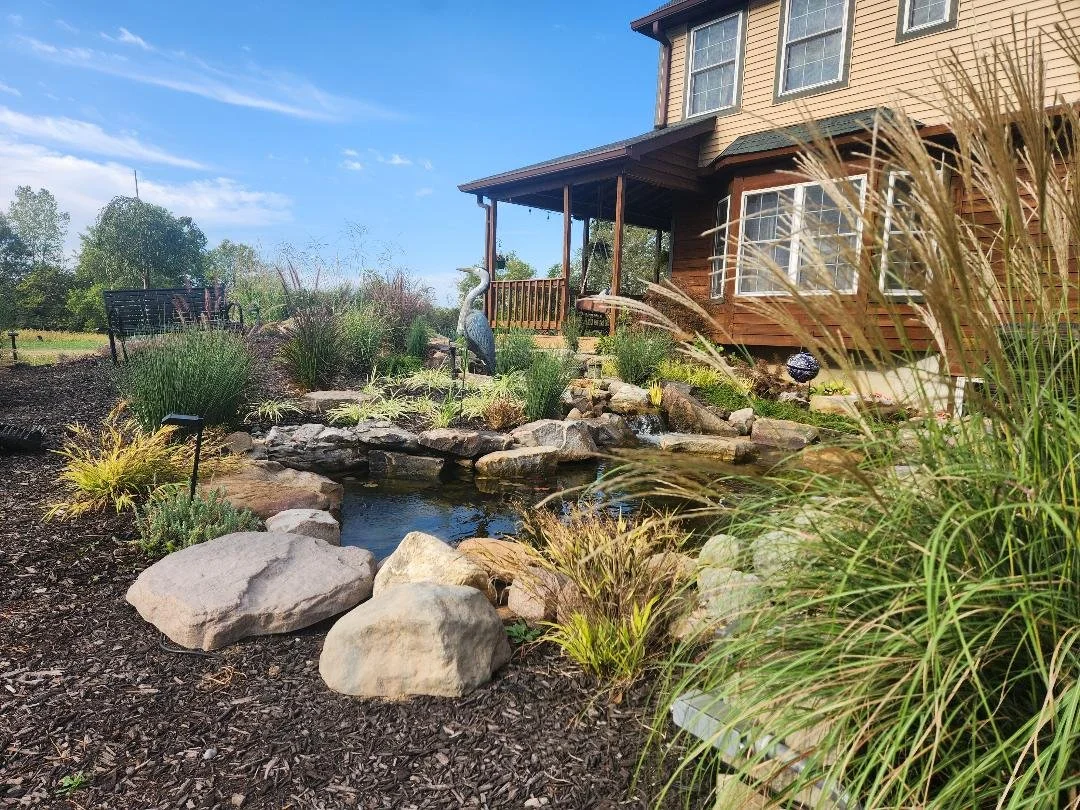
Two things, though, haven’t changed: every piece is grounded in my own perspective, and every one is paired with a photo from our backyard. Watching the seasons change in those images has been a reminder that growth often comes quietly, one day at a time.
This morning, as I watched the steam roll off the pond in the chill of early September, I was reminded that change and continuity live side by side. One year of Patio Ponderings is behind me, and I don’t know exactly where the next year will lead. What I do know is that showing up with words each day has already carried me further than I ever expected.
Here’s to another year of reflection, conversation, and discovery—wherever the path may lead.

Patio Pondering: The Transition Ag Doesn’t Talk About
A friend texted me recently after another loss I wrote about yesterday: “Not sure how the years have gone by so fast and we are at this point in life.”
As I poured my coffee on the patio this morning, enjoying the cool air, a notification popped up for a new estate auction. I planned to glance at it quickly and return to my morning, but when I saw it was a farmhouse estate sale for a family friend, I kept scrolling.
There were 320 lots. That’s a mountain of things to sell. I’ve heard from the family how overwhelming it’s been—both emotionally and physically—to sort, clean, and prepare.
Scrolling through antiques, household goods, and even brand-new items never used, I felt a mix of emotions. Some pieces clearly came from generations before; others were recent purchases. The contrast struck me. This is the hard part of closing out estates from the Silent and Baby Boomer generations, especially farm estates: deciding what to save, what to sell, and what to throw in the dumpster.
Typically, farm estates are tied to long-term lives—in this case, almost 60 years in the same house. That makes it different from simply selling mom’s furniture and moving on. The weight of history hangs heavier when it’s layered into a farmhouse that held not just possessions, but a family’s entire way of life.
Having been through a smaller estate sale myself, I know how it goes. At first, you hold each item, look it over, maybe share a memory. But eventually, the piles of “keep, sell, junk” grow, and the storytelling fades. By the end you find yourself saying more often, “Why did they save this junk?” as you slogged through the detritus of your family’s life, deciding to junk things they thought were important at one time.
The emotions heirs have as they go through estates tax you mentally and physically. Seeing things from your childhood, things that helped shape you, brings back memories and experiences. Other things dredge up emotions that hurt—items that show a person’s mental demise—and you find yourself asking again and again, “Why did they buy this?” the deeper you get into “cleaning.”
In agriculture, we talk a lot about transition planning: legal documents, succession plans, dividing farms and equipment. But we never talk about dealing with the personal items, the things used every day that often had more of an impact than the land or machinery. No one prepares you for that task.
A friend texted me recently after another loss I wrote about yesterday: “Not sure how the years have gone by so fast and we are at this point in life.”
That line has stayed with me. I’m beginning the part of life where the birth of grandchildren and the passing of parents seem to overlap more often. It’s a reminder that while we can plan for the big transitions, it’s the small, ordinary things—the coffee cups, the tools, the quilts—that carry the real stories. But remembering those stories doesn’t make the work any easier. In the end, you still find yourself filling the dumpster, deciding what stays, what goes, and what gets forgotten.

Patio Pondering: The Power of Presence
This morning, I am alone on the patio, alone with my thoughts and the sounds of birds and insects over the babbling of our backyard water feature. The leaves glisten with moisture from last night’s rain, and the air hangs heavy with humidity. The solitude brings calm, but also space to reflect on memories stirred up yesterday.
Yesterday I attended the funeral of a man who once scared the dickens out of me, Butch Wygant. His dark glasses, his few words, and the way he seemed to look straight through you; it was intimidating. Only later did I realize I was in the presence of a strong, loyal, kind, and loving man. At the time, he was simply protecting his daughter from the dangers of teenage boys like me.
I first knew Butch as a 4-H leader on the Allen County board, but I did not really spend time with him until I began dating his daughter in the late 80s. That’s when I was welcomed into his and Elsie’s home as Sasha’s date, then boyfriend. Even after using the hokiest of pickup lines—“You don’t look a thing like your father”—she still let me stick around. We fished together, traveled to Schaffer’s to buy boars, and shared the ordinary moments that come when you are dating into a family.
When my journey through life parted from his, he and Elsie would cross my mind from time to time with little remembrances of happy moments, parent-like guidance, and Elsie’s delicious cream puffs. When my family and I returned to Indiana, I stopped to visit a few times on my many trips across the state. My regret is that I did not turn off US 24 more often, especially as Father Time pulled at Butch’s days here on Earth.
It wasn’t until his funeral that I began to grasp the full weight of his life. This was not a service of empty words from a pastor who barely knew the deceased. It was a true celebration, filled with stories from students, athletes, friends, and family, stretching back to 1962 when he began teaching.
Back then, I only saw him as “Sasha’s dad.” I was focused on movies, Pizza Hut, and who else might be joining us. A time or two, I should have been focused on the gas gauge, too. I was not truly present with him, not in the way that mattered, not in the way he was celebrated today.
Hearing the stories filled in the picture of a man who shaped countless lives in the classroom, on the playing field, and through extracurricular activities. And the hug I received from Elsie reminded me that even after 35 years, I still hold a place with them. It reminded me of the power of presence; his with me then, and mine with them now.
Over the past year I vowed to attend funerals of friends and family. It’s not always easy to walk into those rooms when you’re only a shirt-tail relation, a long-lost friend, or someone who used to be there. But I see it as a sign of respect, a way to honor a life; a simple “thank you” for being important to me in some way. Yesterday, sitting with the parents of my best friend from high school and college, I realized I will be attending more of these as time goes on. I may be on the edge of the circle, but I still showed up. Because showing up matters.
So, my plea is simple: don’t wait until the funeral to realize what someone meant. Give yourself permission to visit, to stop in, to be present with the people who matter while there’s still time. Take the time. Visit. Attend. Show up.
As Sasha said in her reflection yesterday: take the time to be PRESENT.

Patio Pondering: Facing Truth in the Data
The weather off the patio is beautiful this morning. The late summer flowers are basking in the morning sun, and the dew sparkles like little diamonds across the leaves.
Last night I had a conversation with a friend about changes in an organization we were both members of previously. They shared highlights from a meeting where one member laid out a situation with a simple, cogent discussion that put the details in terms anyone could understand. The presentation used facts, numbers, and offered an obvious conclusion. My friend expected the discussion to be full of agreement. Instead, she was dumbfounded by the refusal of the entire committee to see the truth in the data—the truth that this organization was dying, perhaps already dead, just waiting on the death certificate.
After our conversation, I thought about how often this happens in the business world, when teams, committees, or boards refuse to accept the data. I’ve been in some of those meetings, where the answer was obvious, like the flashing Blue Light in K-Mart we Gen Xers remember from childhood. Yet the decisions made ignored the truth.
I get it. Facing facts that disagree with your opinion or plans is difficult, especially when the consequences of accepting the truth will affect you or the business negatively.
My question to my readers today is twofold:
How do you open your heart to being open to the truth and drop your preconceived notions?
How do you communicate that potential bad news to your team?

Patio Pondering: Turning the Calendar
As the calendar and seasons change, it’s good for us to pause and reflect.
The first morning of meteorological fall dawned with a heavy dew, and I was quick to check the forecast after all the hype about cold temperatures and even talk of snow and frost across the Midwest.
I don’t have any big revelations today. Just this reminder: with summer behind us and fall underway, give your best to the season you’re in. Each one brings its own challenges and opportunities — and each one deserves our full effort.

Patio Pondering: The More You Know (The Less You Really Do)
There’s an irony to knowledge: the deeper we go, the more we realize how much we don’t know. True expertise often brings humility. But a little knowledge, just enough to skim the surface, can give us the false confidence to shout it to the world.
It is a beautiful morning on the patio. The sun is dawning brightly, the day promises to be a good one, and my coffee—though a common blend—hits the spot with just the right mix of bitterness.
On my trip to and from school I listened to a podcast hosted by Vance Crowe. Around the thirty-minute mark, I had to stop, rewind, listen again, and even mark the time. Something in the discussion struck a nerve.
Vance was calling out someone who thought they understood Bitcoin but didn’t. As I listened, I realized he wasn’t just talking about Bitcoin. He was describing that familiar character we all know: the know-it-all. The person who drones on with surface-level knowledge, so confident that people eventually tune them out. The danger is, once that happens, their credibility is gone, even in the areas where they may truly have valuable expertise.
That thought hit close to home. With a Ph.D. and decades of experience in swine nutrition and agriculture, I know how easily the letters behind my name can be misunderstood. Some expect me to have an answer for everything. Others assume I think I do. The truth is, sometimes my knowledge runs deep, sometimes it’s only surface-level, and other times I know nothing at all about a topic. My struggle is in finding that balance: sharing what I know with confidence without crossing into the territory of the know-it-all.
For all of us, regardless of our educational credentials, recognizing how easily we can slip into know-it-all territory when we research or speak on a topic should remind us to be more thorough in our quest for truth and knowledge, and cautious in how we share our newfound knowledge. But we don’t want to let the fear of that badge keep us from sharing what we know, so long as we craft it properly.
There’s an irony to knowledge: the deeper we go, the more we realize how much we don’t know. True expertise often brings humility. But a little knowledge, just enough to skim the surface, can give us the false confidence to shout it to the world.
This tension isn’t new. Thinkers have wrestled with the value and danger of knowledge for centuries. Sir Francis Bacon reminded us in the 1500s that “knowledge is power.” Yet, two centuries later, the poet Alexander Pope cautioned, “a little learning is a dangerous thing.” Titles and degrees aside, the truth lies in the space between their words. Deep, hard-won knowledge can guide and strengthen. But shallow knowledge, delivered with too much confidence, can do real harm.
Our challenge is to walk that thin line: generous with what we know, careful with what we don’t, and mindful of how our words land. Not to stay silent out of fear, but to share responsibly, with humility and conviction.

Patio Pondering: When ABCs and 123s Replace Real Conversations
I remember a line that should have been a red flag: “If you don’t send me that report, I can’t tell my boss what you are doing.”
Imagine the strength of our decisions if we paired metrics with conversations; if we actually looked at the person in personnel.
This morning broke with unseasonably cool temperatures. Instead of the dog days of summer, with heat and humidity pressing in, we left the house in sweatshirts, seat warmers on for my morning Soccer Dad duties. Now my coffee is hot here on the patio, the sun is shining through the mist rising off the pond and yard, and my thoughts are churning.
Last night, while working on promotional plans for the next 90 days, I scrolled through LinkedIn. A job suggestion for a Sales Manager role popped up. Reading the description, two things struck me: first, the wall of acronyms like KPI and ROI. Second, the heavy reliance on performance metrics to define success. What was missing was just as loud: communication.
And that absence struck a chord with me, because the times I grew most in my career were under bosses who communicated regularly. That’s not coincidence.
I remember a line that should have been a red flag: “If you don’t send me that report, I can’t tell my boss what you are doing.”
But a report is one-way communication, just words and numbers in a spreadsheet easily manipulated and fabricated. In the absence of real communication, we fall victim to what I recently wrote about: rumors and misinformation spoken behind closed doors becoming truth. What I needed were two-way conversations, monthly one-on-ones that were never honored. Like a good podcast interview, the real insights come when you ask, listen, and exchange ideas.
Too often, we make decisions about people, marketing plans, or sales objectives based only on numbers. KPI. ROI. Sales calls per sale. A whole alphabet soup of metrics. The problem is those numbers assume everyone communicates and performs the same way. They don’t. Some thrive on reports; others need conversation. Reports are a one-way street, capturing results but not nuance. Real conversations, like the kind I have on my podcast, reveal the person behind them.
Imagine the strength of our decisions if we paired metrics with conversations; if we actually looked at the person in personnel.

Patio Pondering: Betty Crocker Didn’t Cook the Books Like This!
I try to keep my writings under Patio Pondering reflective, leading readers to pause and think for themselves. Today’s writing is different. It is not reflective. It is an exposé of what I have uncovered while digging into the public records of the Northeast Allen Fire Territory funds; funds that should have been returned to Springfield, Cedar Creek, and Scipio Townships, along with Leo-Cedarville and Grabill, when the Fire Territory disbanded on December 31, 2023, more than 19 months ago.
In a Patio Pondering I published on August 12, I raised questions about payments listed under DeWitt Consulting LLC, more than $56,000 from Fire Territory funds recorded as “personal services.” At least, that is what the report showed when I printed and saved it on June 10, 2025.
After learning that the Springfield Township Advisory Board had hired an attorney to examine potentially questionable activities with Fire Territory funds, I decided to look again. In the early morning hours of August 20, I ran new queries on the Gateway public data site. To my surprise, I could no longer find DeWitt Consulting listed. The same account number, 1671, that previously showed DeWitt Consulting LLC was now tied to an individual: Lori L. DeWitt.
Two different report types, Disbursements by Vendor and the Annual Financial Report, confirmed the change. Both now show two transactions linked to Lori L. DeWitt: one for $56,053.47 in Personal Services and one for $1,250 in Supplies. In addition, another $6,591.30 in Personal Services was recorded separately under her name and had also appeared in earlier reports. How does a vendor go from zero transactions in 2023 to $63,922 worth of services after the territory was closed?
The reason Lori DeWitt is important to the taxpayers of Northeast Allen County is that she is one of the three elected members of the Springfield Township Board and also serves as the office administrator for the Cedar Creek Township Trustee. Taxpayers in Springfield Township should be asking why she is being paid from funds the Advisory Board, the Trustee, and others have spent the past year fighting to have returned.
What really caught my attention was a detail on the opening page of the reports. The data had been modified at 1:06 p.m. on August 12, 2025. That was the same day my Patio Pondering questioning DeWitt Consulting went live on social media and in the East Allen Courier.
As I kept digging, I found two other vendors whose listings had changed between the June 10 version I saved and what now appears online. “JAKE,” with transactions totaling $47,465, is now listed as “Just Do It LLC.” “Steve Muncie,” whose transactions had appeared previously, is now shown as “D & B Services LLC.” A little searching shows a familial link between D & B Services and Lori L. DeWitt. Searches for “Just Do It LLC” do not lead to logical businesses one would expect to provide nearly $47,500 worth of services to a Fire Territory.
I am a simple man who makes a living with pigs, but something does not add up. Public records do not normally change months after the fact. Vendor names do not morph from individuals into LLCs or vice versa without explanation. Taxpayers should not have to wonder whether the reports they see today will be different tomorrow.
This is not just about numbers on a spreadsheet. It is about trust, accountability, and whether public money is being handled as promised. I know some funds were sent to the townships by Cedar Creek, but my math says there should have been more. Where did the rest of the money go? The transactions I uncovered may be only the tip of the iceberg of questionable spending; money used for purposes other than the fire protection that the citizens of northeast Allen County paid for with their hard-earned tax dollars.

Patio Pondering: Critical Thinking, Situational Awareness, Problem Solving—Oh My!!!
We tried to teach these skills to our children through their experiences and activities. I’ll admit we were better at it with our youngest than with our older two. What can I say; experience pays.
This morning’s Little Red Barn Podcast with my friend Ryan Martin was the final log on the fire for today’s reflection, but I’ve been chewing on this for a few days. My coffee is hot and strong, the weather crisp and fall-like, and my mind is full of thoughts about how these skills seem to be fading in our world.
The first spark came last week in the pickup line at Leo High School. Situational awareness was nowhere to be found. A parent turned into the first lane of the lot to grab their child. The problem? That blocked everyone behind them, which backed traffic onto the road, which in turn blocked the lot’s exit. Eventually someone backed up to unclog the mess. Two days later, same scenario, different driver. Apparently “blackout mode” in a Yukon absolves you from paying attention.
Then today, as Ryan was scolding AI for damaging critical thinking, a mother stopped in the middle of the main road after a policeman released a line of cars. She froze, flashed her lights, and started waving me across like she was deputized as a traffic officer. The issue? Cars behind her had to lock their brakes and traffic stacked up again. She ignored both training and logic; critical thinking gave way to impulse.
Ryan’s point about AI struck me: maybe it isn’t that AI is hurting critical thinking, maybe it’s that many people never really developed those skills in the first place. We’ve stopped putting our kids in situations where they must weigh consequences, test their decisions, and see how their actions ripple into the lives around them.
If we never make kids, or ourselves, practice awareness and critical thinking, why are we surprised when those skills are missing at crunch time?

Patio Pondering: Decisions in the Quicksand of Information
This morning, as I mapped out my mental to-do list over coffee on the patio, the cooler air was a welcome change from much of this summer’s heat. Along with “soccer mom” duties for my son’s marching band, my thoughts kept circling back to today’s Pro Farmer corn and soybean yield projections.
Decision-making can feel like quicksand — breaking free takes courage, trust, and sometimes a little nudge.
Read the full Patio Pondering
This morning, as I mapped out my mental to-do list over coffee on the patio, the cooler air was a welcome change from much of this summer’s heat. Along with “soccer mom” duties for my son’s marching band, my thoughts kept circling back to today’s Pro Farmer corn and soybean yield projections.
Yesterday, I reflected on how we use information to grow. But since then, I’ve been struck by a different challenge: the fear of acting, even when we have information in hand.
Every day I listen to marketing voices ranging from Joe Vaclavik to Chip Flory, the University of Illinois, the Commstock Group, and many others. Yet, despite all those insights, I often hesitate to pull the trigger on a marketing decision. Too often I catch myself thinking, “It has to get better,” whether we’re trading near the lows or flirting with the highs.
The same dynamic shows up beyond grain marketing in our workplaces and homes. How do we work with our teams, colleagues, and families to make decisions with the information already available? How do we empower one another to step into the unknown when we already know so much?
Decision-making can feel like quicksand, the stuff Gen X kids like me feared in Saturday morning cartoons. Breaking free of the “I know, but what if…” mindset takes courage, trust, and sometimes a little nudge from those around us — but once we do, the momentum can change everything for ourselves, for our teams, and for those who depend on us.
I’ll be tuned to AgriTalk PM this afternoon to hear the Pro Farmer yield projections, just like I have for many years. Maybe this year I’ll use it to make a decision beyond no-decision.
What is your “Pro Farmer information,” the data, insight, or perspective that could impact your business or family? And more importantly, how will you use it to make a decision?

Patio Pondering: What Do We Really Know?
Today is the last day of the Pro Farmer Midwest Crop Tour, and I’m starting a little later than usual after working on the computer late into the night. A cup of coffee on the patio is giving me the recharge I need.
As I scrolled through updates this morning, I noticed fewer posts about the tour on X/Twitter than in past years. Still, the pictures and reports all point in one direction: this is a big crop. The real question is, how big? Defining “big” may sound simple, yet the industry has debated that word for decades. It reminds me of President Clinton’s famous exchange over the definition of “is.”
In agriculture, good data and transparency are supposed to be our compass. Yet too often, information lags behind reality. Farmers remember all too well when USDA revises crop size estimates a year or two later with the quiet admission: “We were wrong.” By then, prices have already been set based on the faulty information. Profits were shaped by numbers that didn’t reflect the crop in the bin.
It makes me wonder: how do we handle information in our own businesses and workplaces? Do we use it as leverage in an “I know something you don’t know” way, or do we share it to help the whole team advance and win?
We talk about living in the Information Age, but if the data is incomplete, delayed, or flawed, are we really making informed decisions—or just reacting to interpretations that may miss the mark?
How do you make sure the information you rely on is accurate and used to move everyone forward, not just yourself?