Patio Pondering The Written Collection
What started as my daily coffee-and-keyboard ritual has grown into a collection of reflections on agriculture, leadership, and rural life.
From quiet mornings on my backyard patio to the lessons learned in barns, fields, and boardrooms — these writings capture the stories, ideas, and questions that keep me curious.
Take a moment to explore, and maybe you’ll find a thought or two that sparks your own reflection.
Clear thinking for complex agriculture. I’ll send a note when it’s worth sharing.
Scroll down to discover the stories and reflections from the patio.

Patio Pondering: Closed-Door Decisions, Open-Air Consequences
Farmers aren’t rattled because reality changed—they’re rattled because reality was redefined without their participation.
This morning is classic January in northeast Indiana—gray, chilly, and more dreary than dramatic. My coffee is in a travel mug because I’m headed to the Fort Wayne Farm Show to listen, learn, and take the temperature of agriculture heading into 2026.
If you’re in the ag world, you already know what yesterday’s WASDE and Crop Production reports did; they blew up more than a few marketing plans. The numbers were not mild, they were not expected, and they did not match what many farmers saw in their own combines last fall. You could feel the frustration ripple through group texts, merchandiser calls, and coffee shop conversations almost instantly.
But this Pondering isn’t about WASDE. It’s about what WASDE represents.
For crop producers, those reports aren’t academic, they drive markets, margins, and whether a farm has a fighting chance next year. Yet the people who will absorb the financial impact are the same ones who have zero input into the process. No visibility, no participation, no ability to offer ground-truth context. Just numbers from behind a closed door that redraw the playing field overnight.
And that dynamic isn’t unique to agriculture.
A lot of people live under systems that evaluate them, score them, or financially impact them without ever asking for their data, context, or perspective. Think about annual performance reviews written without observing the work. School scores based on tests no teacher designed. Corporate targets set by executives who never talk to customers. Different industries, same dynamic: decisions that affect your world made without your input.
Farmers aren’t rattled because reality changed—they’re rattled because reality was redefined without their participation.
So I’ll leave you with this: where are decisions being made behind closed doors that dictate your world; and what have you done lately to pry those doors open?

Patio Pondering: The Wabash Cannonball Incident
My phone, set to silent and sitting at my spot, was still Bluetooth-connected to my hearing aid. My ringtone, typical of a K-State Wildcat, was coming through loud and proud directly into my skull.
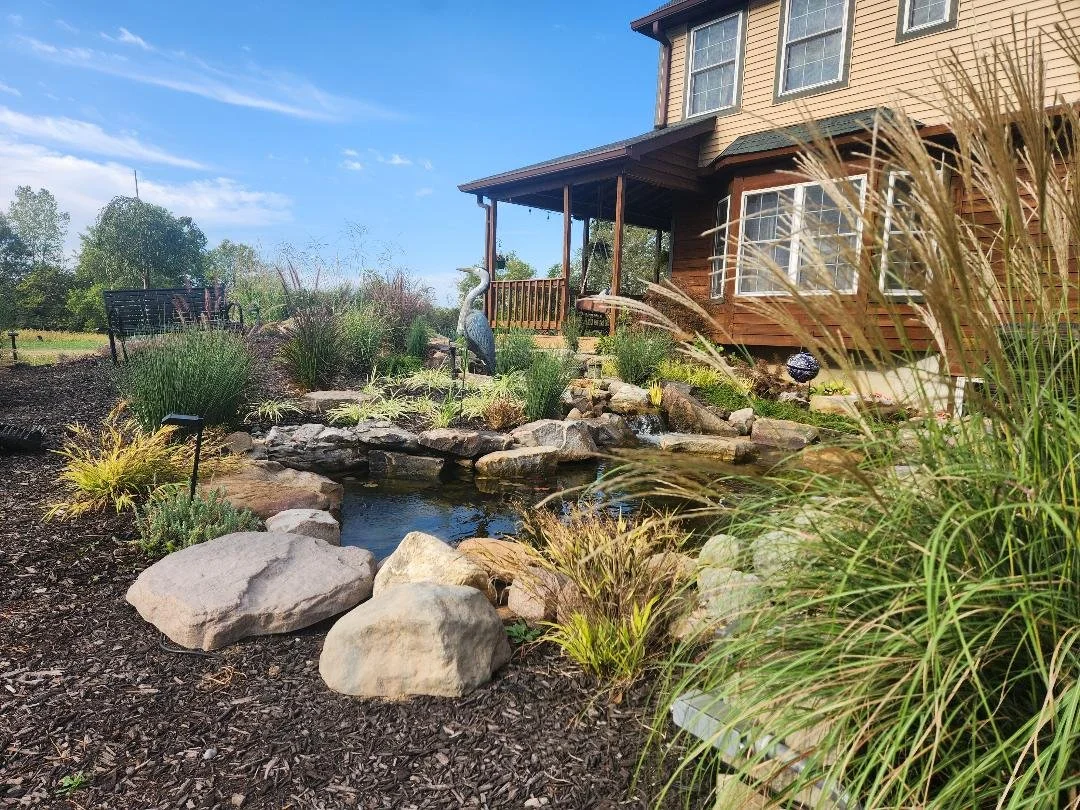
It dawned sunny here in NE Indiana, and I am actually enjoying my coffee on the patio: crisp air, water babbling through the backyard feature, the whole deal. I was somewhere between relaxed and reflective when my hearing aid buzzed and rang as a call hit my cell. That little interruption pulled a memory forward.
A few years ago I was standing in front of a room full of executives and sales teams talking about a new swine feeding program. I was mid-stride, outlining the features and benefits of the feeds I had designed, when I quietly froze. It was not visible to anyone else, but I knew it. The K-State Marching Band’s version of the Wabash Cannonball was suddenly playing in my ear.
My phone, set to silent and sitting at my spot, was still Bluetooth-connected to my hearing aid. My ringtone, typical of a K-State Wildcat, was coming through loud and proud directly into my skull.
I had a decision to make: rip out the hearing aid mid-presentation, or keep rolling and let my personal fight song fuel the talk, silently, for everyone else.
I let it play.
That moment taught me two things. First, silence the phone or remove the hearing aid before presenting. Second, and more useful, sometimes you simply have to keep going through internal distractions.
Like that old ad used to say: do not let them see you sweat. We all have our own “Wabash Cannonball” moments?
What internal distractions are you pushing through these days?

Patio Pondering: “Good Enough” and Other Lies We Tell Ourselves
But what happens when “almost works” doesn’t? When the Rube Goldberg setup in the shop costs more in time or parts than a proper tool would have? Or when someone actually gets injured using the wrong tool that technically worked… until it didn’t?
This morning dawned with high winds and rain. I shut off my early alarm because I hadn’t made it to bed until late. One strong cup of coffee finally snapped my eyes open to yet another dreary morning on the patio.
After this week’s reflection about “almost fit,” I finally pulled the trigger on one of the shirts that I know actually fits. There was a clearance sale on that style, so I stocked up with an online order of eight shirts in various plaid designs to maintain my Captain Plaid title.
As I stood at my closet, contemplating what to wear, I remembered the pile of new shirts sitting on the kitchen counter. I headed downstairs shirtless, ripped open one of the packages, and put one on. It was like getting a hug from an old friend. The shirt just fit.
Today’s reflection isn’t about giving you permission to finally do that thing you’ve always wanted. My experience with “finally” purchasing shirts that fit is more about how much we tolerate things that sort of work — tools, habits, clothing — things we make work, even if they aren’t quite right. We all have them in our closets, kitchens, and farm shops.
In many cases, those “almost fit” solutions do work, or at least seem to. More importantly, they save us from spending money or burning mental energy on replacing them. I’ve said it plenty of times: “I don’t need to spend the money because this gets the job done.” And in terms of my closet, those almost-fitting shirts covered me — mostly.
But what happens when “almost works” doesn’t? When the Rube Goldberg setup in the shop costs more in time or parts than a proper tool would have? Or when someone actually gets injured using the wrong tool that technically worked… until it didn’t?
What struck me this morning is that the mindset is the same across the board. We tolerate “almost” because it functions, because it feels thrifty, because replacing it means making decisions, and because there is always something more urgent to deal with. There’s a certain pride in making do, wearing the adaptation like a Merit Badge.
Yet the moment something actually fits, you feel the gap you’ve been tolerating.
In my case, the old shirts did their job, but these new ones give me the satisfaction of a correct fit. I don’t have to wrestle with short shirttails or sleeves that look borrowed from a younger cousin. Now I can pull some of the old shirts from my closet that I’ve tolerated over the years, regardless of how I paid for them. Unfortunately, my Captain Plaid affinity did not transmit to my sons, so there will be no hand-me-downs.
In our personal lives and workplaces, we know how much better things go when we finally use the right tool or the right fit. And yet we all have things we continue to tolerate that almost fit, almost work, almost profit.
So the question that lingered over my coffee was simple:
Why do we insist on tolerating almost?

Patio Pondering: Finding the Sweet Spot
It is easy to fall into one of two extremes. On one end is the “we never needed all these fancy gadgets” mindset. On the other is the belief that we must have every available tool to stay competitive. Neither extreme leaves much room for thoughtful decision-making.
It is another dreary day here on the patio in northeast Indiana. The kind of day where a strong cup of coffee is less about enjoyment and more about regaining a little momentum. As I watch the mist drift across the pond, my mind keeps wandering back to the shop and the winter maintenance projects waiting to be started. As I sit there, it strikes me that the questions I keep circling around are not unique to farming at all; they show up in nearly every business.
Winter has always been planning season. Time to evaluate what worked, what didn’t, and what might need attention before spring rolls back around. And as those thoughts were taking shape, one idea kept resurfacing: farmers love gadgets and new equipment.
That thought was reinforced when I turned on one of my go-to podcasts and listened to an interview with a planter technology dealer. The conversation revolved around the latest technology and tools that can be added to a planter, alongside discussion about balancing those investments with available capital and potential returns. Sensors, monitors, data streams, dashboards all promise more insight, more precision, and better outcomes.
As a scientist by training, that is where my curiosity — and my skepticism — kicks in.
What do we actually do with all that data? When a chart shows a clean line and an apparent correlation, is it truly a cause-and-effect relationship, or simply a coincidence wrapped in good graphics? Does the information change how decisions are made in the field, or does it just confirm what we already believed?
That question feels especially relevant today, on the eve of the Fort Wayne Farm Show, when the latest innovations, upgrades, and technologies will soon be front and center. It is the time of year when ideas are sparked, comparisons are made, and investment decisions start to feel both exciting and urgent.
None of that is meant as a knock on technology. Data can be incredibly powerful when it is understood, trusted, and applied with purpose. But data without discipline can just as easily add noise, complexity, and cost.
With margins tight and many commercial crop farmers facing losses, it is fair to ask whether multi-thousand-dollar investments per row can always be justified. Promotions and testimonials can be found to support nearly any purchase, but justification on paper does not always translate to improved outcomes in the field.
It is easy to fall into one of two extremes. On one end is the “we never needed all these fancy gadgets” mindset. On the other is the belief that we must have every available tool to stay competitive. Neither extreme leaves much room for thoughtful decision-making.
A disciplined operator lives somewhere between those poles, balancing investment with potential outcomes, tempered by available capital and the realities of their own operation. That balance looks different for every farm, every year, and every operator.
Which brings me back to the question I started with: do we need every gadget to raise a crop, or do we simply need to get the basics right? Or is there a sweet spot that can only be defined individually?
While this discussion revolves around crop farming, the same tension exists in nearly every business. How do you balance the pull between adaptation and restraint within the realities of your own operation?
There is no universal answer, and maybe there shouldn’t be. The important part is not keeping up with trends or resisting them outright, but making decisions that fit your land, your business, your finances, and your goals.
In the end, the best approach is the one that works for you.

Patio Pondering: Finding the Right Fit is a Challenge
In fact, last week, walking into Costco, my shirt tail had already started to pull out. Instead of fixing it, I resigned myself and finished pulling the rest of it free. Fortunately, the untucked look is still an acceptable option for middle-aged men.
I’m enjoying my coffee this morning, gazing out over the patio and backyard from the dry comfort just inside the door. It’s fueling a thought that’s been floating around in my head for the past few weeks, a thought that greets me every morning as I stand in my closet preparing for the day.
I wear an XL shirt to fit my shoulders; larges don’t have enough room for the genetic gift from my parents. But finding an XL that fits me is a different story. Most XL shirts don’t have long enough tails, and they ride up as soon as I sit down or move around. We won’t even address the sleeves that never quite reach my wrists.
I have some shirts I really like. They’re my kind of plaid. They just don’t fit perfectly. So I plan around them: wearing them for a podcast recording where the shirt tail won’t be visible, layering them under a pullover or vest, or resigning myself to constant tucking. The thing is, I go through these same mechanics even with shirts that aren’t favorites. Managing the misfit has simply become part of my daily routine.
In fact, last week, walking into Costco, my shirt tail had already started to pull out. Instead of fixing it, I resigned myself and finished pulling the rest of it free. Fortunately, the untucked look is still an acceptable option for middle-aged men.
What makes this more interesting is that I do own shirts that actually fit. One style came from the clearance rack at Cabela’s. The other was a company shirt given to me as a trade show uniform. I found both of these online later and bookmarked them, sitting there quietly, waiting for me to pull the trigger. I’ve hesitated because they cost more than typical shirts and because buying them would require making room in an already full closet.
Whether it’s the expense, the effort required to purge, or simple comfort with “almost fits,” I’ve yet to push myself to replace what merely works with what truly fits. Unfortunately, this shirt conundrum may not be the only place in my life where I’ve made that compromise.
And I’m aware that avoiding the decision is, in itself, a decision.
Maybe today is the day I place that order and force a purge by making room for shirts that actually fit.

Patio Pondering: When Survival Gets Mistaken for Success
I cringe when I see local residents praise Dollar General as a sign of community strength. I see comments about how great it is, how lucky we are, how “we have such a great team” at our local store.
This morning dawned with two weeks of holiday havoc finally behind us. The first workday of 2026 arrived quietly. Sunlight skimmed across the backyard, keeping the ice at bay in the water feature, as I took the first sips of a strong, black coffee and let the day settle in.
I recently saw a post from the manager of our local Dollar General promoting the sale of candy bars to support the Dollar General Literacy Foundation.
Literacy matters. Education matters. I have thought about this promotion several times over the holiday season, after seeing it promoted online several times. The more I considered who was being asked to participate, the more uncomfortable it became.
There are two problems here. First, a multibillion-dollar company is asking poor communities to fund programs meant to help them. Second, it is doing so by selling low-nutrition candy to people who are already forced, by price and access, to buy too much low-nutrition food in the first place.
That discomfort connects to something else I have been carrying for a long time.
I cringe when I see local residents praise Dollar General as a sign of community strength. I see comments about how great it is, how lucky we are, how “we have such a great team” at our local store.
To be clear, I do not doubt the team. Those jobs are hard. Managers and employees show up every day, serve their neighbors, and take pride in doing the best they can with what they are given. That work deserves respect.
But praising the people should not require celebrating the system.
When a community begins treating the presence of a Dollar General as progress, it often signals something else entirely. It suggests that wages are thin, options are limited, and that convenience has replaced investment. It is not an indictment of the people who shop or work there. It is a reflection of how little margin the community has left.
Seen through that lens, selling candy to fund literacy is not generosity. It is a transaction that shifts responsibility away from corporate scale and back onto the people already carrying the weight. Literacy is a long-term investment. Candy-bar charity is a short-term gesture that makes the problem feel addressed without actually confronting it.
We should be able to hold two truths at once: respect for good people doing honest work locally, and skepticism of corporate models that profit from scarcity. Both things can be true. And pretending otherwise only makes it easier to confuse survival with success.

Patio Pondering: The Class of ’89 and Watching From the Right Side Up
I lived through my own version of Stranger Things, albeit without the Mind Flayer, Demogorgons, or Vecna. I had friends immersed in Dungeons and Dragons. Mid-1970s Camaros sat in the parking lot. I knew the unmistakable aroma of Aqua Net.
Today is a cloudy day here in northeast Indiana. The backyard landscaping is covered in snow, and our water feature is fighting off the freeze as it continues to bubble. The view from the patio is calm and peaceful as I enjoy my coffee.
This week marked the end of the Stranger Things series. As I watched the seasons unfold, something struck me. It was more than the 1980s references that we Gen Xers felt viscerally. It was more than the music. It was something else.
That something hit me in the waning minutes of the final episode when the words “Class of 1989” were spoken.
I was in the Class of 1989 at Northrop High School.
After the credits rolled and I started to process what we had just watched, the other shoe dropped. Stranger Things hit me so hard because I am now the age of the parents. Hopper. Joyce. Ted. Karen. They were all standing in the same place I find myself today, with children finishing their high school lives and beginning to spread their wings into college and “real” jobs.
I lived through my own version of Stranger Things, albeit without the Mind Flayer, Demogorgons, or Vecna. I had friends immersed in Dungeons and Dragons. Mid-1970s Camaros sat in the parking lot. I knew the unmistakable aroma of Aqua Net.
The bikes, the basements, the music were never really the point. What caught me off guard was realizing I am no longer watching the story from the seat of a kid pedaling home before dark. I am watching it from the porch, hoping everyone makes it home safely.
Maybe that is why this series lingered with me. Not because it reminded me of who I was, but because it revealed, quietly and almost unexpectedly, who I have become.

A Good Year on the Patio
No big pivots. No overnight success. Just steady progress, early mornings, and a lot of coffee.
That feels like a year worth being grateful for.
2025 was a good year on the patio.
I published 204 Patio Pondering reflections, released 57 podcast episodes that reached 7,055 downloads, and shared 18 reflections with readers of the East Allen Courier. Those numbers matter, mostly because of the work behind them.
Over the course of the year, the patio became a place to work through a wide range of thoughts and emotions. Some mornings were shaped by leadership, trust, and difficult decisions; others by fatigue, doubt, gratitude, or quiet resolve. There were reflections sparked by current events and others born from small, ordinary moments that lingered longer than expected. Some posts came from frustration, some from humor, and others from simply sitting still long enough to notice what was already there. Taken together, they reflect a year spent paying attention, asking honest questions, and learning to be comfortable without tidy answers.
This year pushed me to sharpen skills I was already using and learn a few new ones along the way. I became a better interviewer by listening harder and talking less. I learned more about editing and audio production than I ever expected, and I got more disciplined about the craft behind the conversations.
Those skills showed up most clearly in the conversations themselves. I interviewed longtime friends, new connections, and some of the most recognizable voices shaping agriculture today. I had guests cry, push back, and laugh. Conversations ranged from industry-wide challenges to deeply personal reflections, often sparked by a simple question that led to “that’s a great question” or “I’ve never thought about that.” Whether across the table from trusted friends or nationally respected voices, the goal remained the same: create space for honest conversation and memories, both good and bad, to surface.
I also began consulting work on projects both domestically and internationally, including a ten-day trip to China helping pig farms work through grow-finish challenges. All of this unfolded as I continued to sort through where I fit in an ever-changing agriculture and livestock industry, one that is clearly evolving, sometimes faster than the roles and paths available to people shaped by experience, curiosity, and perspective.
Like any good operation, I added and refined tools. New microphones and software upgrades joined the mix, along with AI as a partner for editing, organizing, and publishing. The thinking, writing, and conversations still start the same way they always have: with time, attention, and curiosity.
Before the end of the year, we added recording equipment for a planned expansion into memory-focused interviews, starting close to home and capturing stories and experiences from relatives before they are lost to time.
Patio Pondering continues to be a place to slow down, think out loud, and tell stories rooted in agriculture, work, family, and place. Any growth this year rests on friends who showed up when I needed encouragement, a network willing to listen and share ideas, and most importantly, my family, who makes the early mornings, long conversations, and quiet moments on the patio possible.
2026 will bring more reflections, more guests, harder questions, and more emotion, as we continue to enjoy the words, sounds, and moments that unfold here on the patio.
No big pivots. No overnight success. Just steady progress, early mornings, and a lot of coffee.
That feels like a year worth being grateful for.
— Jim

Patio Pondering: Unbreakable Walls and Redirected Energy
Over the years I have revisited this wall repeatedly, often finding only information I already had. This past weekend, with the help of modern research tools and a little AI assistance, I decided to give it one more serious push.
The weather forecasters were right. This morning is dawning just below 20 degrees after pushing past 50 yesterday. I am grateful for hot, strong coffee as I watch the sun rise over the patio and gather my thoughts.
One of those “tell me something about yourself that no one knows” icebreakers we all endure would reveal that I am an advanced amateur genealogist, an interest passed down from both of my grandmothers. Anyone who digs into family history long enough becomes familiar with “brick walls” — ancestors where the records simply stop.
One of my longest-standing brick walls has followed me for more than two decades. My third great-grandmother, Maria Anna Geiger, and her daughter Sophie emigrated from the Kingdom of Württemberg to the United States in 1866. Sophie eventually settled in Allen County, Indiana. I have her baptism records, but for Maria Anna, the trail ends abruptly. No birth record. No marriage record. Nothing.
Over the years I have revisited this wall repeatedly, often finding only information I already had. This past weekend, with the help of modern research tools and a little AI assistance, I decided to give it one more serious push.
The wall did not move.
What did change was my understanding. As I dug deeper into the political and religious realities of early-1800s Württemberg, it became clear that some lives simply did not leave clean paper trails. Marriage was regulated by the state, and without land, money, or status, many couples could not legally marry. The church recorded what it could, but it was not the judge. Some families lived their entire lives largely undocumented, not by accident, but by design.
That realization allowed me to finally move this brick wall into a new category: unbreakable. And strangely enough, that acceptance was freeing. I no longer feel the need to attack it every time I sit down to work on my family tree. The frustration is gone, replaced with calm.
A few days later, I recognized that same feeling from other moments in my career. Times when I finally accepted that a sale, a project, or an advancement was never going to happen. Removing those pursuits from the expectation bank in my head reduced stress and freed up energy for things that actually could move forward.
We all have brick walls in our lives — things we continue to push against long after the odds of success have dropped to near zero.
The hard question is this: when is persistence still wisdom, and when is it time to let go and redirect that energy somewhere it can actually grow?

Patio Pondering: When “Just Hit F8” Isn’t Enough
When those tradeoffs are not visible or well communicated, the delay can be misread. What feels like careful judgment on my side can look like inaction on someone else’s.
It is hard to believe we are in the last full work week of the year. Indiana weather is once again being crazy; our temperatures will push 50 today, then fall into the teens by tomorrow morning. I am trying to enjoy my hot cup of coffee as I distill a few thoughts. Before I sit at my desk, I am reflecting on the changes and realities of feed formulation I have experienced over the past 35 years.
Yesterday, I started beta testing a new formulation program for my friend @Marcio Gonçalves. Over the years, I have used many formulation programs to design feeding programs and products for pigs. I first used PC Spartan in ANSC 221 after we learned the Pearson Square in Dr. Tip Cline’s Animal Nutrition class at Purdue. Even then, I ran into obstacles when ingredients or requirements did not easily match the expected outcome.
Since then, I have used a blend of PC-based and cloud-based programs, some intuitive, others not, to meet the nutritional needs of pigs. Sometimes making those feeds was easy; other times I was stymied by something in the formulation. That issue could have been a vitamin level, a ratio that could not be met, or simply running out of room for all the needed ingredients.
Fixing those issues was the art of feed formulation, and sometimes the solution took time to resolve.
Here is the problem I faced many times over my career: many people do not understand what it takes to make a feeding program. It is not always as simple as putting in numbers and hitting F8. Many times, there are decisions that must be made to fit a program to a customer.
To be fair, many days feed formulation really is that simple. The ingredients line up, the requirements fit, the costs behave, and hitting F8 delivers exactly what you expect. Those are good days, and they happen often enough that it is easy to assume they are the norm.
The challenge is that not every day looks like that. And when it does not, the work shifts from numbers to judgment.
Sometimes ration weight breaks do not align with nutrient recommendations.
Sometimes a ration requires special ingredients with incomplete nutrient profiles.
In times of tight margins, I had to meet a specific ration cost even when it meant falling short of ideal nutrient targets.
The harder part was that very few people understood the intricacies involved in getting everything to work so that, when you finally hit F8, it actually worked. They only saw the final outcome, not the mental gymnastics required to balance rations and budgets to match the needs of that farm.
When those tradeoffs are not visible or well communicated, the delay can be misread. What feels like careful judgment on my side can look like inaction on someone else’s.
As we become more adept at using AI, formulation programs will continue to improve. We will get ration updates at the speed of light. Still, there will be times when you hit a brick wall. Those are the moments when expertise and experience matter most—when knowledge breaks through like the Kool-Aid Pitcher crashing through that wall to get the pigs fed.
What are the challenges in your life that others assume are easy, but really are not?

Patio Pondering: Production Numbers, the Phantom Menace
What are the phantom metrics you chase in your life — the ones you fixate on but never stop to question why?
The sun is out this Friday morning in NE Indiana, even though another Alberta Clipper is headed our way. Before we get plunged back into the cold, I’m taking a minute to enjoy the view and a hot cup of coffee.
Over the past week I’ve thought about the artificial benchmarks we place in our lives — benchmarks we convince ourselves will magically fix everything in our lives, on our farms, or in our businesses.
When I traveled and talked with pig farmers in China, everyone told me the same thing: if they could just get a 2.3 feed conversion, their farms would be profitable and their lives easier. It didn’t matter what their operation looked like, what genetics they used, or where they purchased or manufactured feed. They all said 2.3. I heard it so many times I started dreaming about 2.3 feed conversion.
I think about hog farms here in the U.S. that repeat standard feed costs or production metrics as benchmarks for profitability, hearing the same numbers in different meetings across the country. They had fallen into the same trap the Chinese farmers had — believing that some metric, shouted by someone, was the magic number, the moment their farm would finally be perfect.
Unfortunately, in every case where these farmers repeated these benchmarks, each one had no clue about their own operations. When I asked about feed delivery records, the answers were vague. They didn’t have them. When I asked about closeout records, I got wishy-washy excuses about why they didn’t have those either. When I tried to discuss feed budgets and how closely they were followed, I usually got blank stares.
These farmers believed that if they just hit that magic number, life would be great — yet they had no understanding of the realities inside their own barns. And this isn’t isolated to pig farms. The same thing happens in the business world and in our personal lives. We convince ourselves that if we could just achieve this one thing, then everything would fall into place.
What are the phantom metrics you chase in your life — the ones you fixate on but never stop to question why?

Patio Pondering: When a Good Battery Is Actually Bad
I assumed I had what I needed, and that assumption sent me troubleshooting the wrong problem. I could have spent all morning trying different fixes with no hope of success.
Another bright, sunny morning here on the Patio, sipping my coffee as I look over our snow-covered backyard. This morning my thoughts drift back to a simple “honey do” task I thought I finished yesterday and how it unexpectedly connects to the workplace.
Yesterday I replaced the battery in the garage door remote. We keep a battery cache with everything from tiny wafer batteries up to big D cells, so I grabbed a replacement 2032, put it in the remote, and went on with my evening.
This morning, when I left to take my son to school, the garage door did not budge. None of the buttons on the remote worked. My first thought was that I must not have reconnected the remote to the opener. No big deal. I planned to fix that after the school run.
When I returned home I tried to reconnect the remote to the opener, but after several attempts it still failed to connect. The Learn light kept flashing, a little reminder in my face that it was not working. After a few more tries, I headed into the house, grabbed the battery tester, and found the problem. The battery was dead. Caput. No juice.
The part that stuck with me was not that I used the wrong tool. It was that I trusted a bad one. That battery came from the “good battery” drawer, the place where the working ones are supposed to live, so I never thought to question it. I assumed I had what I needed, and that assumption sent me troubleshooting the wrong problem. I could have spent all morning trying different fixes with no hope of success.
It struck me how often this same pattern shows up in our teams. We assume the people around us have what they need, the skills, the clarity, the support, the bandwidth, simply because they are in the role or because they have managed before. We assume everything is charged and ready to go. But just like that battery in the good drawer, not everything that looks prepared actually is. And when someone on the team is running on empty, the whole system ends up troubleshooting the wrong problems.
Over my career I have been asked many times if I had the right tools to do my job and to support sales and my customers. Most of the time I did, but the ‘tool’ I needed most was a leader who had the charge, clarity, and capacity to guide the team forward, especially when our teams carried so many dotted-line responsibilities to essential parts of the business.
As we approach the start of a new calendar year, it is a good time to reflect on your teams. Rarely does a team fail because people do not care. More often they falter because someone was running on empty while everyone else assumed they had a full charge. Before the next project stalls, ask yourself: are you sure your people have what they need?

Patio Pondering: No One Is Indispensable, Even You
Operational rhythms are not going away. They are part of the business cycle, and they can create chaos or build resilience depending on how we approach them.
It snowed overnight here in NE Indiana, and the whole landscape is covered in a clean, white blanket as the morning sun hits the fields. My coffee is hot, and I am tucked into the Annex Patio trying to get back into the groove after travel and the holidays.
As I look out across the fields, I have been thinking about what I call our operational rhythms. These are the natural ebbs and flows of a team’s availability over the course of a year. People travel for work. People take PTO. There are conferences, family needs, sick days, and the crush of year-end responsibilities. No team stays at full strength for all fifty-two weeks.
A recent example is my own schedule. I spent ten days consulting in China and came home just in time to roll right into Thanksgiving. That back-to-back stretch would have created real challenges for any team I was part of, and it made me think about what leadership can do along with what each of us can do individually to prepare for those inevitable absences.
For leaders, the responsibility starts with building teams that can function smoothly when someone is gone. That means setting expectations early, making sure responsibilities are shared, and avoiding single points of failure. A leader can create a culture where stepping away is manageable or a culture where people feel like they must lug a laptop into a tent on vacation just to keep things afloat. I have seen that happen. I have done versions of that myself.
Employees also carry responsibility. This part is a little uncomfortable to admit.
Sometimes we do not prepare our coworkers for our absence because, deep down, being the only one who can do something feels good. It feels secure. It feels important. If I am the only one who can fix a problem, then I must be indispensable. I have fallen into that mindset before, and it helped no one, including me.
Looking back, I wish I had been better at making clean handoffs before I stepped away. I wish I had communicated more clearly about what might come up, what needed covered, and what could wait until I returned. Preparing others is not a burden. It is a responsibility that strengthens the whole team.
Operational rhythms are not going away. They are part of the business cycle, and they can create chaos or build resilience depending on how we approach them.
As we move through the year with its travel, PTO, deadlines, and life events, how do we prepare each other so the work continues smoothly and no one feels forced to carry the load alone?

Patio Pondering: Lessons from Mr. Rogers’ Neighborhood at 40,000 Feet
But what if we took a page from Fred Rogers?
What if the person we were talking to became the most important thing in the world for those few minutes?
It is the start of a new month, and I am jumping back in the saddle after being overseas and celebrating Thanksgiving. Today began with a school closure announcement and my feed full of weather advisories. My coffee is hot, and I am NOT writing from the frigid patio this morning.
A couple of weeks ago, while traveling to Asia and cruising somewhere over the Northwest Territories at 40,000 feet, I watched A Beautiful Day in the Neighborhood, the biopic about Fred Rogers and a fictionalized journalist. One line from Mr. Rogers hit me square in the chest as I settled in for the long flight.
The movie centers on an investigative journalist who is assigned to interview Fred Rogers for a “Heroes” expose. The journalist had arranged an initial phone call through Mr. Rogers’ team, and during that conversation, Rogers asks him:
“Do you know what the most important thing in the world is to me right now?”
The interviewer guesses no.
Mr. Rogers replies, “Having this phone call with you, Lloyd.”
Think about that.
All the influence he had.
All the tapings.
All the people pulling at him.
All the emotional weight he carried for others.
And yet, the most important thing in the world to him was the moment right in front of him.
That line stuck with me. If I am honest, it stung a little.
I can think of too many times in my life in meetings, on sales calls, in family conversations, or even small talk in the barn when I was only half there. I was physically present but mentally somewhere else. I was thinking about the next deadline, the next customer issue, the next feeding program, or the next crisis.
I do not think I am alone in that.
But what if we took a page from Fred Rogers?
What if the person we were talking to became the most important thing in the world for those few minutes?
Imagine how that would change our sales calls.
Or our conversations with coworkers.
Or the way we talk to our kids at the end of a long day.
When I wrote the rough draft of this reflection while sitting in the Tokyo airport replaying that line in my head, I wondered how often I give people the gift of my full attention and how often I shortchange them without meaning to.
Maybe that is the challenge for all of us today.
Wherever we are and whoever is in front of us, can we make that the most important thing in the world?

Patio Pondering: A Thanksgiving Reflection
Wishing you a day filled with warmth, rest, and the kind of gratitude that lingers long after the dishes are done.
This Thanksgiving morning, the coffee is hot, the fields are quiet, and the to-do list can wait for a day. Even with some corn still standing and cover crop left to plant, today is a reminder that gratitude isn’t tied to perfect circumstances — it’s tied to perspective.
Like many of you, this year brought its share of challenges and unexpected turns. But it also brought moments of grace, helping hands, good conversations, and a deeper appreciation for the simple parts of life we often overlook.
So today, I’m thankful for family around the table…
For neighbors who show up when it matters…
For the sunrise over a frosty field…
And for the chance to pause long enough to notice all of it.
Wishing you a day filled with warmth, rest, and the kind of gratitude that lingers long after the dishes are done.
Happy Thanksgiving, friends. 🍁☕🦃


Patio Pondering: Saying Yes
But this morning, as we quickly approach Thanksgiving, I want to focus on the Yes’s, the yes’s that make my life better.
This morning, my coffee is strong as usual, and I enjoyed the first sips as I gazed across the pre-dawn landscape while waiting for my son to finish getting ready for school. The snow is melting, but what is left gives a beautiful patina to our backyard and the surrounding fields.
With the recent snow and glimpses of the coming winter, all the “No’s” in my life have been weighing on me. No’s from family, friends, job interviews, potential business partners, and many more. When life throws you curveballs and the path you are on isn’t the one you planned, it is easy to get caught in the quicksand of negativity, second-guessing past decisions and actions.
But this morning, as we quickly approach Thanksgiving, I want to focus on the Yes’s, the yes’s that make my life better.
Over the past 15 months, I have said YES to a lot of job opportunities. Unfortunately, none of the employers complimented with their own yes. Those No’s have given me time to explore other Yes’s, though.
The most obvious YES is my writing. This journey of sharing thoughts and reflections through my daily Patio Ponderings has expanded my writing skills and opened my soul and thoughts to anyone willing to read them.
I said YES to setting up my own consulting, staying open to new ways I can help the swine industry with my skills and experience.
I said YES when my gut told me I needed a website presence for Patio Pondering. Expanding my skills as a “web designer” was a stretch for me, but it has become another creative outlet.
Using artificial intelligence to help me create is a huge YES, especially for a Gen Xer. While some of my friends are lamenting AI and all the “computer gadgets,” I am using it daily, and it has made me a better writer, scientist, and communicator.
I said YES when Todd Thurman and Ryan Martin encouraged me to start podcasting. That opened my communication repertoire in ways I never imagined. My interviewing skills have grown, and that growth has carried over into conversations with family and friends as well.
On our farm, I have said YES to expanding our use of stewardship practices like cover crops and no-till. I have also said YES to promotion, actively looking for opportunities to add more acres instead of sitting back and waiting for them to find us.
With my family, I have said YES, attending marching band competitions recently when things at home could have easily occupied my time. That is alongside all the other YES’s that help our family navigate our hectic lives together.
I continue to say YES to friends and my community. They add rich colors to our life using a palette I could never craft myself, whether it is our Fair Folk family, Boy Scouts and the Philmont crew, 4-H, or simply stepping up to help a neighbor in need.
There will be a two-week pause to my daily Patio Ponderings because I said YES to an opportunity to help a friend with his business overseas.
The quicksand is still there; life will always have its pull, but each YES is a step forward, a vine to pull yourself out of the muck and toward solid ground again.

Patio Pondering: The Power of an Unexpected Compliment
Recognizing someone’s work in a spontaneous and genuine way can have a lasting impact on both the team and the individual.
This morning was the coldest since last February, 24 degrees here at the house, with the driveway and barnyard glazed in ice. I am enjoying my coffee from the kitchen window, looking out over the patio and snow-covered landscape. My winter wardrobe is not quite ready for pondering outside in the cold.
As I poured my coffee, a memory came to mind. It was a moment of unexpected praise from many years ago that still brings a smile to my face.
I was at an annual sales meeting in a training center still dressed in its 1970s glory, complete with shag carpet, wood paneling, low ceilings, and poor acoustics. If you closed your eyes, you could almost smell the faint trace of smoke from the days when lighting up in a meeting was accepted, even expected.
Like most meetings of its kind, the presentations dragged on as leaders clicked through slides covering topics many already knew or that did not apply to everyone. I do not remember what the National Sales Manager was talking about, but I remember when he suddenly called me out by name for doing a great job promoting a swine product line.
I sat there, partly embarrassed and partly proud that my work had been noticed. The best part was how unexpected it was. Later, as I thought about it on the drive home, those few simple words carried more weight than any of the charts or strategies we discussed.
Recognizing someone’s work in a spontaneous and genuine way can have a lasting impact on both the team and the individual.
How can you lift someone’s spirits today with a simple and unexpected “Great job”?
Too often we hold back praise because we think it is not the right time, worry it might embarrass someone, or fear that others might feel overlooked. Sometimes, though, a few honest words of recognition are exactly what someone needs to keep going.

Patio Pondering: The Ingredients of Belonging
The beauty of this band is that the only real qualification is an interest in music and a willingness to march. No one asks for résumés or reference letters, just commitment and heart. Somehow, it works.
A Morning of Chaos and Calm
This sunny Monday morning was discombobulated by Mother Nature throwing snow and ice at the morning commute. Our local school is now on an e-learning day, which is being foiled by network issues with Canva, and the local news feeds are full of crash notices and calls to slow down.
As I enjoyed that later-than-normal coffee, it struck me how quickly we all adapt. Ice and snow rearrange the whole day, yet life keeps moving. The instinct to adjust seems stronger and comes more naturally when we’re part of something bigger than ourselves.
The Band That Belongs
Yesterday we hosted an unofficial end-of-year party for my son’s marching band. The original plan was to have a bonfire with one of the piles of trees we pulled from a fenceline, but snow and cold made us shift to an indoor event. Fortunately, we have a large house that could accommodate 45 high-schoolers and their loud voices.
As my wife and I entertained, watched, and listened, we were in awe of how this group of teenagers molded together as a team on and off the field. There were the typical teenage-boy antics, high-school girls’ laughter and gossip circles, but there were no exclusions, no one sitting alone on the sidelines. Everyone was involved.
The beauty of this band is that the only real qualification is an interest in music and a willingness to march. No one asks for résumés or reference letters, just commitment and heart. Somehow, it works. Every personality, every background, every odd quirk finds its place in the formation. Variety isn’t engineered here; it’s invited, expected, and accepted.
Watching them, I couldn’t help but think about how we adults try to replicate this sense of belonging by manipulating our teams and friend groups. Maybe this sense of belonging came from the close-quarters costume changes on school buses, the late-evening practices, or the joy of a successful season. Maybe it’s because these students—these children—have a home in the musical arts where they can grow, excel, and learn.
When Fit Replaces Belonging
I don’t know exactly why they molded into the groups they did. I do know they have my respect for what they are and how they are competitive, yet competition isn’t everything to them. As I watched the band run around the house, have a snowball fight, and even feed our horses apples, I couldn’t help but think about how this team came together without prequalifications, without placement exams, or screenings to see if they “fit.”
That stands in contrast to three job interviews I had this past year. All three started well, with, “Your résumé and experience fit what we want in this role.” In all three cases, the next step was a personality-profile assessment to see where I might fit with their team. And in all three cases, I was ghosted by the companies. I didn’t pass their test to be on their team. I never had the chance to share how I could fit in with my experience and talents.
I know these companies are just trying to facilitate and speed up cohesion, but their filtering may have stripped away the very ingredients that make a team rich. The people who think differently, who bring rough edges or unexpected ideas, are often the ones who add the flavor that can’t be found in a formula.
I wonder how different my son’s marching band would be if the director had used the same kind of test, “just to see how you would fit in,” before accepting someone into the band.
Engineering teams can be necessary in very specific cases. But engineering a team to fit some arbitrary matrix loses talent, loses the variety of experiences that make our world better, and limits you to just what you already know.
The Stone Soup of Teamwork
As I contemplated the differences between what I saw in my son’s marching band and what I’ve experienced in the workplace over the years, I remembered a fable I read as a young student: Stone Soup.
In the story, a traveler convinces wary villagers to contribute to a pot of boiling water that begins with nothing but a simple stone. One by one, they add what little they have—a few carrots, a potato, some herbs—and together they create something far richer than any of them could have made alone.
In the case of the band, the stone is the band itself, and the director adds what’s needed—another tuba, more flags, a bass guitar. He adds and takes as they come, just like the fable where each person brings what they have to make the soup richer.
In contrast, the workplace also starts with a stone, a sales objective or a project goal, but it adds to it differently. They want a marketing manager with x years of experience, a specific degree, and the right personality profile. The soup, while still a soup, doesn’t have the same depth of flavor.
It made me realize we’re all trying to make our own version of Stone Soup, but somewhere along the line we started turning away the ingredients that make it good, because we thought we knew better, that we knew exactly what we needed. But did we?
Finding the Recipe Again
Maybe the answer isn’t to perfect the recipe, but to trust the process. To let the right ingredients find their way to the pot. Like the marching band, the best teams are built from those willing to show up, contribute what they have, and make something greater together. That’s how real belonging begins, not from who we select, but from who we invite.

Patio Pondering: Not for Fame or Fortune
So here’s to them, the behind-the-scenes, cart puller, prop puter-upper, water-carrying, cheer-leading parent volunteers who make the magic happen. The band may bring the music and the flash, but the heartbeat behind it belongs to you. My hat is off to you, every one of you!
This morning’s a bit different. I do not usually write my Patio Ponderings on a Sunday, and every one of the 259 before this came from a workday morning. But the snow that fell overnight, and this third or maybe fourth cup of coffee, have my thoughts bubbling over. Pondering on yesterday’s Indiana State Marching Band Finals stirred up more than just pride for my son’s band. It reminded me how many people work behind the scenes to make those moments happen.
Leo Jr./Sr. High School, where my son plays, made its first finals appearance in fourteen years and placed sixth in Class C. Our neighbors at Woodlan finished seventh in Class D. Both bands had incredible seasons, and seeing all the smiles, hugs, and proud posts from students, parents, directors, and even school administrators warmed this snowy morning.
But as I sat here gazing at the snow-covered landscape, my thoughts didn’t stay on the performers or the trophies. They turned to the people behind the scenes, the ones pushing carts of accessories, running cords for microphones, pulling wagons laden with water bottles, ensuring each prop is placed just right on the field, and making sure every show runs like it should. You see them in their color-coordinated pants and shirts proudly emblazoned with “Pit Crew.” They’re the unsung heroes, the quiet engine that keeps the band moving from one field to the next.
I’m not one of those volunteers. My CDL-exempt farmer’s license does not stretch to a band semi, so we support in other ways. But I have watched those parents work, the same faces, week after week, in the dark, in the rain, in the two-minute set-up rush between performances, steady as can be.
There is a line from an old Alabama song from my youth that fits them perfectly: “Not for fame or fortune do they strive.” These folks don’t do it for applause or recognition. They do it for love, for their kids, for my kid, for their school, and for the joy of seeing all the months of hard work by the director, students, and band staff come alive under the lights.
Mike Rowe made a career celebrating people who do the hard, unseen jobs that keep our world and schools running, the custodians, secretaries, lunch ladies, and bus drivers who make sure each school day is ready for educational excellence. Band parents fit right in that group. On any given Friday night or Saturday morning, you’ll find them out there pushing props across the turf, dropping cords in the cold, and making sure the spotlight shines on someone else.
So here’s to them, the behind-the-scenes, cart puller, prop puter-upper, water-carrying, cheer-leading parent volunteers who make the magic happen. The band may bring the music and the flash, but the heartbeat behind it belongs to you. My hat is off to you, every one of you!

Patio Pondering: The Wisdom of Turning Right to Go Left
There was no acknowledgment of their improper passing at an intersection or disregard for my turn signal, only the frustration of being delayed by a tractor and grain cart doing things the right way.
Patio Pondering: The Wisdom of Turning Right to Go Left
The weather forecasters were right!
I woke to the comforting pitter-patter of rain on the roof and am now enjoying my coffee while watching it fall around the patio. This kind of rainy weather is perfect for pondering here on the patio.
But I am not reflecting on the accuracy of weather forecasting or even on how the rain changed my plans. Not today. Today’s thoughts are on the Left-Hand Turn.
The left-hand turn is inefficient, time-consuming, and dangerous.
I see that inefficiency when I drop off or pick up my son at school. The exit is supposed to be right-turn only, but when the police officer is not there, the mice will play. Inevitably, a left-hand offender slows the entire drop-off line as they wait for a break in both lanes of traffic. Sometimes their impatience nearly causes a wreck, but the left-hand offender does not seem to care how their choice affects everyone else. For the rule followers, this is infuriating.
The dangers of the left-hand turn are not limited to parking lots. Just last week, I almost had a collision with a Honda Accord while making a left-hand turn with a grain cart. To set the scene, I was hauling a full load to unload into a semi-trailer. A grain cart is essentially a portable grain bin; ours holds 1,000 bushels and is about the size of a New York studio apartment. We had flashers, beacons, and turn signals all operating, doing everything right, yet the driver still chose to ignore it.
As I began my turn, I caught a glimpse in the rear-view camera of that gray Accord pulling out to pass. I was already committed to the turn, and stopping an 80,000-pound rig is not as simple as stomping on the brake. Fortunately, I stopped just in time and avoided a wreck. Instead of any appreciation for not totaling their car, the passenger’s response came in the form of a few choice hand gestures and words even a novice lip-reader could translate. There was no acknowledgment of their improper passing at an intersection or disregard for my turn signal, only the frustration of being delayed by a tractor and grain cart doing things the right way.
Moments like these remind me of the stories from years ago about how UPS limited left-hand turns in their routes because they were inefficient and unsafe. That change, one of those aha moments, cut fuel use, reduced mileage, and made Big Brown more efficient.
A small adjustment to eliminate an unnecessary, risky maneuver saved UPS millions in time, fuel, and accidents.
So I wonder, what would happen if we all learned to “turn right to get left” a little more often in life and stopped forcing those “cross-traffic turns” ingrained in our routines?