Patio Pondering The Written Collection
What started as my daily coffee-and-keyboard ritual has grown into a collection of reflections on agriculture, leadership, and rural life.
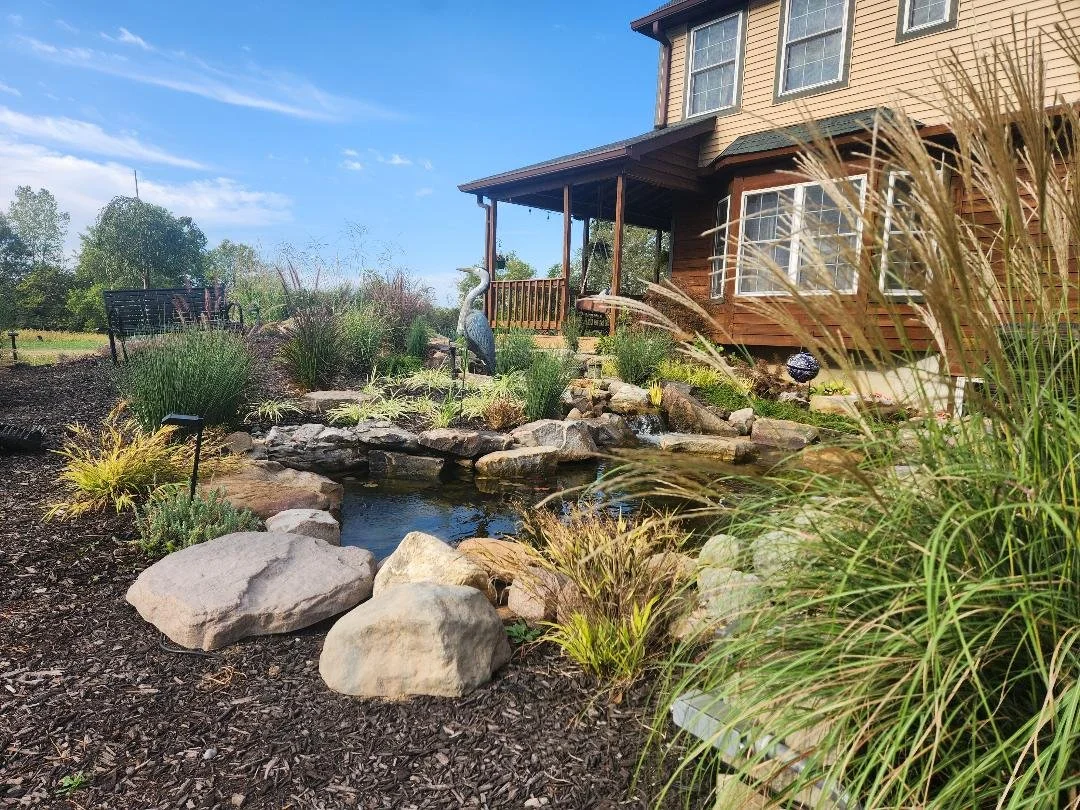
From quiet mornings on my backyard patio to the lessons learned in barns, fields, and boardrooms — these writings capture the stories, ideas, and questions that keep me curious.
Take a moment to explore, and maybe you’ll find a thought or two that sparks your own reflection.
Clear thinking for complex agriculture. I’ll send a note when it’s worth sharing.
Scroll down to discover the stories and reflections from the patio.

Patio Pondering: The Chilling Grip of Micromanagement
It is frustrating to listen to because you can almost see the damage forming in real time. These environments do not grow people; they shrink them. They do not build trust; they break it.
This morning dawned with a thin layer of frost across the fields, a quiet reminder that Thanksgiving is already on the horizon. My view from the patio is crisp and cold, the kind of morning where coffee feels less like a luxury and more like a necessity.
Over the past few weeks, I have had several conversations about micromanagement in both homes and workplaces. Not one of them was uplifting.
The conversations about micromanagement in the home centered on heavy-handed parenting that relied on phrases like “I told you to do it this way” or “Here is my plan for you.” These approaches often came with carefully plotted trajectories for someone else’s future. In one case, the pressure led a family member to rebel, and the situation eventually drew law enforcement involvement.
At work, the tone was not much better. Friends shared experiences of managers watching every move, criticizing without offering direction, and even hinting at retaliation when questioned. Different setting, same result. Control is often mistaken for leadership.
It is frustrating to listen to because you can almost see the damage forming in real time. These environments do not grow people; they shrink them. They do not build trust; they break it.
So how do we handle the micromanagers in our lives? Do we walk away and look for freedom somewhere else? Or when the micromanager is a family member, do we find a way to set boundaries without burning the bridge?
Maybe the bigger question is this: How much control are we willing to surrender before we finally reclaim a little peace and trust of our own?

Patio Pondering: When the Right Role Waltzes In
Maybe the real challenge isn’t just about seeing others or ourselves differently, but leading in a way that gives people space to rediscover themselves, regardless of their title or where they are in their career path.
The sky is clear and the air has a slight chill as the sun begins its trek across the late October sky here in Indiana. I’m back to my normal Dark Roast grind, coffee in hand, watching excavators move dirt on my neighbor’s farm for a new chicken house.
For some reason, my social media feed served up two references to Inglourious Basterds this morning, both about Christoph Waltz.
The first was a clip of Simon Sinek explaining how Waltz responded when asked how he managed to channel the evil needed to play Colonel Hans Landa. According to Sinek, Waltz looked puzzled by the question, and after a pause simply said, “He wasn’t evil.”
The idea that we all see ourselves as good, on the right side of history, could fill volumes. But the second video about Christoph struck a deeper chord; it felt more human, more familiar.
That second clip showed Quentin Tarantino describing how close he came to shelving Inglourious Basterds because he couldn’t find anyone to play the complex role of Hans Landa. Every audition fell short until Christoph walked into the room. He didn’t just read the part; he became it. Tarantino later said Waltz “saved the movie.”
In later interviews, Waltz reflected that Tarantino “plucked me out of comfortable resignation, out of self-pity.” By most counts, he had already built a respectable career, yet he was languishing, working steadily but without spark, convinced his best days were behind him. Then came a role unlike any he had played before, one that revealed a side of his talent few had ever seen and ultimately made him one of the most memorable villains of our time.
It made me wonder how often we typecast people in our work lives. How often leaders, teams, or even peers look at someone’s title or past role and assume that’s all they can offer. We reduce experience to a label, forgetting that most of us carry far more depth, creativity, and adaptability than a business card can hold.
We forget that sometimes the right role, the right opportunity, or the right moment just hasn’t walked into the room yet. My friend Jim Bishop recently wrote about his transformation from a corporate climber to private consultant. His words are worth your time.
Maybe the real challenge isn’t just about seeing others or ourselves differently, but leading in a way that gives people space to rediscover themselves, regardless of their title or where they are in their career path.
How often do we typecast others, or ourselves, and overlook the talent sitting right in front of us?

Patio Pondering: When the Squeaky Wheel Gets All the Grease
Maybe the lesson is not to stop greasing the squeaky wheel altogether, but to remember to grease every zerk, even the hard to reach one underneath the combine.
The sun has yet to crest the horizon this morning, the last week of “late” sunrises before we turn the clocks back to Standard Time. I am trying a different coffee roast today, and the change is refreshing as I take in the chilly patio view.
It’s hard to top yesterday’s One Year Sober reflection. As I sit here, coffee in hand, I have plenty of things flowing through the muddy waters of my brain, but one thought from yesterday afternoon keeps resurfacing: how some people can be so insular in their thoughts and actions that they fail to see the bigger picture.
The old saying “The squeaky wheel gets the grease” came to mind. I started thinking about how management reacts to these squeaky wheels, whether employees or customers. Too often, the response is to placate them. Give them what they want, make the noise stop, move on. But when that becomes the default, placating turns into rewarding.
I think back to a few customers I worked with who always complained. They complained about the plant. They complained about the truckers. They complained about the sales team and management. And management always tried to appease them. Yet the complaining never stopped. It probably still happens to this day.
That particular customer sold quite a bit of feed, but at some point, you must ask when is enough, enough? When is the abuse of your people and the complaining about your product and services too much?
I’ve seen it in other settings too, where the squeaky wheel keeps getting the grease while the rest of the wagon quietly holds the load. It is easy to focus on the noise because it demands attention. But the quiet ones, the dependable employees, the steady customers, the people who just do their jobs without drama, they are the ones who keep things rolling forward.
Maybe the lesson is not to stop greasing the squeaky wheel altogether, but to remember to grease every zerk, even the hard to reach one underneath the combine. Appreciation, trust, and attention shouldn’t only go to those who make the most noise. Sometimes it’s the quiet, consistent ones who deserve the grease the most.
As you head into your day, who’s keeping your wagon moving, and have you let them know you notice?

Patio Pondering: One Year Without Alcohol
Then I did the math. I was going through three half-gallons of bourbon every two weeks. That is a lot of alcohol.
This week I am solo parenting since Kim is in Nebraska playing Grandma.
I started my day playing Soccer Dad, dropping our son off at school before the sun crested the horizon. Fortunately, I had a tumbler of hot coffee to wake me up as I endured the drop-off line.
Today is a special day for me. Not only is it my son’s 16th birthday, but it is also my one-year mark without alcohol.
I distinctly remember the Sunday morning 365 days ago when I resolved to stop “enjoying” bourbon and the routine that surrounded it. I had just awakened after hosting my son’s birthday party the night before and realized I could not remember the entire evening. Sadly, it was not the first time that had happened. Lying there, trying to piece together the night, I worried. What did I say? What did I do? Who did I offend? What could have gone wrong?
The words of comedian Nikki Glaser came back to me. She told Theo Von about her own “aha moment” when her brain simply shut down after a few drinks, a defense mechanism to protect her from what she might do if she kept drinking. I resembled that story, and that Sunday morning it scared the crap out of me enough to say, I am done.
My path to no alcohol was not typical. There were no shakes of withdrawal, no social media announcement, no meetings, and no wooden token. It was simply a quiet resolve to stop drinking.
As the days without bourbon and beer went by, I realized I was not addicted to alcohol nearly as much as I was addicted to the routine, both at home and in social settings. Grabbing the tumbler. Adding the ice. Pouring the bourbon. Breathing in that first waft of aroma. Hearing the clink of ice in the glass. That little ritual became the rhythm of my evenings.
Then I did the math. I was going through three half-gallons of bourbon every two weeks. That is a lot of alcohol.
Sitting here twelve months later, I can see how much stress I put on myself, my family, and my friends when I drank. I know I did things I would never do sober, said things I did not mean, celebrated too hard, and definietly offended a few people. Fortunately, I do not have those regrets from the past year. If I offended you in the past twelve months, I meant to do it. 😉
I am not posting this to brag, well, maybe just a little, but mostly to be a small light for someone who might need a nudge to do something they have been wanting to do to improve their life.
☕ Listen to my podcast discussion about this journey at PatioPondering.com/podcast.

Patio Pondering: Muscle Memory
I learned that feel back in 1986 on an old International H with an eight-foot disc. Over time, it became second nature as I worked with bigger and bigger tillage implements over the years, just as Pires relied on hers. And it’s not limited to fieldwork.
This morning dawned sunny and bright. The forecasted frost never came, and with hot coffee in hand, it looks to be a great start to the last day of the week.
Yesterday a friend sent me a short video of pianist Maria João Pires, who came to play Mozart’s Piano Concerto No. 23—only to realize, seconds before the orchestra began, that they were performing No. 20 instead. For a moment she was stunned. Then, as the music swelled, she relaxed, trusted her training, and played flawlessly. Her fingers remembered what her mind had forgotten.
Watching her, I thought about muscle memory in my own life. Earlier this week I was working soybean stubble ground to repair ruts and compaction from a wet spring. For those of us who grew up running tillage—whether it was a disc, a plow, or a field cultivator—you get it. You feel it. It’s like driving a car down a gravel road; you don’t stare at the shoulder to stay centered, you just know where it is.
That’s how tillage works when you’re the one actually holding the wheel. I’m not talking about auto-steer; I mean when you’re fully in control of the tractor. You feel where the equipment is behind you and where the tractor needs to be in relation to the last pass or the field edge. Before long, you don’t have to look back—you just sense it. You focus on the horizon, and everything else falls into place. That’s muscle memory.
I learned that feel back in 1986 on an old International H with an eight-foot disc. Over time, it became second nature as I worked with bigger and bigger tillage implements over the years, just as Pires relied on hers. And it’s not limited to fieldwork. In my years as a swine nutritionist, problems sometimes hit my desk that felt hauntingly familiar. The data, the symptoms, the customer’s tone—it all echoed past experiences. Like Maria João Pires in that moment of panic, I’ve had to pause, take a breath, and trust that I’ve played this tune before. That same muscle memory—the quiet confidence built through repetition—guides my hands even when the situation changes key.
Experience doesn’t just teach us what to do; it trains us to feel when something’s right—or when it isn’t. And more importantly, when we lean into that experience—our own muscle memory—like Pires, we can overcome the unexpected challenges that land in front of us.
Where in your work do you trust your own kind of muscle memory?

Patio Pondering: When Job Descriptions Don’t Tell the Whole Story
What the heck? I went back and looked at the job description again. There was nothing in the essential functions or core competencies about leadership, mentorship, or supervision. Just a standard HR boilerplate line: “The Swine Nutritionist may have direct supervisory responsibilities.”
It’s been a busy time here on the patio working on a couple of consulting projects, but this morning’s coffee is extra enjoyable as I watch the sunrise over the wet landscape. The hot coffee fills me with comfort as I recharge my batteries for the day ahead.
A couple of weeks ago, several friends sent me a job description and all said, “Jim, this looks just like you.” I read through it and thought, this is a no-brainer — a perfect match for my 25 years as a swine nutritionist and 18 years of direct work with producers. I crafted my résumé carefully to fit the job description and wrote a cover letter that highlighted how my experience aligned with each of the key requirements.
The screening phone interview with the HR director was going really well until they mentioned, almost in passing, “This position would have some leadership and mentorship responsibilities with one other person.”
I wasn’t mentally prepared for that question. My leadership experience started years ago in 4-H and Boy Scouts and has continued through the years, leading cross-functional teams that merged research, marketing, and nutrition to meet customer demands. But because it wasn’t in the job description, I hadn’t prepared examples or stories to highlight it. I stumbled through my answer, saying something vague like, “I haven’t led people directly, but I could do it.” Not my best moment, especially considering the mentoring and coaching I’ve done recently.
Other than that stumble, I thought the interview went great. I was already thinking about next steps when the “thanks but no thanks” email arrived.
I was dumbfounded. My résumé nearly mirrored the job description word for word. It talked about working directly with customers, being the face of the company at events like World Pork Expo and Iowa Pork Congress, and leading presentations and training sessions, all things I’ve done and done well throughout my career.
I reached out to the company president, whom I know, to ask what I was missing. His response:
“You have a lot of great experience, but the team was looking for someone with leadership and mentorship experience.”
What the heck? I went back and looked at the job description again. There was nothing in the essential functions or core competencies about leadership, mentorship, or supervision. Just a standard HR boilerplate line: “The Swine Nutritionist may have direct supervisory responsibilities.”
It wasn’t part of the essential functions or competencies, just a vague afterthought. The kind of sentence that checks a box for HR but doesn’t tell a candidate much about what the company really values.
I’m not frustrated because I didn’t get the job; after nearly sixty “no’s” over the last year, I’ve learned to take those in stride. I’m frustrated because what they wanted wasn’t what they said they wanted. If leadership and mentorship had been clearly listed, I would have highlighted my years of leading youth programs, mentoring colleagues, and coordinating cross-functional teams. I would have been prepared to discuss it in the interview. But they didn’t, and I wasn’t.
So here I sit, disappointed yes, but mostly frustrated by yet another example of incomplete communication. I was qualified for that position. More than qualified. But I didn’t get to highlight it because I didn’t know it was part of the criteria.
And as 2025 rolls on, I realize I’m not alone. I read about it all the time from other job seekers: “I matched the job they posted, not the candidate they were actually seeking.”

Patio Pondering: The Drift from Responsibility
The calendar filled with Out of Office or Travel placeholders, while the team that needed direction was left to fend for itself. The team fell apart. The leader kept moving, but the team stopped growing.
Enjoying my coffee this morning on the patio is refreshing. Another beautiful sunrise and the promise of a great way to end a busy week.
As I was getting ready for the day, a thought jumped into my head about two former colleagues who never really did the jobs they were hired to do. What frustrated me most, and others on the team, was that both were allowed to keep operating outside their roles and were even rewarded for it.
One was hired to help grow a key part of our business. From the start, it was clear their interests were somewhere else. While the rest of us focused on building the commercial market, this person chased a specialty segment that had little to do with our goals. When I raised my concerns, I was told, “He’s selling feed, don’t worry about it.” But we should have worried. The market we were responsible for dried up, and that business never recovered.
The other was brought in to lead a team, complete with the title, the meetings, and the talk of collaboration. For a while, it looked promising. Plans were made, ideas were shared, and it felt like we were on track. Then the meetings stopped, the vision that once stretched like a clear vista over the Rockies turned into a Jackson Pollock splatter of half-formed ideas. “Scheduling conflicts” piled up. The calendar filled with Out of Office or Travel placeholders, while the team that needed direction was left to fend for itself. The team fell apart. The leader kept moving, but the team stopped growing.
So where does the blame really belong? Is it with the employees who chase what’s fun or flattering instead of what’s needed? Or with the managers who look the other way, mistaking movement for progress?
Maybe the real issue is that accountability fades when results are measured by activity instead of impact, or when made-up metrics are used to hide what’s really happening. Hide the truth and you’ve already excused the drift from real responsibilities.
As you lead your teams, how do you reward creativity and initiative while keeping the focus on core responsibilities? How do you balance maintenance with growth?

Patio Pondering: Partnerships That Pull Their Weight
The best partnerships always came from those who understood a simple truth:
If you help me grow, I’ll help you grow too.
There’s a chill in the air this morning. I’ve got a jacket on as I enjoy my coffee and watch the sun crest over the horizon. The clear sky promises another beautiful day here in Northeast Indiana.
As I continue building my consulting business, I’ve been thinking about partnerships — what makes them work and what doesn’t. Since 2007, I’ve worked with dealer networks in both technical support and direct sales roles. Some dealers were 100% brand loyal, while others mixed suppliers. Over those 18 years of sales calls, one question kept surfacing again and again:
“What are you, as the company representative, going to do to help me get more business?”
That’s a loaded question.
As livestock farming and the feed industry have evolved, there are fewer customers and more competition, and the sales process has changed dramatically. When I was asked that question, I had to pause and think: how much effort has this dealer put in on their own? How committed are they to the partnership? Do they offer services their market truly needs?
With proactive, full-line dealers, those conversations often led to detailed joint sales plans. But when a dealer sat behind the counter waiting for customers to walk in, blaming the company for not driving business their way, I didn’t waste much time.
The best partnerships always came from those who understood a simple truth:
If you help me grow, I’ll help you grow too.
Whether it’s farming, feed sales, or any business, real success starts when both sides lean into the harness and pull the traces.

Patio Pondering: Zig When Plans Zag
But as I reflect on how some of us naturally roll with these minor disruptions, others get stuck when plans change.
This morning dawned with a nuisance rain, a Finkle Sprinkle, with just enough to halt harvest activities in our area but not enough to relieve the drought that still has us in a death grip. The air carried that fresh smell of rain as the drops tapped softly on the patio roof.
We had to change plans, drop five, and punt.
That’s nothing new for any of us. Many times, when making sales calls with my teams, we had to adjust plans because a customer or prospect couldn’t meet. We’d shuffle our schedule, maybe stop in on that prospect who said, “Come by when you have time,” or grab lunch with a coworker we rarely saw. The day wasn’t lost; it just took a different route.
But as I reflect on how some of us naturally roll with these minor disruptions, others get stuck when plans change. They freeze, not from lack of effort, but from the discomfort of uncertainty. Some folks simply haven’t had to build that adaptability muscle yet, and that’s okay. They’re still valuable members of our teams.
The challenge, then, isn’t to outpace them. It’s to help bring them along. To lead by example when the plan zigs instead of zags. A calm voice, a steady hand, or even a simple, “Let’s figure it out together,” can turn frustration into forward motion.
How have you worked to smooth sudden shifts in plans with your teams, especially those challenged by the changes that happen at the speed of business?

Patio Pondering #250: A Milestone Morning
As I sat down to write, I realized something: this is my 250th Patio Pondering.
It’s another sunny morning off the patio. I drove my son to school and watched the sun creep over the horizon, another beautiful start to the day here in Northeast Indiana.
As I sat down to write, I realized something: this is my 250th Patio Pondering.
Two hundred fifty times I’ve sat with a thought, a reflection, a question, or an observation—and put it on paper. That should feel like a big milestone, right?
But the truth is, I don’t feel particularly profound this morning. My thoughts are muddled. My spirit is heavy. And nothing I’ve got feels ready to share, at least not yet. Maybe tomorrow. Maybe post #251.
So for today, I’ll simply acknowledge the moment. Quietly. No fanfare. Just a nod to the discipline it takes to show up 250 times.
Sometimes that’s enough.
What milestone have you reached lately—not with applause, but with grit?

Patio Pondering: Being a Good Neighbor
Lately, I’ve been thinking about what makes a good neighbor. We’ve all heard that “good fences make good neighbors,” but what about beyond a bull-strong, hog-tight fence?
Once again, a heavy mist drifts from our pond. The air is cooling, and autumn is coming. I made this morning’s coffee extra strong to kick-start the week.
Lately, I’ve been thinking about what makes a good neighbor. We’ve all heard that “good fences make good neighbors,” but what about beyond a bull-strong, hog-tight fence?
Last week, I testified before a plan commission about a proposed livestock barn. My theme was “right place,” but in the back of my mind, I kept wondering, What about being a good neighbor? This new neighbor never spoke with anyone nearby about their plans, a misstep judging by the conversations I had afterward.
This weekend, I noticed blaze orange stakes on the farmland behind our place, telltale signs of impending construction. A few phone calls later, I learned this neighbor planned two chicken houses. Like the other barns, they haven’t approached any of us about their plans.
Then I thought about my own time here, almost two decades on this farm. Have I always been a good neighbor? No, I haven’t. I’m in the middle of a feud with one neighbor that will likely never end. Instead of talking face-to-face, I vented my frustration in an anonymous video. That was a mistake, one I’ll probably carry with me for the rest of my life.
As I’ve matured, I’ve tried to be a better neighbor by doing, sharing, and caring. When there are weddings or funerals, I drive, deliver, and sit, anything to help. But I still fall short when life gets busy. Between family, school events, and farm work, I sometimes forget to slow down, stop, and show concern.
How have you been a good neighbor? And what do you do to stay one when life gets busy?
Sometimes being a good neighbor starts with something as simple as a hello, a sincere wave when passing, or rolling down the window for a quick chat.

Patio Pondering: See Something, Say Something
I saw something. I said something. They did something.
This morning, mist is rising from the pond and dew covers the patio. You can feel fall in the air, even though the sun’s rays are warm and the sky promises another beautiful day here in Northeast Indiana. My coffee is extra strong to kick me into gear for the end of the week.
See Something, Say Something.
This phrase started as a public safety slogan encouraging people to report suspicious activity, but it’s found its way into other parts of life: bullying, harassment, and even workplace safety.
On Monday, while enduring the drop-off line at Leo Jr./Sr. High School, I watched three elementary-aged girls jump out of a car in the middle of the high school parking lot and walk toward the elementary school. While this technically is not allowed, it happens every day. What caught my attention was that the girls walked directly behind a cement truck pouring concrete for the football complex. My heart skipped a beat as they disappeared into the truck’s blind zone in the dark, pre-dawn light.
They made it safely to the sidewalk, but that image stuck with me.
Then on Wednesday morning, it happened again: a young boy hopped out of a vehicle in nearly the same spot and wandered behind another working cement truck, completely unaware of the danger just feet away. I snapped a quick photo to capture what I saw, partly to make sense of why this was still happening.
See Something, Say Something.
This time, I did.
I sent a message to the superintendent and school administrators describing what I’d seen, along with the photo showing the boy walking behind the truck. I hoped they would speak with the construction company and tighten safety around the area.
To my surprise, later that day the school sent out an automated message reminding parents that elementary students were not to be dropped off at the high school, and that all drop-offs needed to occur in designated zones.
I saw something. I said something. They did something.
How many times in our lives have we muttered, “Someone should say something,” and then done nothing more? The same silence that lets unsafe acts go unnoticed in a parking lot can also let poor decisions or toxic behavior grow unchecked in the workplace. What lessons do we teach our children, and our teams, when we choose comfort over courage, silence over safety?

Patio Pondering: When the Script Sinks the Ship
That script, meant to support me, became an anchor that pulled me under. And I know I’m not the only one who’s been there.
This morning was supposed to be frosty, but the temps didn’t dip quite far enough. Now the sun is bouncing off the patio, and it promises to be another beautiful day.
I wish I could say my last public speaking experience was just as sunny.
I’ve been working hard to improve my presentation skills. Between the podcast, YouTube videos on communication, and some solo practicing, I’ve felt more confident in my delivery lately. So when I had to speak in front of the county plan commission about a proposed building site I opposed, I thought I had a strong game plan.
My opening was crafted to show both my credibility, with over 25 years in livestock feeding and production, and my local investment as both a farmer and landowner. I wasn’t there just to say "I don’t like it." I had four concise, fact-based points. I’d even woven in the new county wheel tax to strengthen one of my arguments. I thought I was ready.
And then I stepped up to the podium, and it all fell apart.
It started with the microphone being off. That threw me for a second, but the real problem was my approach. I had written out a full script to read.
Here’s the thing. I’m not a read-the-script guy. I do best when I speak naturally, using key points and phrases to guide me. I’m also a walker when I present. I move, I engage. Being anchored to a podium with a sheet of paper in front of me only made things worse. I stumbled. I repeated myself. When I looked up to make eye contact, I lost my place. The confident, prepared communicator I’ve been working to become? He didn’t show up.
That script, meant to support me, became an anchor that pulled me under. And I know I’m not the only one who’s been there.
Still, it showed me something important. If I want to round out my speaking skills, especially for formal settings like public hearings, I need to practice being effective even when I’m stuck behind a podium. That discomfort is a sign of where I still need to grow.
But here’s the other lesson I won’t soon forget: important moments aren’t the time to experiment with unfamiliar tools. Trying something new, like reading from a full script, might be a good skill to build, but it needs to be practiced in lower-stakes environments first. The plan commission wasn’t the place to test-drive a new approach.
Sometimes the tools we think will help us end up tripping us up, especially when they go against how we naturally work. There’s a fine line between pushing ourselves to grow and forcing ourselves into a mold that breaks us down.
How do you balance preparation with staying true to your natural style? When has a “helpful tool” done more harm than good?

Patio Pondering: They Cared
They were refreshing because they showed one thing: they cared.
They were happy we came. They wanted everyone to feel welcome. And they wanted us to have a good time.
This morning’s view from the patio is beautiful. We finally have a morning with little dew and no fog. The sun’s rays are reflecting off the high clouds, giving a warm red glow to the landscaping as I sip my coffee.
My mind is full of thoughts—appropriate wedding attire, reading comprehension, following road signs and rules of the road, communication. On top of that, I’m trying to complete a visa application, and between the poor English translation and contradictory instructions, I’m not sure where my day will take me.
I attended a wedding this weekend and had time to observe a lot. I could probably write a week’s worth of Patio Ponderings just on what’s considered “appropriate wedding attire” these days. But one memory stands out: when we spoke with the bride and groom as they mingled through the crowd.
Both were genuinely happy to see us, but each mentioned how worried they were that they wouldn’t have time to talk with everyone. Their interactions with me and my son were simple, sincere, and refreshing.
They were refreshing because they showed one thing—they cared.
They were happy we came. They wanted everyone to feel welcome. And they wanted us to have a good time.
How often do you leave a meeting or conversation making others feel that same way—that you cared, that you really wanted to help, and weren’t just full of the “right” words?

Patio Pondering: Bullied by a Handshake
I knew his move. I had seen it before. It wasn’t a greeting; it was intimidation, a show of dominance wrapped in the disguise of a Midwestern handshake. And I have been down that road before in the business world.
This morning dawned with the promise of another great day here in Northeast Indiana. Indian summer is in full swing, the fall flowers around the patio are bursting with color, and my coffee is hot as the sun begins to warm everything.
Several weeks ago, I had an encounter that stirred old memories I cannot seem to shake.
Have you ever been bullied by a handshake?
I have, most recently at a small public meeting with about ten people in attendance. As I entered to find a seat, a man I knew by reputation extended his hand. His grip locked on like I was a lifeline. When I answered his question about my name with “just a concerned citizen,” the pressure grew tighter, almost punishing. Now, I am a big man, but I was becoming uncomfortable with the strength of that vice-like connection.
After I finally wrenched my hand free, I gave him my name. His response? “That wasn’t so hard, was it.”
I knew his move. I had seen it before. It wasn’t a greeting; it was intimidation, a show of dominance wrapped in the disguise of a Midwestern handshake. And I have been down that road before in the business world.
Early in my career, before a Swine Training Meeting, I was warned about a particular salesman and his infamous handshake. Unfortunately, the warnings did not prepare me for the crafty way he pulled me into his death grip. His grip was worthy of a professional arm wrestler, and he yanked me into his personal space. My heart rate jumped, sweat started to rise, and I felt cornered.
He finally released me after what felt like minutes, though it was only seconds. I tried to focus on my presentation, but the encounter stuck with me—partly because of the pain in my hand, but more because of how inappropriate it was. This handshake went well beyond the “firm and strong” we are taught as kids growing up in the Midwest.
As I reflect on both of these handshakes, it is clear the intent was the same: to intimidate, to show dominance under the cover of a simple greeting. In reality, they did not win respect. They only hardened me against them.
Leadership and professionalism are not just shown in big decisions. They are revealed in small moments too. A handshake can welcome or it can wound. One builds connection. The other erodes it.
How about you—have you ever experienced a handshake, or another small gesture, that was less about connection and more about control?

Patio Pondering: Two Conversations, Two Outcomes
The stark differences in those two conversations hit me this morning. These weren’t stories from strangers; they were people I know, families that share roots not far from my own. And yet the outcomes for their children look worlds apart.
This morning, I was greeted with a “temporary shutdown” message from the elevator where I planned to deliver soybeans. Because of this delay, I can sit with my coffee and watch the sun rise over the patio. It gives me time to think about two very different conversations I had yesterday.
Yesterday I had a conversation with a young friend about the same age as my eldest children, though she’s really more like a daughter to me. It was the kind of conversation that leaves you energized. She is in her second year of work after earning a professional degree, and she is absolutely rocking it. Toward the end of our visit, I asked her, “What in your upbringing helped you grow into the professional you are today? What did your parents and our circle of friends do that helped shape you and your peers into adults who are working, buying houses, and building lives?”
That question stuck with me because it is one I ask myself often when I think about the “children” in our friend group. For the most part, they are contributing, thriving, and adding to the world around them—starting careers, buying houses, raising children, and even saving for retirement.
Later in the day, I had another conversation with a neighbor. This one revolved around some of their family members who are facing real struggles: legal troubles, joblessness, cycles of hardship. They described causes like poor parenting choices, lack of accountability in youth, and consequences that compound over time.
The stark differences in those two conversations hit me this morning. These weren’t stories from strangers; they were people I know, families that share roots not far from my own. And yet the outcomes for their children look worlds apart.
It leaves me wondering: how do families, starting from similar roots and experiences, raise children who walk such different paths? And maybe the bigger question—what can each of us do, day by day, to tilt the balance toward responsibility, contribution, and hope for the next generation?

Patio Pondering: When Words Trip on the Stage
Preparation doesn’t mean simply reading word for word. It means being familiar enough with the material to deliver it naturally, without the audience wincing at stumbles.
This morning on the patio, coffee in hand, I’m watching the mist drift off the pond. Soybean harvest started for us yesterday, and we’re gearing up for a busy week.
While working in the office and shop, I’ve been thinking about how much time I’ve spent sharpening my presentation and interviewing skills. Between watching YouTube videos from speaking coaches, listening to other presenters, and preparing for my podcast interviews, I’m trying to improve how I come across in public. Because of that, my ears are more tuned in than they used to be. I notice when a speaker is smooth, and I notice when they’re not.
This past weekend at a marching band competition, the PA announcer struggled. They stumbled over names. They tripped over prepared lines. At one point, they nearly forgot to announce some bands during the award ceremony. It was uncomfortable to listen to, not because of style differences, but because it was obvious they hadn’t practiced.
What struck me is that none of this was a surprise. The names, the script, the schedule—all of it was known well in advance. With just a little preparation—circling tough pronunciations, rehearsing transitions, reading through the band introductions—it could have gone much smoother. Preparation doesn’t mean simply reading word for word. It means being familiar enough with the material to deliver it naturally, without the audience wincing at stumbles.
I actually felt sorry for the announcer, because I’ve been there. Standing in front of a crowd isn’t easy, and I know how it feels to struggle with words. But it was also a reminder to myself: when we put our face or our voice in front of people, preparation is the difference between credibility and cringe.
So here’s what I’m pondering today: how do you prepare when your words are about to carry beyond the patio?

Patio Pondering: When Standing Out Breaks the Picture
Marching band gets this right. They teach our kids that excellence does not always come from the soloist in the spotlight. Sometimes, it is found in the line that moves perfectly in sync, the color guard that spins as one, the unified design that tells a story without distraction.
This morning, I hit the patio well before sunrise. Between an early alarm and the slower crawl of dawn, I beat the sun out of bed. It was a bachelor weekend with my youngest son. We got some things done around the farm, and on Saturday, I took in a marching band competition where my son’s band took top honors.
Over the past three years of being a marching band parent, there has been one thing I have struggled with—something I have noticed again and again, talked over with my wife more than once, but never put into words until now.
As I sat there in the stands this weekend, watching another round of performances, that same thing caught my eye once more: a male member of the color guard dressed differently than the rest, not as part of the theme, but in a way that visually stood apart. I do not know the reason behind the costume choice, but I do know this—it distracted me. It pulled my attention away from the flow of the performance. I found myself thinking again about how much the judging criteria in marching band emphasize uniformity of style and ensemble cohesiveness.
This is not about gender. Just like no one bats an eye at a male nurse or a female firefighter anymore, a boy in the guard is not the issue. The issue is when anyone, regardless of who they are, stands out visually in a way that breaks the unity of the team.
To be fair, there are times when dressing one guard member differently enhances the show. A villain in red and black. A soloist in blue representing water. Those are purposeful design choices that add to the story. But when it is simply a visual inconsistency without clear context, it can undercut what the band is working so hard to present.
That got me thinking about other areas of life, particularly business.
I could not help but think about times when a team’s effectiveness was hurt by individuality—when someone insisted on standing out at the very moment cohesiveness was needed.
We have all been there, when someone says something and you mentally shake your head, thinking, “Oh no… why did they say that?” One sentence, one decision, one off-note that pulls the whole team off balance.
Business is not always the place for standing out. Sometimes, what is needed most is message discipline. One off-script comment can tank a deal or blow up weeks of planning.
It happens in family life, too. We build routines, traditions, and expectations—not to stifle individuality, but to create rhythm and stability. And when one person constantly pulls in a different direction, the load gets heavier for everyone else.
Sure, there is a time for standing out. But there is also a time to blend in—for the sake of the group, the goal, or the message.
Marching band gets this right. They teach our kids that excellence does not always come from the soloist in the spotlight. Sometimes, it is found in the line that moves perfectly in sync, the color guard that spins as one, the unified design that tells a story without distraction.
And this morning, as the sun rose slowly behind the treetops, that lesson settled in. Whether on the field, at the office, or around the kitchen table, there are times when strength lies in showing up in alignment, not to disappear, but to help the team shine.
Sometimes the strongest note… is the one that fits the chord.

Patio Pondering: When Keeping Your Word Backfires
It makes me wonder: if both sides meet the terms, but expectations shift after the ink is dry, what does “fair” really mean in a contract?
The weather forecasters were right: we had heavy fog this morning. The fog was so thick our schools delayed then canceled school. The sun finally burned off the moisture and the day is beautiful.
Yesterday as I was working on a project, I had to review a contract that had been cancelled. I could not find a great reason for the cancellation, so I contacted the cancelling party to ask why they chose to walk away. What they said threw me for a loop.
In our discussion they shared that my client had fulfilled all the requirements of the contract—every single one. When pressed, they finally said:
“They paid me what they owed, but they should have paid me more because conditions changed.”
The funny thing? This is the third contract termination I’ve reviewed with a similar story: the agreement was fulfilled, but one side was still unhappy.
None of these contracts had bonus provisions, no tiered payment structure based on profit, just a flat payment. Yet one side was mad—mad because the other side did exactly what they agreed to.
In two of the cases, my clients even offered more than the owners had received before, and still, the owners were upset they hadn’t gotten more. Frustration runs high on both sides.
It makes me wonder: if both sides meet the terms, but expectations shift after the ink is dry, what does “fair” really mean in a contract?
When have you been in this situation—on either side of the table?

Patio Pondering: Trust Before Training
Looking back, the whole thing could have been avoided. A few conversations, tailored to the personalities on the team, could have changed the outcome entirely. Instead, a lack of awareness about who he was leading derailed the program before it even began.
This morning the sun is trying to break through the haze as I enjoy my coffee. I have several calls scheduled for the day but am taking a few moments to enjoy the sounds and peacefulness here on the patio.
When I sat down to write this morning’s Patio Pondering, I intended to focus on pork industry profitability, how pig farms are in a rare position to recoup lost equity with the unprecedented profits of autumn hogs. But as I sat there, I couldn’t stay with the numbers. A memory from years ago kept scrolling across my mind like a headline ticker, refusing to be ignored.
A new sales manager had come on board and was tasked with leading a fresh sales training program, a tough assignment for anyone. Part of his job was to give each team member an initial assessment on skills like communication, negotiation, and cold calling. Months later, after implementing new tools, he would reassess us to measure growth.
I was young in my career then, and when I received my initial assessment, I was crestfallen. The manager had never even met with me. His grades were based entirely on one person’s opinion, with no input from me or from colleagues who actually worked with me. Some scores were fair; others were so far off-base that I entered the training with a chip on my shoulder. I wasn’t the only one. Many of my teammates also questioned their value to the group after seeing how they had been graded. Without context, many of us questioned our value to the team. The missed opportunity wasn’t about toughness; it was about leadership, knowing your team well enough to recognize who needs context, who needs conversation, and who can run with blunt feedback.
The manager was a classic “High D” personality: direct, black-and-white, and uninterested in conversations he saw as unnecessary. To him, the assessment was nothing more than a baseline. To us, it felt like a judgment carved in stone. Instead of leaning into the training as a chance to grow, the team sat through the sessions distracted, grumbling about how wrong the scores were. What he thought was a starting line turned into a minefield.
Had the sales manager taken time for short, individual meetings with each of us to explain the assessment as only a starting point and to outline how the training was designed to build up weaker areas, the program could have been far more effective. A little context and recognition of different personalities at the beginning might have shifted frustration into buy-in. The company invested in a training program that never got traction, not because the tools were bad, but because trust was broken at the start.
The final blow came when he recycled those baseline assessments in our annual reviews. What had begun as a misguided shortcut ended as a failure of leadership, a failure to understand his team, and a waste of resources. Maybe this was a failure in leadership by the new sales manager, but maybe it was also a failure by the bosses who forced him to lead a new team and launch a new sales training program at the same time.
Looking back, the whole thing could have been avoided. A few conversations, tailored to the personalities on the team, could have changed the outcome entirely. Instead, a lack of awareness about who he was leading derailed the program before it even began. In the end, leadership starts with knowing the people you’re leading, then shaping your communication so each person can hear it in the way that makes sense to them.