Patio Pondering The Written Collection
What started as my daily coffee-and-keyboard ritual has grown into a collection of reflections on agriculture, leadership, and rural life.
From quiet mornings on my backyard patio to the lessons learned in barns, fields, and boardrooms — these writings capture the stories, ideas, and questions that keep me curious.
Take a moment to explore, and maybe you’ll find a thought or two that sparks your own reflection.
Clear thinking for complex agriculture. I’ll send a note when it’s worth sharing.
Scroll down to discover the stories and reflections from the patio.

Patio Pondering: One Man's Quiche, Another Man’s Casserole
Same eggs. Same cheese. Same satisfying weight in your stomach on a rainy Wednesday morning. The only thing that changed was the word on the label — and somehow that word carried enough cultural baggage to make grown men defensive about what they put on their fork.
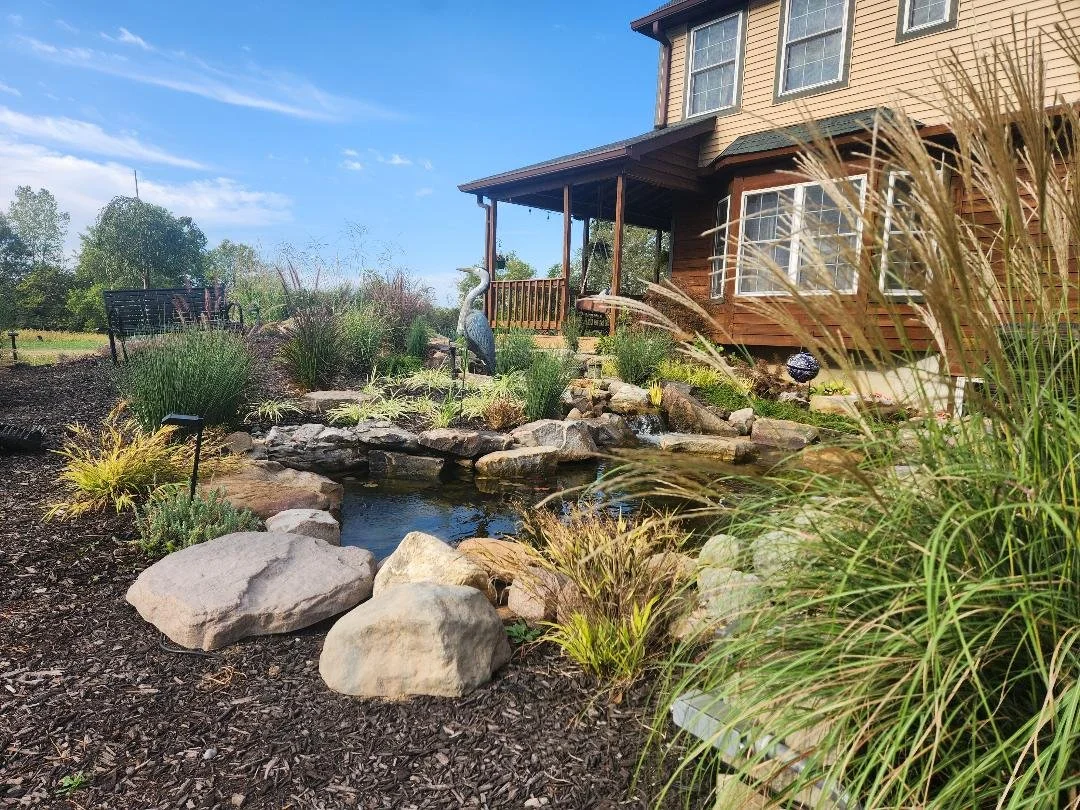
Rain came through our area early this morning, the pitter-patter on the roof pulling me out of sleep before the alarm had a chance. The patio glistens as the morning sun finds its way through the landscaping. My coffee is hot and on the strong side as I settle into what I call the Terra Level Executive Suite — my home office, ground floor, close enough to the garden to feel honest about the day ahead.
My wife brought me breakfast while I was organizing my to-do list. A slice of quiche.
Every time I hear that word, I think back to a book from my youth — Real Men Don't Eat Quiche — a satirical poke at masculine stereotypes that was everywhere in the early 1980s. I'll be honest with you: I never read it. But that title stuck with me for forty-some years, and this morning it finally told me why.
One man's quiche is another man's breakfast casserole.
Same eggs. Same cheese. Same satisfying weight in your stomach on a rainy Wednesday morning. The only thing that changed was the word on the label — and somehow that word carried enough cultural baggage to make grown men defensive about what they put on their fork.
How many times in our lives do we let definitions define us?
In agriculture, we do this constantly. A "small farm" versus a "family operation." A "hog confinement" versus a "modern production facility." A "consultant" versus someone who couldn't keep a corporate job. The facts on the ground are identical. The perception shifts entirely based on the vocabulary someone else handed us.
I spent 25 years in an industry where I watched good ideas die because they got labeled wrong, and I watched mediocre ideas thrive because someone dressed them up in the right terminology. The quiche versus breakfast casserole divide isn't just a generational joke — it's a case study in how quickly we outsource our judgment to a word.
The lesson I took from my Tuesday morning quiche: be skeptical of the label, especially when it's making a decision for you. Ask what's actually in the dish before you decide whether real men eat it.
Turns out, real men eat whatever their wife brings them with a smile. And they're grateful for it.

Patio Pondering: Transparency Is Proven in the Records
Taxpayers do not need speculation or interpretation. They need records that align with established accounting standards and a clear explanation when they do not. Until those questions are answered, claims of transparency and honesty remain untested by the very documents that should support them.
After raising questions two weeks ago about why taxpayers of the former Northeast Allen Fire Territory have not yet seen the detailed financial accounts that were promised, I learned that the Indiana State Board of Accounts issued a subpoena requesting extensive documentation related to those records.
That development provides important context. Requests of this scope are not routine and typically indicate unresolved questions involving recordkeeping, classification, or compliance with required reporting standards. Until that process is complete, delays in releasing records may be understandable. Even so, taxpayers are still entitled to ask whether publicly available records align with basic accounting and transparency expectations.
As I review the transactions available online, two issues stand out.
First, the classification of labor-related payments.
Public records show nearly $66,000 in payments described as compensation for labor performed to reconcile or “fix” Fire Territory accounts. Under standard governmental accounting practice, labor compensation is required to be reported on Employment Compensation Reports. However, the Employment Compensation Reports filed for both 2024 and 2025 list only $15,000 in compensation and do not reflect the additional payments described elsewhere in the public records.
When questioned publicly, an explanation has been offered for how the payments were initially recorded. However, regardless of how the error occurred, the reporting inconsistency remains unresolved in the required Employment Compensation Reports.
This raises straightforward accounting questions:
If these payments were compensation for labor, why do they not appear on the required compensation reports?
If they were not compensation, under what classification were they paid?
Where is that classification documented for public review?
Second, continued expenditures after dissolution.
The Northeast Allen Fire Territory was officially dissolved in 2023. Yet public records show expenditures recorded and paid in 2024 and 2025 against accounts tied to that dissolved entity. Dissolution ordinarily signals the end of spending authority, except for clearly defined and documented close-out activities.
To date, no clear public explanation or supporting documentation has been provided explaining why post-dissolution expenditures were authorized or how those expenditures align with statutory requirements. Public commentary has focused on criticisms of prior accounting practices, but those statements do not resolve the reporting and authorization questions reflected in the records themselves.
These are not allegations. They are accounting and governance questions rooted in publicly available records.
Transparency is not demonstrated through assurances, summaries, or slogans. It is demonstrated when classifications are consistent, reporting requirements are met, and documentation is available for independent review.
Taxpayers do not need speculation or interpretation. They need records that align with established accounting standards — and a clear explanation when they do not.
Until those questions are answered, claims of transparency and honesty remain untested by the very documents that should support them.

Patio Pondering: I Believe
Here's what I think that song reminded me: belief isn't a feeling you wait on. It's a posture you choose. Hope isn't naïve. Hope is what serious people carry when the path isn't clear yet.
While working on a project last week I let Spotify play something different. I landed on a sampling from the Stranger Things soundtrack. Then the "I Believe" theme came through my speakers and something happened I didn't expect. A tear ran down my cheek.
It caught me off guard. But then I sat and listened.
Because that song didn't just play. It sent me back to that ending basement scene with that unspoken question. Do you still believe?
And the answer that came back surprised me with how fast it arrived. Yeah. I do. I believe in a lot of things.
I believe the sun coming up over the east field tomorrow morning means another chance to get it right. I believe that plans made at a kitchen table with honest people are worth more than polished strategies built in conference rooms. I believe the best conversations I've ever had happened leaning on a fence, not standing at a podium.
Here's what I think that song reminded me: belief isn't a feeling you wait on. It's a posture you choose. Hope isn't naïve. Hope is what serious people carry when the path isn't clear yet.
So today, I want to ask you. What do you still believe in?
Write it down. Say it out loud. Don't wait for a Stranger Things soundtrack to remind you.

Patio Pondering: Willie the Wildcat, a Microphone, and The Pressure Vessel
I've sat in meetings listening to a supervisor praise the team, talk about great progress, paint a beautiful picture while my colleagues and I are giving each other side eyes. The "what is he talking about?" looks. No words needed. Because the people hearing the toxic positivity can usually see right through the fancy words and theatrics. They know something's not right in River City.
Mornings on the patio are different now that our youngest son has his driver's license. No more regular trips to the school drop-off line for me. This morning started with a bright sunrise as I poured my coffee, sat down, and did what I probably shouldn't do before the first sip: started scrolling.
After a click or two, my feed was full of Coach Jerome Tang, Kansas State's coach, and commentary on a two-minute postgame press conference that's now everywhere. After a 29-point loss to Cincinnati at home, with students wearing paper bags in the stands, he told the media his players don't deserve to wear the uniform. That very few of them would be back next year.
As a K-State alum, it's hard to watch. But what really got me wasn't the press conference. It was the 113 days before it.
Just ten days earlier, after a 34-point loss to Iowa State, Coach Tang told the media he wasn't disappointed. He was proud of his players' effort. Thirty-four-point loss. Proud of the effort. Then a 29-point loss and the whole thing comes apart.
For months, K-State fans watched two realities run side by side. The narrative at the podium: praise, progress, belief. And what was happening on the court: talent that wasn't being utilized, players who weren't functioning as a unit, performances that didn't match the story being told. The fans could see it. Every game, the gap got wider.
I've been there. Not in an arena. In a conference room.
I've sat in meetings listening to a supervisor praise the team, talk about great progress, paint a beautiful picture while my colleagues and I are giving each other side eyes. The "what is he talking about?" looks. No words needed. Because the people hearing the toxic positivity can usually see right through the fancy words and theatrics. They know something's not right in River City.
And I've been on the other side too. I've stood in meetings and said, "The project is going well. The plan is working. The team is doing a great job." Smile. Nod. Move on. Until the day it's, "Um... we've got a problem." And the building that had been smoldering for weeks couldn't hide behind fresh paint anymore.
That's not a leadership pivot. That's a pressure vessel failing.
Honest assessment isn't cruelty. It's respect. It's trusting the people around you enough to close the gap between what you're saying and what they can see, before someone else closes it for you.
If you're leading something right now and you can feel that gap opening, close it. Close it today. It doesn't get easier tomorrow. It just gets more expensive.
Coffee's cold. Sun's up. Go have an honest conversation with somebody.

Making It Official — Does This Mean I've Grown Up?
Forming the LLC was me making it official and being honest with myself. I spent a long time thinking I was just writing and podcasting while I figured out the next move. Turns out I was building one.
Patio Pondering started with me sitting on the patio on a sunny September morning in 2024. No business plan. No strategy. Just coffee, quiet, and a need to gather my thoughts after a career change I didn't see coming.
I started writing. Then I started talking first to myself, then into a microphone. For seventeen months, the writing and the podcast gave me a place to think out loud about an industry I've spent my whole life in. They opened conversations I didn't expect and reminded me what I'm actually good at.
Yesterday I filed paperwork with the Indiana Secretary of State and formed Patio Pondering LLC.
The writing isn't going anywhere, if anything, I've leaned into it more. The podcast is growing and I'm investing in it. But I'm also putting more emphasis into swine nutrition consulting; helping producers and feed teams make better decisions when the margins are tight and the answers aren't obvious. That's the work I've done for 25 years. Patio Pondering just finally gave it a home.
Forming the LLC was me making it official and being honest with myself. I spent a long time thinking I was just writing and podcasting while I figured out the next move. Turns out I was building one.
I won't pretend filing an LLC was dramatic. You fill out a form, pay a fee, and the state sends you a confirmation. But there's something about putting your name on a thing that makes it real in a different way, the same way putting a deed on a piece of ground feels different than just working it.
It started on the patio. It still starts there most mornings. The coffee's the same. The questions just got bigger.
Patio Pondering LLC — Clear Thinking for Complex Agriculture.

Patio Pondering: The Narrative Said They Lost. They WON!
I wrote this on X after sitting and absorbing what happened in Lincoln:
Nebraska is a top 10 team, they're good. Plus, they were playing at home. This isn't as much of an almost choke by Purdue as Nebraska just being a great team at home.
Last night I watched a battle between two top 15 basketball teams as Purdue trekked across the Midwest to play Nebraska. It was a rollercoaster ride as Purdue came steaming out of the gate and built a double-digit lead before Nebraska hit their first field goal. The first half and the start of the second half went Purdue's way, with a 22-point lead at one point. But I'm a Purdue fan, I knew Nebraska would not stop fighting and they did as I expected.
Purdue began to struggle with their jump shots and the Cornhuskers started hitting from just about everywhere on the court. The lead fell to single digits then back to double digits with less than three minutes left. Purdue's poor shooting and Nebraska's grittiness came together to force the game to overtime.
Overtime was a fight with Nebraska finally taking their first lead of the game but Purdue prevailed by three points in the end.
As I scrolled through X and Facebook to read reactions I was not surprised. The narrative wrote itself within minutes: Purdue almost chokes again. Typical Purdue with no killer instinct. Painter can't coach with a lead. And much more.
I started to feel the pull to pile on, talking about the choke, but I didn't. Side note, this is where my sobriety pays off — I resisted the urge to comment. I thought about the game I just watched and tried to remove myself from the emotional rollercoaster I had just endured.
I wrote this on X after sitting and absorbing what happened in Lincoln:
Nebraska is a top 10 team, they're good. Plus, they were playing at home. This isn't as much of an almost choke by Purdue as Nebraska just being a great team at home.
As I looked closer, I saw a few others that saw the forest for the trees. Here is one I shared:
It'll be easy for people to point to Purdue blowing a 21-point lead, and a 14-point lead with 2:45 to go, but don't forget that they WON…AT NEBRASKA!!! It got hairy at the end, but that's still an ELITE win. Never apologize for winning…especially against Top 10 teams. – Brandon Ramsey @BRamseyKSR
What so many people lost in their speed to criticize Purdue for their 22-point collapse is that Purdue had just won on the road in the Big Ten on a Tuesday in February against a top 10 team. Brian Neubert of GoldandBlack.com contends that the Big Ten Championship is won on Tuesdays.
This morning as I thought about the comments and reactions, I thought about how many times in our work lives we fail to see the forest for the trees by taking the easy path and repeating the easy narrative.
We've all heard them and even participated: That new guy won't make it. She only got promoted because of who she knows. That farm will never make it work with that system. They'll never hit those numbers. We don't do it that way here.
Convenient narratives formed from fragments instead of facts.
Just like last night's game, reality is usually more complicated. Wins rarely look perfect. Progress often feels messy. And context matters more than we care to admit.
Maybe the better question isn't "How did they almost blow it?" but rather "What did they actually accomplish?"
How often do we miss the win because we're fixated on how uncomfortable the ending felt?

Patio Pondering: What do you mean you didn't know?
Time, it turns out, is not. Mine is spent making another trip. Certainty is not controlled either; that comes only after a mistake is made. What is controlled is information—and information is power.
It is the day after the Super Bowl; I already made a trip to the meat locker to pick up venison and am now enjoying a strong cup of coffee as I prepare to attack my to-do-list. Not one thing on that list has anything to do with football or halftime shows, I have real problems to address.
We have to file a small claims case in a neighboring county. Last week I prepared the filing document, affidavits, and gathered every original record I thought I would need. Before making the drive to the county seat, I double-checked the clerk’s website to make sure I had everything in order. I even visited a Notary Public to make an affidavit I prepared “official.”
According to the information available online, I did.
Last Friday standing at the counter, I began handing the clerk my paperwork. She looked through it, then paused.
“Where are all the other copies?”
What copies?
“Oh, you have to have three copies per defendant,” she said, pointing to a one-page instruction sheet sitting behind the counter. “Just like it says on this information document.”
I asked why that document was not available on the website.
She replied, without hesitation, “We keep this here so we can control it.”
What?
It is 2026.
Now I get to make another trip to the courthouse to file the same paperwork—this time with the correct number of copies.
Could I have called the clerk’s office ahead of time and asked? Yes. That part is on me.
But here is what keeps nagging at me.
On balance, I can find my property tax bill, review it line by line, and pay it in full entirely online. No counter. No clerk. No printed copies. No special instructions held behind glass. A process involving significant money, legal obligation, and public accountability runs smoothly at the speed of the internet.
So, what is different in the Clerk of Courts office?
Why can a one-page PDF not be posted for anyone to access?
What exactly is being controlled?
Time, it turns out, is not. Mine is spent making another trip. Certainty is not controlled either; that comes only after a mistake is made. What is controlled is information—and information is power.
Most people will eventually figure it out. Some will make extra trips. Some will take time off work. Some may give up altogether. The system works, but it works unevenly, and quietly favors those with flexible schedules, experience navigating bureaucracy, or simply more patience.
None of this is dramatic. No one raised their voice. No rule was broken.
But when basic information is treated as something to be guarded rather than shared, it is worth asking whether control has slowly replaced service—and whether we notice the difference until we are standing at the counter.

Patio Pondering: Pork, The Pyramid, Your Plate
I want this industry to be bullish—but I want that bull to be Babe the Big Blue Ox, not Ferdinand. Babe pulls real weight. Ferdinand is pleasant, but he does not move the load.
I want pork to succeed. Ever since I bought my first pig from Howard Faulstick in Monroeville, Indiana, in 1987, I have wanted pork to succeed. From those first pigs forward, I have spent my career believing I could help make pork succeed.
That belief is exactly why I struggle with the mixed signals our industry continues to send.
I listen to industry leaders talk about promoting pork and increasing pork sales. That word choice matters. Sales are not the same as consumption, and they are not the same as demand. Much of the current conversation centers on positioning pork at the center of the plate, competing directly with beef steak.
If that is truly the goal, then we need to be honest about what wins that battle.
Beef does not dominate the grill or the steakhouse because it is the lowest-cost protein. It wins because consumers expect a rewarding eating experience and are willing to pay for it. Marbling matters. Consistency matters. Confidence matters.
Today, the typical pork loin contains roughly three percent intramuscular fat, while the high-quality beef featured in steakhouses ranges from five to more than eleven percent. At the same time, we continue to reward pig farmers for leanness, not marbling. We talk about taste, but we still pay for something else. Add to that the consistency of meat color beef delivers, compared with the ongoing challenges we face with pork loins.
We are still living with the legacy of Pork. The Other White Meat. That campaign solved a problem of its time, but the lean premiums it reinforced never really went away. Our messaging has shifted toward flavor, experience, and center-of-the-plate relevance, yet our incentives have not kept pace. We say one thing and pay for another.
This contradiction deepens when paired with the continual push that producers must always be the lowest-cost option. Cost discipline matters. No one disputes that. But lowest cost does not equate to quality. You cannot ask producers to optimize solely for efficiency, cheapest inputs, and maximum leanness, then expect a premium eating experience to appear at retail or foodservice.
Center-of-the-plate relevance is not won by shaving pennies.
It is not surprising, then, that much of our promotion leans into applications where pork is effectively disguised—carnitas, tacos, bowls, pulled pork. These are important markets, and pork performs well in them. But they are also forgiving formats. They rely on seasoning, sauces, and preparation methods that cover for inconsistency rather than expose excellence.
A pork chop on a plate has no place to hide.
I recently heard the argument that per-capita consumption is no longer a useful metric. The explanation was that total pork consumption continues to grow, even if per-capita numbers remain flat.
That deserves scrutiny.
If per-capita consumption is flat while the population grows, then we are not creating new demand—we are simply feeding more people. And if a growing pork-eating Hispanic population is not pushing per-capita consumption higher, we should be willing to ask where pork is losing relevance elsewhere.
Metrics are not the problem. What they reveal is.
The timing matters. New nutrition guidelines put pork in a strong position to grow demand. The health narrative has shifted. Demographics should be helping. The door is open.
The question is whether we have a plan to walk through it.
If we continue to produce pale, poorly marbled pork while telling consumers to “taste what pork can do for you,” promotion will be forced to work harder and harder to sell around the product instead of with it. Nutrition creates permission. Taste creates repeat purchases. Incentives determine whether we ever get there.
I want this industry to be bullish—but I want that bull to be Babe the Big Blue Ox, not Ferdinand. Babe pulls real weight. Ferdinand is pleasant, but he does not move the load.
If pork is going to win at the center of the plate, it will not be because of word games, reframed metrics, or lowest-cost absolutism. It will be because we finally align genetics, production systems, incentives, and promotion around delivering a consistently great eating experience.
That is how demand is built.
Everything else is just keeping pace.

Patio Pondering: Inherited Lessons, Real Education
I was raised with very clear ideas about what constituted a “real” education. I remember chastising high school classmates who chose to attend the commuter college in Fort Wayne, quietly dismissing their choice as settling for something less. You can imagine what my internal monologue sounded like when I headed to West Lafayette to attend what I believed was a “real” college.
This morning, I am preparing to attend the Ohio Pork Congress and my day is starting earlier than usual. I do not have to be Drop Off Line Dad so I can enjoy my coffee while watching the sun start its daily trek across the Winter Sky.
While my wife was watching television last week, I was scrolling through social media and came across a series of videos featuring stylized Sesame Street characters break-dancing to Safety Dance. It was edgy. Definitely not the Bert and Ernie I grew up with in the 1970s. And yet, I found myself tapping my foot, smiling, oddly comfortable with it.
Not long after, I saw a separate video discussing the stigma that still exists around attending community and junior colleges.
Those two ideas stuck together longer than I expected.
The Sesame Street characters were clearly no longer confined to their original role as puppets on a children’s television network. They had evolved, been reinterpreted, repackaged for a different moment in time. And while it was different from what I remembered, it didn’t feel wrong. It just felt… different.
That reaction surprised me, because when it came to post-secondary education, I wasn’t always so flexible.
I was raised with very clear ideas about what constituted a “real” education. I remember chastising high school classmates who chose to attend the commuter college in Fort Wayne, quietly dismissing their choice as settling for something less. You can imagine what my internal monologue sounded like when I headed to West Lafayette to attend what I believed was a “real” college.
Those views didn’t appear out of nowhere. They were inherited.
My grandmother earned a four-year degree in the 1930s to become a teacher, then returned for her master’s degree in 1958. Education mattered deeply to her. That value was passed down without question. My mother picked up that banner and carried it forward with conviction, pushing my sister and me toward “real” colleges and supporting me as I went on to earn my Ph.D.
The system worked. The outcomes reinforced the belief. And with success came judgment—quietly at first, then comfortably.
Over time, though, my views on post-secondary education have matured. Not because I value education any less, but because I’ve come to see it with more nuance than the rigid framework I inherited. Experience has a way of doing that. So does parenthood.
Today, as I consider the paths available to my own children—including the possibility of trade school—I find myself far more focused on fit, purpose, and opportunity than on labels. The value of education hasn’t diminished for me; the hierarchy around it has.
So, as I sit watching Bert and Ernie dance to Safety Dance, I’m struck by how easily I’ve accepted their evolution, and how long it took me to fully examine my own. Familiar things change. Sometimes they grow beyond the boxes we built for them. And sometimes, with a little time and reflection, we do too.

Patio Pondering: Still Waiting for Transparency
Taxpayers should not have to wonder whether the books they eventually see will tell the complete story. Nor should they be left to speculate about why basic financial transparency, something required by Indiana law, has become so difficult to achieve.
Over the past few weeks, I have received messages from Springfield Township citizens asking whether there have been any updates regarding the Fire Territory fund irregularities I wrote about earlier this year. Each time, I have had to give the same disappointing answer: there have been none.
The last update I am aware of came in September, when taxpayers were told the books would be shared publicly after a State Board of Accounts audit was completed. Since then, there has been silence. Despite repeated requests from taxpayers and township officials, the detailed financial records remain unavailable for public review.
This continuing lack of transparency raises uncomfortable but reasonable questions. Seven months have passed since the Springfield Township Advisory Board hired an attorney to examine how Fire Territory funds were managed. Nine months since the State Board of Accounts began its audit. Nearly two years since the Fire Territory was dissolved. Yet taxpayers still cannot see a clear, detailed accounting of where millions of dollars designated for fire protection went.
What makes this situation even more frustrating is that taxpayers continue to pay for accounting work related to these same accounts. Accounts that multiple sources have said were previously well maintained and in good order. We are now paying for work that, by all appearances, should have been straightforward to complete months ago.
I have already documented specific, questionable transactions in previous letters. More than $64,000 in “personal services” payments tied to a defunct entity. Vendor names that changed in official records after questions were raised. A $360,000 office purchase using funds designated for fire equipment. These are not hypothetical concerns. They are documented, unresolved issues. So why is basic transparency taking so long? What could reasonably justify nearly a year of delay when the public has a legal right to review how its tax dollars were spent?
Every month that passes without transparency erodes public trust a little more. The citizens of northeast Allen County paid for fire protection. They deserve to see where that money went. They deserve clear answers to the questions that have been raised. And they deserve those answers now, not at some undefined point in the future.
Taxpayers should not have to wonder whether the books they eventually see will tell the complete story. Nor should they be left to speculate about why basic financial transparency, something required by Indiana law, has become so difficult to achieve.
This is not about political disagreements or personal conflicts. It is about accountability, transparency, and whether those entrusted with managing public funds are doing so appropriately. The longer this process continues without clear answers, the more justified citizens are in questioning how their tax dollars are being handled.
I remain hopeful that full transparency is coming soon. But it should not take this long.

Patio Pondering: Friday Night Fundamentals
We love the magic bullets. The transfer player who's going to change everything. The new hybrid. The precision ag platform. The next best thing. And sometimes those things help—but only if the foundation is solid. A great player can't score if she never gets the ball. A great hybrid can't perform if your soil health is shot.
Old Man Winter has a tight grip on us right now. The morning dawned with flurries and more cold. As I enjoyed my coffee gazing over white landscape I thought back to last Friday night’s girls basketball game at our local high school.
Our team has two really good players and a supporting cast that plays basketball. I grew up watching great girls basketball in the '80s and I appreciate good basketball—I'm from Indiana after all. As with most games I attend, I am upbeat, ready for out team to win. Unfortunately, as the end of the first quarter neared, I realized our girls were in trouble.
As the game got further and further out of hand for our girls, I watched a different game unfold. Not the one on the scoreboard, but the one in the fundamentals. I saw one of our talented players standing open under the basket, calling for the ball, while her teammate picked up her dribble in the corner with nowhere to go. I watched lazy passes sail out of bounds. I saw players forget to block out on rebounds, letting smaller opponents grab second chances. Double dribbles. Traveling. Simple mistakes that compounded into a 20-point deficit.
The frustrating part wasn't the score. It was watching a great player get stymied because her teammates couldn't execute the basics. All the talent in the world doesn't matter if you can't get the ball where it needs to go.
I thought about that on Saturday morning while reading through the latest crop planning commentary. "Get the fundamentals right." I've lost count of how many times I've read that phrase in the past month. Agronomists and analysts alike are peppering their advice with it as we prepare for another crop year with prices below production costs. It's good advice, but what does it actually mean?
In swine nutrition, I see the same pattern. Operations chasing the latest feed additive, the newest genetic line, the technology that promises a 5% improvement—all while their basics are broken. Inconsistent feed delivery. Poor water quality. Ventilation that's been "good enough" for years. You can bring in the best genetics available, but if those pigs can't breathe right or drink clean water, you're that player standing open under the basket while your teammate fumbles in the corner.
We love the magic bullets. The transfer player who's going to change everything. The new hybrid. The precision ag platform. The next best thing. And sometimes those things help—but only if the foundation is solid. A great player can't score if she never gets the ball. A great hybrid can't perform if your soil health is shot.
Here's what I saw Friday night that stuck with me: the two talented players on our team started playing frustrated basketball by the second half. They knew what needed to happen, but they couldn't make it happen alone. Regardless of how hard they tried, they could not overcome and you could see it in their demeanor. That's what broken fundamentals do—they don't just limit performance, they kill morale.
As many of us in the Midwest and in ag are watching basketball while making plans for 2025 crop year, maybe we all should take a few moments to review our foundations. Do we have the fundamentals "right" regardless of what team or business we lead? Before we chase the next thing, before we invest in the magic bullet, before we bring in that transfer player—what fundamental are we avoiding? What basic thing keeps our best people standing under the basket, calling for a ball that never comes?

Patio Pondering: Different Quiets
You see this with livestock. A down ear. A calf not quite moving with the herd. A dullness in the eye. Small things that don’t set off alarms but catch your attention if you’re used to watching closely.
This morning’s Patio Pondering came a little later than usual. I was playing handyman, making a trip to Menards for parts to fix a leaking toilet. New bolts, a new gasket, everything cleaned up and back together. As I headed downstairs to turn the water back on, I noticed something else.
The sump pit was full.
That alone wasn’t alarming. But when I reached in to check the pump, the water was warm. The water isn’t supposed to be warm.
The toilet leak was fixed, but I also discovered the sump pump had seized and wasn’t working anymore. The silver lining was timing. I found it now, before snowmelt or heavy rain would have really needed it.
The sump pit wasn’t alarming. It was just full. Quietly.
It reminded me that not all quiet is the same. Some quiet is peace. Some quiet is focus. And some quiet is a signal that something isn’t working the way it used to.
You see this with livestock. A down ear. A calf not quite moving with the herd. A dullness in the eye. Small things that don’t set off alarms but catch your attention if you’re used to watching closely.
The warm water in the sump pit was a quiet warning.
And not all quiet means the same thing.
I’ll be thinking about that on my way back to Menards.

Patio Pondering: How Dare You Use a Thesaurus
Looking back on that moment now, I don’t see it as a failure of teaching or leadership. I see it as the first time I watched a system wield a sledgehammer to put someone back where it was comfortable keeping them. Carol didn’t break a rule. She violated an expectation. And in rigid systems, that’s the greater crime. Self-improvement becomes threatening when it shows up where it wasn’t authorized.
I have a distinct memory of sitting in Ms. Butler’s English class in B-hall at Northrop High School and watching her publicly chastise Carol Sibole for cheating on her paper. Carol was accused of having someone else write her essay. When she tried to defend herself, she said something that has stayed with me for more than forty years:
“I used a thesaurus to use better words to make it sound better for you.”
There are not many moments from high school that still surface uninvited. This one does. Not because of the accusation itself, but because of what it revealed. Carol had been quietly placed in a box—the poor writer box—and the moment she tried to climb out of it, she was slapped back down. Her attempt to improve herself was met not with encouragement, but with suspicion, contempt, and public embarrassment.
For context, Ms. Butler was an old-school, hard-nosed teacher of English and Economics. She was strict. She had high expectations. And when she decided to discipline someone, she did it herself, in her classroom kingdom, with a kind of reaper-like harshness that cut to the bone. When she went after Carol, the room went dead quiet. Everyone understood the lesson being delivered. You could see Carol deflate with each sentence, even as she tried to explain herself. Even now, I can still see and feel the scene unfold.
Looking back on that moment now, I don’t see it as a failure of teaching or leadership. I see it as the first time I watched a system wield a sledgehammer to put someone back where it was comfortable keeping them. Carol didn’t break a rule. She violated an expectation. And in rigid systems, that’s the greater crime. Self-improvement becomes threatening when it shows up where it wasn’t authorized.
I’ve spent more than twenty-five years inside organizations that talk endlessly about growth. We plaster walls with values statements. We hold annual reviews filled with improvement goals. We send people to seminars, workshops, certifications, and lunch-and-learns. On paper, development is celebrated. But I’ve also watched what happens when someone actually changes—when they start to think differently, speak differently, or bring skills that don’t fit neatly inside their job description. That’s when the system tightens. That’s when people are nudged back into “their lane,” reminded of “their role,” and quietly taught that ambition is welcome only if it stays predictable.
Leaders in most systems don’t succeed by dismantling these structures. They succeed by learning how to operate them efficiently. They master the carrot—praise, bonuses, titles, development plans—while keeping a firm grip on the unspoken sledgehammer of stay in your lane. Performance is rewarded. Transformation is not. Growth is applauded right up until it challenges assumptions about who someone is allowed to be.
I know this pattern because I’ve tested it myself. I’ve had leaders praise my performance and talk about development—right up until I asked how I could help beyond the narrow lane I was assigned. That’s when the conversation stopped. Just do your job as well as you can. It wasn’t said harshly, but the message was clear: perform, but don’t expand; contribute, but don’t cross boundaries. I wasn’t being corrected for poor performance. I was being reminded where I belonged.
Our systems are full of the outward signs of mobility. Annual reviews promise growth. Training programs and self-help systems tell people how to become better. LinkedIn alone will bury you in inspiration before breakfast. And yet we spend almost no time confronting the entrenchment tools we rely on to keep people in their place—the role policing, the early labels, the assumptions formed once and never revisited. Those tools don’t just slow growth. They quietly train people to stop trying.
I learned that lesson watching Carol stand in front of a classroom.
I’ve watched it play out for decades since.
And at this point, I’m no longer willing to pretend it’s accidental.

Patio Pondering: Don't Worry, We'll Remember (We Won't)
What should have been a simple turn-the-valve to stem the flow of water turned into a game of Turn-the-valve-and-yell-did-it-turn-it-off. Of course, the valve for the master bathroom toilet was the last valve I turned. Finally, the water is off and we can decide what to do with the leaky toilet.
This morning is another cold one off the patio, school is cancelled for another day due to the frigid temperatures and drifting snow. I made no effort to venture out to the patio, enjoying my coffee from the warm confines of our kitchen. My coffee is a respite from the surprise way this morning started.
There are few phrases that startle a homeowner into action, words like "The dog has diarrhea!" or "There's no electricity." This morning, I was startled from my early morning REM with "There's water all over the bathroom floor and it isn't from the dog!"
Bleary eyed I sprang from my bed like I had just heard St. Nicholas on the roof and ran to the bathroom.
It took me a few seconds to see water dripping from the tank of the toilet. An easy fix, just reach down and turn off the valve and all is well. Wait, where's the valve? Oh, that's right, our builder used one of those fancy water manifolds in the basement so now remote shutoffs are needed. When I went to the basement, I remembered that the person that built our house chose to not label the valves.
What should have been a simple turn-the-valve to stem the flow of water turned into a game of Turn-the-valve-and-yell-did-it-turn-it-off. Of course, the valve for the master bathroom toilet was the last valve I turned. Finally, the water is off and we can decide what to do with the leaky toilet.
When I returned to the kitchen to enjoy my morning coffee I thought about the blank water manifold with no labels. As I sat there with my coffee, still slightly annoyed at the blank manifold, it hit me - how many times have I done exactly what that plumber did? Not with labeling plumbing lines, or instructions I left for someone, or assuming someone knew how to do something I never actually showed them, but with how I've implemented plans or completed tasks with no documentation to help those coming later.
Just yesterday I wrote a SOP for a new position to help with my podcasting. As I wrote the various sections I kept realizing that I had to specifically write the procedures for the new person because they did not have the knowledge to "Remember what we did." The plumber knew which line went where but that knowledge did me no good 24 years later as I stood there looking at that unlabeled manifold with water dripping two stories above me with a panicked wife telling me “That’s not it."
How many times in our lives whether at home or at work do we say "We'll remember" when in reality we won't?

Patio Pondering: Figuring It Out Together, Separately
For me, asking for help is an admission that I am a Ph.D. who does not have all the answers. An admission that doesn’t shock my friends, I know. And it’s also an admission that even with nearly three decades of experience, I’m swimming in new waters.
It is another frigid day here on the patio, and today is another e-learning day for our area. I plan to hunker down in my Terra Level Executive Suite and work on several projects.
As I looked out over the patio this morning, I caught myself thinking — and then thinking again — about taking next steps when there is no map. No supervisor. No committee to put up guardrails.
This isn’t limited to those of us working on our own. The same uncertainty shows up inside organizations whenever a team steps into something new. A project without precedent. A product without a clear playbook. A direction that hasn’t yet been agreed upon.
There’s an assumption in our world that only the bold, the loud, the explorers are the ones who win and make things successful. And if I’m honest, that description doesn’t fit most of us who work in small businesses or inside the corporate world.
So where does that leave those of us whose Myers-Briggs personalities start with “IN”? Those of us trying to make our way — navigating corporate minefields on one hand, or trying to blaze our own trail as entrepreneurs on the other.
Fortunately, the roadmap through life doesn’t start with “Only the Bold and Loud Shall Pass,” guarded by the business world’s version of the Gray Wizard. The slate is blank. Wide open. Waiting for us to blaze our own trail.
The harder part is making the decisions. Taking the steps. Moving forward when the questions start piling up.
Is this right?
What would a committee suggest?
If I only had a team to help me.
So how do we form teams or advisors when we don’t actually have a team?
For me, it means reaching out to friends who are doing similar things. Just this morning I had a conversation with a friend and fellow podcaster about adding a team member to streamline my podcast work. While I was at Iowa Pork Congress, I had conversations with other consultants about how we might work together on joint projects that could help us both.
We all have support somewhere in our networks. The harder part is dropping the walls and admitting we need help. For many of us, that is a much bigger hurdle than we care to admit.
Asking for help is an admission that I am a Ph.D. who does not have all the answers. An admission that doesn’t shock my friends, I know. And it’s also an admission that even with nearly three decades of experience, I’m swimming in new waters.
So today, as I drain the last of the coffee from the pot sitting in the Terra Level Executive Suite, I’ll work on my projects. Not because I’m certain each task is the right move, but because movement beats paralysis. And because somewhere in my network, someone else is doing the same thing — feeling the same uncertainty — and maybe we’ll figure it out together, separately.

Patio Pondering: Trust Me, I Work With Pigs!
I turned as they left the meat case and finished my Winter Storm Preparations. It wasn't until I was driving home that I digested what had happened at the meat case at the Meijer Store on the northeast side of Fort Wayne: I had promoted pork.
This morning is bright and clear off the patio after the detritus of the weekend's massive snow has everything covered in a heavy blanket of snow. I am not venturing out on the patio this morning, staying in where the temperature is a comfortable 72 degrees and my coffee is hot and strong.
At the Iowa Pork Congress last week I had several conversations with friends and one of the topics we covered quite a bit was increasing demand and the new promotion campaign by the National Pork Board titled Taste What Pork Can Do. We had lots of discussions about whether the campaign is the right one, more discussion on how we had to expand demand beyond the 50 pounds or so per person where pork consumption has stagnated.
Many of us in animal agriculture are quick to blame checkoff organizations for missteps in promotional campaigns, but what have we done personally to actually promote pork outside our circle that already consumes pork?
That thought stuck with me as I drove back to northeast Indiana. What have I done to promote pork in my own life? Little did I know that I would have that opportunity when making a grocery run ahead of Winter Storm Fern.
This Saturday I made a trip to our local Meijer store to join the throngs of people stocking up on Winter Storm Essentials. As I pushed my cart with our own version of Bread, Milk, and Eggs I stopped at the pork display to see the offerings. I was happy to see empty shelf space - someone was buying pork.
While I stood there perusing the offering, a young, twenty-something couple was looking at pork. They finally grabbed two packages of breakfast chops (a horrible way to sell pork chops IMHO). When they were about to drop the packages in their cart I spoke up: "How do you plan to cook those?"
Mind you, I'm dressed in Carhartt head to toe, complete with blood, manure, and grease stains. I did not look like the Pork Promotions Lady. There was nothing appealing about my appearance to make me approachable until I said that I work with pig farmers.
The reply was simple: "In a pan."
"Put those back and grab some of those thicker pork chops over there. They will cook better and give you some leeway on doneness."
"Oh, cool."
"Do you have a meat thermometer?"
"Yes."
"Take the meat out of the pan when the middle is 145 degrees and you should have a great meal."
"Thanks, we never know what to get when we look at pork."
I turned as they left the meat case and finished my Winter Storm Preparations. It wasn't until I was driving home that I digested what had happened at the meat case at the Meijer Store on the northeast side of Fort Wayne: I had promoted pork.
In that moment, driving home through the snow, I realized I'd finally answered my own question. I've spent time critiquing checkoff campaigns and debating promotional strategies - and some of that criticism is valid. But Saturday at Meijer was more effective than any of those discussions. That couple was intimidated by the meat case, and someone needed to step up. This time it was me.
"We never know what to get when we look at pork." Those words should concern all of us. Consumers want to buy what we produce, but they're afraid of screwing it up. The National Pork Board can run campaigns, but they can't be there in every grocery aisle. We can. Every person in this industry who truly knows their product has the power to change that narrative.
So here's what I'm asking: What have you done this week to promote your product? Not at a conference. Not in a policy meeting. In real life, with real people who don't already buy what you're selling. And if the answer is "nothing," what's stopping you? It took me ninety seconds. One conversation. That's all.

Patio Pondering: Something Feels Different This Year
The comments were blunt. Pay a living wage. Hire your neighbors. Why do you need to milk that many cows anyway? This isn’t an ag problem — it’s a legal problem. Underneath all of it ran a current of something I can only describe as exhausted frustration: We’ve been told for years we weren’t good enough, and now we’re supposed to feel sorry when large systems hit a wall.
I’m settling back into my office after spending the week at Iowa Pork Congress in Des Moines. It was good reconnecting with old friends and talking about the swine industry, my consulting work, and the podcast. Back home, the temperature off the patio is frigid as we prepare for a massive winter storm. And walking that trade show floor this year, something felt different.
I dropped a solo podcast episode yesterday about how dramatically the World Pork Expo trade show has changed over the last 27 years. The decision-makers simply aren’t there anymore. The people who used to walk the aisles, evaluate equipment, and prepare for buying decisions? They’re mostly gone. The pork industry, like it or not, has gone the way of the chicken industry. Those decisions aren’t in the hands of the people who used to make them. Consolidation has shifted where power and direction sit.
That observation was still rattling around in my head when earlier in the day I came across a video and the first wave of reactions on social media. As the responses grew, it quickly became clear this wasn’t going to be a quiet conversation.
Last fall, a large dairy operation in South Dakota went through an immigration audit, and a substantial portion of its workforce had to leave. Given what’s happening with enforcement in Minnesota and elsewhere, the news itself wasn’t surprising. What caught my attention — and what lit up the comment sections — was the response that followed. The framing many people saw was that agriculture needed to rally around this operation, that this was bad for agriculture, and that support was needed.
The pushback was immediate and pointed.
But what struck me was this: the pushback wasn’t really about immigration policy. It was about something deeper.
What I saw online wasn’t a debate about immigration. It was a backlash from people who feel they followed the rules, got left behind, and then were asked to sympathize with systems that only work when the rules aren’t enforced evenly.
The comments were blunt. Pay a living wage. Hire your neighbors. Why do you need to milk that many cows anyway? This isn’t an ag problem — it’s a legal problem. Underneath all of it ran a current of something I can only describe as exhausted frustration: We’ve been told for years we weren’t good enough, and now we’re supposed to feel sorry when large systems hit a wall.
As I drove back across Interstate 80 through the prairies of northern Illinois, I kept thinking about the contrast between the narrative being presented and what I was seeing in those comment sections. I thought about the phrase that has echoed through rural America for decades: Get big or get out.
How many farmers heard that and believed it? How many ran the numbers, tried to figure out how to scale up, and realized they couldn’t make it work — at least not while following every rule and regulation they were told mattered? How many sold out? How many just got out?
And all the while, some of the operations held up as examples of efficiency and modern agriculture appeared, at least from the outside, to be operating under very different pressures and expectations than the farms that disappeared quietly.
I don’t have a dog in this particular hunt. We don’t have full-time employees on our farm. The labor we rely on comes from friends and neighbors. I can’t speak firsthand to the challenges of staffing large, labor-intensive operations. But I can see the disappointment and anger in those comment sections — from people who feel they watched a large portion of rural America get swept aside under the banner of progress and efficiency.
For a moment, something felt exposed. And what people reacted to wasn’t just one farm’s situation. It was a broader question about whether the consolidation that reshaped agriculture delivered on the promises it made — and who paid the price along the way.
I think back to that trade show floor at Iowa Pork Congress. I think about the decision-makers who aren’t there anymore. I think about a comment section erupting over a one-minute video about a dairy farm in South Dakota.
Something is shifting. Rural America is looking at the systems that replaced it and asking questions it didn’t used to ask out loud. And the industries and businesses built around that transformation are discovering that the old narratives don’t land the way they once did.
I don’t know where this goes. But I know what I saw this week — both on that trade show floor and scrolling through those comments on the drive home. The conversation is changing.
And it probably needed to.

Patio Pondering: Teaching the Competition
Agriculture doesn’t just give away the playbook at the farm gate. We do it geopolitically. We exported soybean genetics, planting techniques, fertility programs, pest management, and infrastructure under the banner of feeding the world. In the process, we taught our largest soybean competitor how to beat us — and congratulated ourselves for the progress.
Last night was an historic evening here in Indiana when the Hoosiers won the National College Football Championship. This Boilermaker tips his hat to them as I enjoy my coffee and gaze across the frozen tundra that is our backyard landscaping. If the weather models are right, we’re in for a monster storm this weekend, so this morning I’ll enjoy the sun from the kitchen with a hot cup of coffee.
As I watched the celebrations on television and social media, I kept thinking about the secret behind Coach Cignetti’s success. That’s when it occurred to me: I once treated my own “secret sauce” very differently — and it likely cost me business and contributed to the downfall of an entire feeding program.
In agriculture, we’re wired to teach. We host field days, swap ideas over tailgates, and explain everything we know to anyone who asks. We call it helping — and we’re proud of it. It’s part of our culture, part of our identity, and for the most part it’s been a strength.
But teaching has a boundary, and I learned the hard way what happens when you ignore it.
I spent years working in an environment that valued relationships and transparency. We told the world exactly what we used — the ingredients, the suppliers, the backstory, all of it. We even went so far as to name the products and suppliers in our marketing materials and presentations. We were “Intel Inside” without the exclusivity of “Intel Inside.”
At the time, that approach built credibility and made sure our “friends in the industry” were compensated and recognized. It was considered the right thing to do.
But as the industry evolved, that same transparency started to erode credibility and profit potential. What had once been reputation-enhancing became nothing more than giving away the playbook. Instead of projecting technical aura, it revealed supplier relationships that were sometimes outdated and rarely strategic.
When I eventually recognized the shift — and realized those “friends in the industry” weren’t helping me anymore — I began changing how I talked about our work. I shifted from “A blend of A from X, B from Y, and C from Z” to “a blend of ingredients designed to…” I replaced brand names with words like “supplier,” “partner,” and “source.” It wasn’t about secrecy — it was about modern business boundaries and preserving expertise.
That’s when I ran into the cultural resistance.
Supplier diplomacy inside the company outweighed sales strategy, and protecting feelings outranked protecting revenue. We couldn’t risk offending our “friends in the industry,” even if those friends were also selling their “secrets” to our competition.
Eventually, I had to accept that the industry had shifted, and so had the rules for preserving value.
And here’s the part that sticks with me:
Agriculture doesn’t just give away the playbook at the farm gate. We do it geopolitically. We exported soybean genetics, planting techniques, fertility programs, pest management, and infrastructure under the banner of feeding the world. In the process, we taught our largest soybean competitor how to beat us — and congratulated ourselves for the progress.
We didn’t just transfer commodities; we transferred capability. We handed over the technical aura of U.S. soybean production in the same way we once handed over our supplier lists — with the best of intentions and the worst of outcomes.
Transparency builds trust. Total transparency destroys margin.
So here’s what I’m wrestling with this morning:
Where else are we applauding our generosity while someone else quietly takes our margin?

Patio Pondering: Silos are for Livestock Feed, NOT People
My friend and I took different paths, but we ran into the same wall. The minute your skill set stops being easy to label, organizations stop knowing what to do with you.
A cloudy, cold morning here in NE Indiana with bouts of light snow punctuates that we are in the heart of winter. This morning the coffee hits harder as I gaze over the patio, and so did a conversation I had the other day at the Fort Wayne Farm Show. Funny how a quiet sunrise with a hot cup of coffee can resurrect the things we would rather ignore.
I ran into an old hand at the Fort Wayne Farm Show, a feed-industry salesperson who has been doing the dance longer than most. It did not take long before our conversation drifted toward the frustrations of being the face of the company while having almost no control over the parts that matter. Delivery delays he could not fix. Commission structures that shifted without explanation. Accounts reassigned because he did not fit neatly into some internal team structure. None of that surprised me. I have heard the same complaints my entire career in the feed business.
What caught my attention was not the complaints themselves, but the pattern underneath them. Take trucking, for example. He was frustrated about getting product where it needed to go, on time. As we talked, it became clear he was a victim of his own competence, ordering early, ordering big, and covering for weaknesses upstream. In other words, he made it look easy. And when something looks easy, internal leadership assumes it must not be that valuable. That is how being good at your job quietly turns into being an easy target.
The more we compared notes, the more obvious it became that his experience is not unique and it is not limited to one company or one corner of ag. I have heard the same story across species, across sales structures, and across management styles. The details change, the pattern does not. Companies punish competence, reward compliance, and silo people instead of leveraging them.
That is where our conversation hit home for me, because that is exactly what I have been wrestling with, the problem of being more than one thing. I am not just a Swine Nutritionist. I am not just a researcher. I am not just a farmer. I am not just a consultant, writer, or podcaster. I cross disciplines because agriculture forces us to, and because that is where the real value sits. But outside the farm gate, most companies do not know what to do with people who do not fit into a single category. They prefer tidy silos over messy talent, and then they lose talent because people either leave or never quite fit those silos in the first place.
My friend and I took different paths, but we ran into the same wall. The minute your skill set stops being easy to label, organizations stop knowing what to do with you.
Makes you wonder how much talent we bleed in ag because we expect people to be simple when the job is not.

Patio Pondering: I Do Not Consent
Farmers will share data, we always have, but the price of that data should be mutual respect, transparency, and a seat at the table. Not gaslighting. Not binary thinking. And definitely not silence.
I woke earlier than my alarm this morning, my mind full of thoughts and ideas after a few conversations at the Fort Wayne Farm Show yesterday. I filled my coffee and made the Drop Off Run to the high school, enjoying the sunrise from the car seat, not the patio, this morning.
My thoughts about crop farming and my swine farming customers are more pointed today as profitability discussions are once again at the heart of every conversation. One ironic thought hit me while returning from the drop-off line: if you spend enough time scrolling social media, you will eventually run across First Amendment auditors or sovereign citizen types, the ones who declare “I do not consent!” when someone in authority gets too close for comfort.
It is easy to chuckle at those videos. But lately, I am starting to wonder if agriculture should not borrow a page from that playbook.
Because a whole lot of people in this industry keep taking our information, private, financial, operational, genetic, inventory, yield, and quietly building reports, datasets, and business models from it without ever once asking if the folks generating it actually agree to the terms. There is no opt-in in spirit. There is no informed consent in practice. And there is certainly no conversation.
This week’s USDA report was just the latest example. It blew up marketing plans, shifted prices, and lit every farm group chat on fire. But the most interesting part was not the report itself, it was the reaction inside our own house. Anyone who questioned the numbers was instantly gaslit as ignorant, emotional, or “too slow to market when you had the chance.” Others were told that if their local reality did not match the national model, then their reality must be wrong.
That is not debate. That is conditioning.
But let us be honest, this is not about a single WASDE release. It applies across the entire reporting ecosystem. Ask any hog producer how well the Hogs and Pigs report reflects modern contract barns, vertical integration, or genetic flows, and you will get a polite chuckle. Yet that report still moves futures and dictates income, using survey methods built for an industry that has not existed for twenty years.
Meanwhile, the private side is not much better. Ag retailers, packers, integrators, equipment companies, and software platforms collect more data on farmers than most farmers realize, field by field, animal by animal, bushel by bushel, and we rarely know how it is stored, shared, packaged, or sold.
There are checkboxes and signatures, sure. But informed consent, transparency, and a real conversation? Those rarely show up, and when producers ask, they usually get silence.
And this is where the gray area lives. Most of us assume that checking a box or signing a form means our data will be used for a specific, narrow purpose, like sharing yield maps with a seed dealer to compare hybrids. What we do not see is the part where that same data gets uploaded, aggregated, resold, or blended into county, state, or national assessments. We did not say “no,” but we never truly said “yes” to all of that either. It is in that foggy space where the blame game starts, and the industry falls back on “well, you should have known,” as if implied consent and informed consent are the same thing.
So maybe it is time we try something different. Maybe it is time agriculture learns to say, calmly and clearly:
“I do not consent.”
Not in the melodramatic YouTube sense, but in the quiet, serious, grown-up sense:
I do not consent to being an uncredited data source.
I do not consent to systems that profit from my information without transparency.
I do not consent to black-box reports that move markets but ignore the actual ground truth.
I do not consent to being ghosted when I ask basic questions about methodology, accuracy, or intent.
Farmers will share data, we always have, but the price of that data should be mutual respect, transparency, and a seat at the table. Not gaslighting. Not binary thinking. And definitely not silence.
Where in agriculture have we been giving consent without ever being asked, and how long are we willing to keep letting that slide?