Patio Pondering The Written Collection
What started as my daily coffee-and-keyboard ritual has grown into a collection of reflections on agriculture, leadership, and rural life.
From quiet mornings on my backyard patio to the lessons learned in barns, fields, and boardrooms — these writings capture the stories, ideas, and questions that keep me curious.
Take a moment to explore, and maybe you’ll find a thought or two that sparks your own reflection.
Clear thinking for complex agriculture. I’ll send a note when it’s worth sharing.
Scroll down to discover the stories and reflections from the patio.

Stepping Back
The thing I saw, and the thing I have seen repeated throughout my school and work career, is the ability to stand back and let someone do the job you asked them to do.
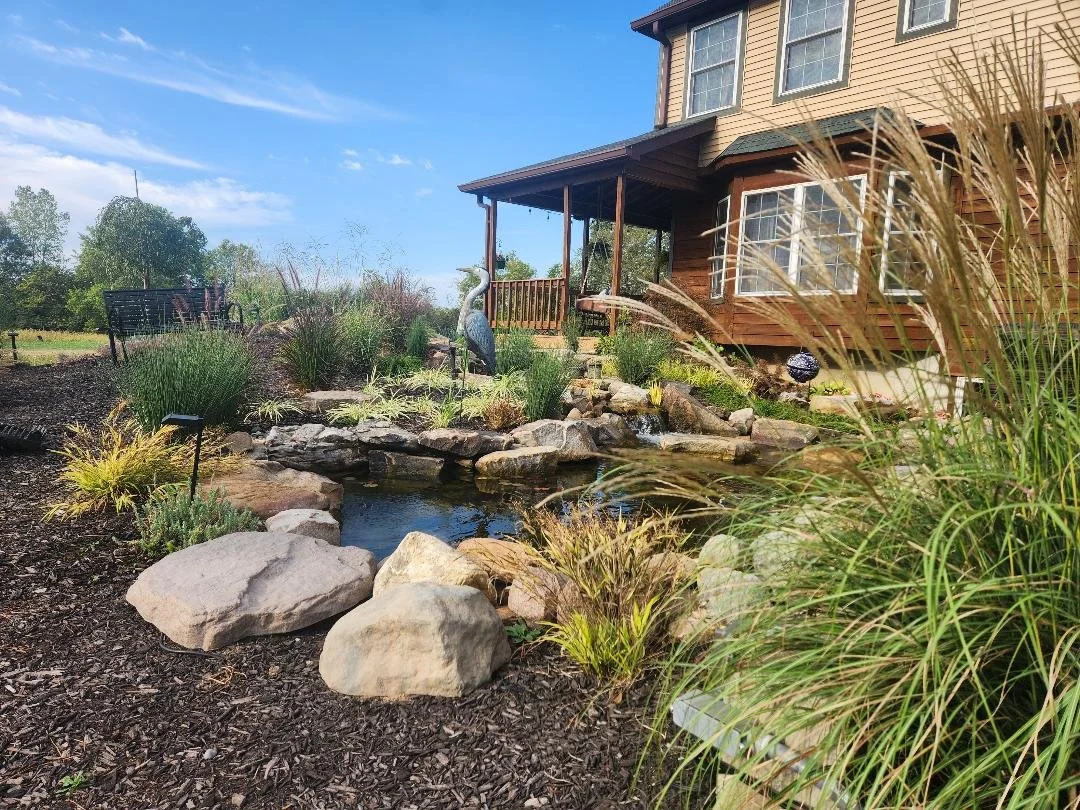
It is an absolutely beautiful day dawning here on the patio. As I enjoy my cup of coffee, I see all the life just exploding around me, from the sunflowers to the squash to the gladiolas to the grasses planted as a border. As the caffeine starts to hit, I think back to an experience I had this last weekend helping with an Eagle Scout project.
In this seasonal life, with more of an eye toward contemplation and observation, my role as an adult advisor has changed a little bit. Another adult and I took over the parts that needed some knowledge and skill in carpentry, but beyond that, I settled into the role a Scout's parent can play: advisor, counselor, instigator, while the young man led the project himself.
After many years of being both the leader and the one leading the work, I can see things differently than a 17 year old can.
I watched him struggle with wanting to do the work himself while also having to lead it. At one point, he was immersed in attaching boards while at least four other Scouts stood there watching. There was work sitting right in front of them: boards to carry from the trailer, boards to hold steady for the adult doing the cutting, boards to hold in place for attaching to the frame. He was so locked into doing something he was good at that he missed a trailer full of people waiting to help him. Other times, the work ran the other way, and people just had to sit and wait for pieces they couldn't start until he finished his own.
The thing I saw, and the thing I have seen repeated throughout my school and work career, is the ability to stand back and let someone do the job you asked them to do.
For some of us, that is a skill we never learn. We keep micromanaging, sticking our fingers in, disrupting, causing problems. We've all seen it in our work or school careers: the leader who asserts "that's not the way I want it done," or the passive-aggressive "obviously my instructions were not understandable for you." Others swing so far the other way they check out completely, like Lieutenant Dike leaving the front to "make a call" while the rest of Easy Company held the line in Belgium in 1944.
Stepping back has a cost, and it shows up right away. Watching him fumble with a task he could have delegated, watching those four Scouts stand idle, was slower than if I had just handed out the assignments myself. An adult could have had those boards flying in half the time. But that is not what the day was for. The cost you pay in the moment, the slower pace, the awkward pauses, the tasks that sit half finished a beat too long, is what buys a 17 year old the chance to actually learn to lead instead of just watching someone else do it.
Having trust in the team you assemble, trust that they will accomplish the goal in whatever way they find necessary, is a valuable talent. Fortunately, we still have organizations like Scouts that try to instill the basics of that skill in young people.
Next time you catch yourself reaching for the boards, ask yourself what would happen if you just sat back and watched. Stepped back, and let your team work their magic.
The Second Call
That spreadsheet is where I keep a record of every company I've talked to, applied to, or been approached by over the years. It's not fancy. A row for the company, a column for the date, a column for what happened. So when this recruiter's email came in, I did what I always do. I checked the history.
Hey, I woke up this morning, coffee in hand, and the thing sitting on the patio with me wasn't the weather or the crops. It was an email from a recruiter.
A good one, actually. A position I'm qualified for, one I'd probably do well in. The kind of opportunity that ought to get a person's attention, and it did, for about the length of time it took me to open my job search spreadsheet.
That spreadsheet is where I keep a record of every company I've talked to, applied to, or been approached by over the years. It's not fancy. A row for the company, a column for the date, a column for what happened. So when this recruiter's email came in, I did what I always do. I checked the history.
Turns out this same company had reached out about this same position a year earlier. The person they hired then has apparently moved on, which is how I ended up back in their inbox. But the history told me something more important than the job description did. A year ago, I applied, I interviewed, and I heard nothing. No "thanks for your time." No "we've gone with someone else." Nothing. The company just went quiet, and I was the one left checking my phone for a courtesy that never came.
So when the recruiter and I talked, I gave her the truth as plainly as I could. If a company doesn't have the respect to tell me no, I don't have the interest to talk to them about yes. Not this year.
Here's the connection I keep coming back to. This isn't rare, and I don't have to guess at that, because my spreadsheet tells me so. Thirty percent of the applications in my job search database ended in a ghost. Nearly a third, gone silent. And that list isn't full of strangers. It includes a local cooperative where I hold membership. A national check-off program I contribute to every single year. Companies I promoted, by name, in past jobs of my own. The ghosting isn't isolated to companies I've never heard of or never supported. It's industry-wide, and it reaches all the way into organizations I've helped fund and represent.
I hear versions of this story constantly in agriculture, from young people just starting to look for work, from experienced hands testing the market, from folks who took the leap to apply somewhere new. The application goes in, the interview happens, and then silence. No closure, no courtesy, just a slow fade until the applicant figures out on their own that the answer was no.
The lesson, for me, is that a spreadsheet isn't just record-keeping. It's memory with a purpose. It kept me from walking back into a situation that had already told me who they were, and it did that without a single second of guesswork. Companies that ghost candidates aren't just losing a moment of goodwill. They're writing themselves into somebody's permanent file, and in an industry as connected as ours, that file gets read more than once.
So here's the call to action, for anyone doing the hiring, whether it's a co-op, a family operation, or a Fortune 500 with a recruiter on staff. Close the loop. It costs you one email and about ninety seconds. It costs the applicant nothing, but it costs you a lot more than you think when you skip it.
Agriculture runs on relationships that outlast any single transaction. We ought to treat our people, even the ones we don't hire, the same way we'd want to be treated if the roles were reversed. We can be better than this. I know we can, because most days, we are.

When Spidey Senses and Cyber Security Save the Day
My senses went into overdrive when the technician asked for the login information to verify fraudulent activity. Fortunately, my wife does not have that since I am the one that does the banking on this account.
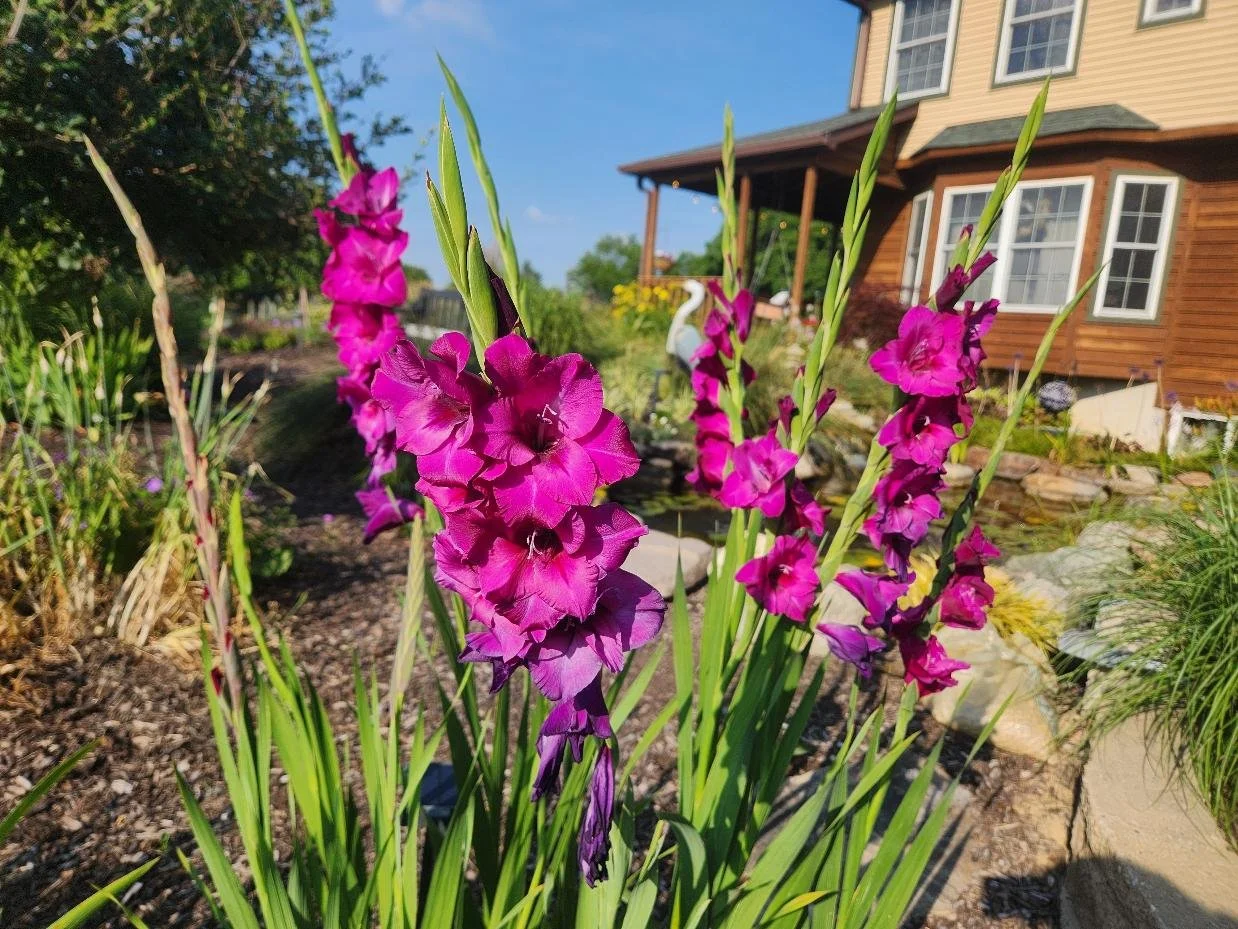
My son and I are bachelors this week and I awoke with the sun streaming onto our half-occupied bed this morning. As I enjoyed my coffee on the patio, the explosion of flowers surrounding me was absolutely amazing. Seeing the work my wife put in pay off with the natural paintbrush put a smile on my face. As I sat here in the safety and comfort of our backyard landscaping, I thought back to how a simple phone call yesterday could have upset that tranquility.
Yesterday I was in the tractor side dressing corn with nitrogen when I received a call from my daughter — it wasn't my daughter, it was my wife calling since she was on the phone with the fraud department of one of the banks we use. I was not surprised because I received a text message from them earlier in the day asking if a transaction was legitimate; it wasn't. Admittedly, I was not completely engaged with the call since I was in the middle of field work.
Since my wife rarely uses the bank on the phone, I stopped the tractor and logged into the app to see recent transactions and did not see anything out of the ordinary. I shared the two recent transactions since that is what they typically ask for as clarification of legitimate activity. We've been down this road before.
As I listened on the old-fashioned three-way call, my spidey senses were starting to tingle.
My senses went into overdrive when the technician asked for the login information to verify fraudulent activity. Fortunately, my wife does not have that since I am the one that does the banking on this account.
I asked why we needed to share it and even said that the bank's IT department could reset the password and send a link for us to reset the credentials. The technician kept repeating the same script, not listening to our questions. That just amped up my spidey senses. I finally yelled for him to be quiet. I used colorful farmer, working-livestock-in-the-barnyard language, though.
Finally my wife hung up, and it hit me how close she came to being a victim of a phishing attack aimed at our account.
We are both educated professionals, and we almost fell for it anyway. But asking why they needed that login, offering up the bank's own password reset process instead — that wasn't me thinking fast on my feet. That was Cyber Security training from Kent Corporation talking. Years of sitting through those sessions, and it turns out the lesson that stuck was the simplest one: never share your credentials, no matter who's asking or how official they sound.
I'm sitting here with my coffee on the patio enjoying the beauty and tranquility, realizing that this morning could have been chaotic. One shared password is all it would have taken.
So ask yourself, and ask your family: who handles the logins at your house? And if someone calls asking for one, hang up and call the bank yourself.

What Have We Done
So maybe my tribute isn't a guilt I carry, replaying every Fourth of July and every anniversary of a beach landing I never saw. Maybe the lament itself isn't the wound reopening. It's a bell that rings, a bugle call, the same kind of shout a captain once gave to take that hill, except the hill being called out to me isn't a beach or a field in Georgia.
I awoke to a cloudy day with the promise of much needed rain, at least spotty showers. I am waiting to make plans for the day while enjoying my cup of coffee on the patio. As I look at the July flowers surrounding the patio, I am pondering the words I wrote yesterday, after celebrating our republic's 250th birthday.
It was the summer of 1998. My wife and I had just moved to Perry, Iowa, to start our lives after graduate school, and I convinced her to go see a movie about World War II. I remember exactly where we sat, in the orchestra pit along the aisle, in that old theater in downtown Perry. I had no idea what I was in for. I just knew the movie was about World War II. Then it started.
What followed is now famous, that brutal, unflinching scene of butchery on Omaha Beach, directed so well by Steven Spielberg. Twenty-four minutes of horror, of gore, of the chaos that landed on that beach on June 6, 1944, and twenty-four minutes of an audience in a small Iowa theater sitting mesmerized, unable to look away and unable to keep watching either.
I was 27 years old, a new Ph.D., standing at what should have been the start of the prime of my life, and I wept like a child in that seat. Afterward, walking to the car, I turned to my wife and asked her, "What have we done? What have we sacrificed? What have we done to justify the sacrifices of that day back in 1944?"
Almost 28 years later, the day after our nation's 250th birthday, I found myself back in the same question. I had spent the week watching documentaries about the founding fathers, watching clips of heroism from the Revolutionary War, the Civil War, the first and second World Wars, and there it was again, waiting for me, the same question I asked walking down a quiet street in Iowa as a young man. What has my generation done to pay for the sacrifices of others? Whether it's the first to fall as conscripts in the Revolutionary War, or the ones who never got their names remembered at all.
That question isn't abstract for me. I can put names to some of it.
Luke May, David Bruch, Abraham Depew, Samuel Cole, and Alexander Sloan, five of my ancestors, served in the Revolutionary War. None of them sat in a room in Philadelphia arguing philosophy. None of them wrote a clause into anything. Their voice in "the consent of the governed" was a musket and a long march, not a vote or a seat at the table.
But one of those five, Luke May, is where the line gets harder to look away from. His son, Calvin May, fought in the War of 1812, a war most people forget was fought at all. And Calvin's grandson, James W. May, my great-great-grandfather, was wounded in the Civil War, lying somewhere in Georgia, a long way from home, paying for a piece of a country he'd probably never see whole.
Three generations of the same family, Revolutionary War to 1812 to a battlefield in Georgia. Grandfather, son, grandson, each one handed the same hill in a different century. Something interrupted their lives every time. War took a piece of their twenties, or their health, or their name from history altogether. They didn't get to just live. They got handed a hill and told to take it, and mostly they did, without much say in the matter and without any promise of being remembered for it.
Here's the honest confession sitting underneath all of this. Some part of me, sitting in my comfortable home, looking out at a farm and a family and a life I've built without much interruption at all, has felt a kind of disappointment in myself. I never had my own Omaha Beach. I never laid wounded in a field in Georgia. My sacrifice has been, by comparison, minor. Unremarkable. A life lived rather than a life given.
But I've come to think that wanting the dramatic sacrifice is its own kind of arrogance. It mistakes the point of what they did. Luke May and Calvin May and James W. May bleeding in a field in Georgia weren't fighting so that their descendants would one day earn an equally dramatic story. They were fighting so their descendants wouldn't have to. If I never have to lie wounded in a field, that isn't a failure to live up to them. That's the mission succeeding. A quiet life isn't the absence of honoring their sacrifice. It might be the fulfillment of it.
So maybe my tribute isn't a guilt I carry, replaying every Fourth of July and every anniversary of a beach landing I never saw. Maybe the lament itself isn't the wound reopening. It's a bell that rings, a bugle call, the same kind of shout a captain once gave to take that hill, except the hill being called out to me isn't a beach or a field in Georgia.
My hill is to remember. To celebrate. To learn more. To share.
That's what the genealogy work has become for me, tracing Tobias Hagenbucher's path from Sulzfeld, Baden to a Chicago dairy route, following William and Sophie Smith out of Württemberg, and piecing together how Luke May's great-grandson ended up wounded in Georgia three generations and three wars later. It's not for an audience. Most of what I write reaches a small blog in 2026 that not many people will ever read. But they didn't fight for an audience either. They didn't know they'd be remembered. Doing the quiet, mostly unseen work of making sure they aren't forgotten is its own kind of standing at the top of a hill nobody else is watching you take.
The lament still comes around. It'll come around again next Fourth of July, and the one after that. But I don't think it comes to punish me anymore. I think it comes to walk me around my own life once a year and make sure I'm still paying attention to what it cost to get here. Full circle, not a spiral. A reminder of them, and an honest look at what I've done with what they gave me.
Maybe that's the whole answer. Not a beach. Not a field in Georgia. Just a life lived on purpose, remembered out loud, and passed on.
Granite Remembers What We Tell It To
I still don't understand it. Five people who made the journey from Germany to Chicago, who built a life here, who raised children and ran a milk business, and who rest together with nothing to mark that they were each individually here.
I was tedding and raking hay today, alone on the open station tractor in the heat of the afternoon, and my mind kept drifting back to a headstone I'd shared a couple weeks ago.
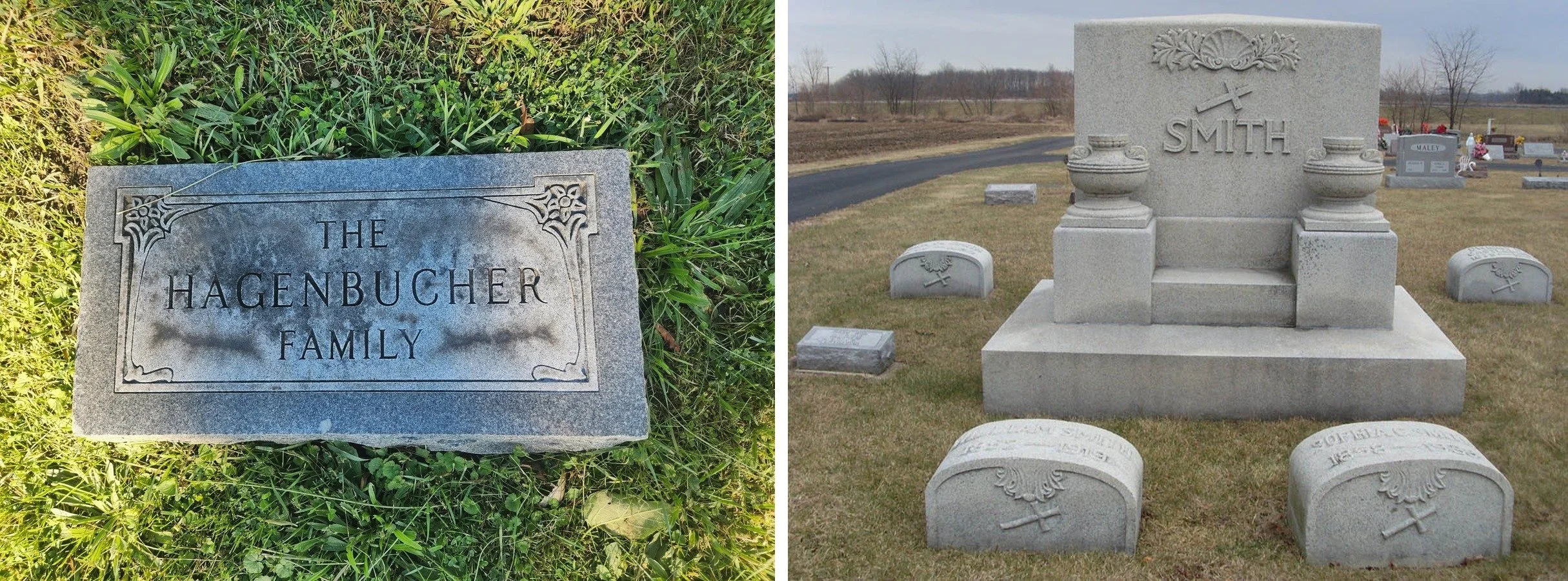
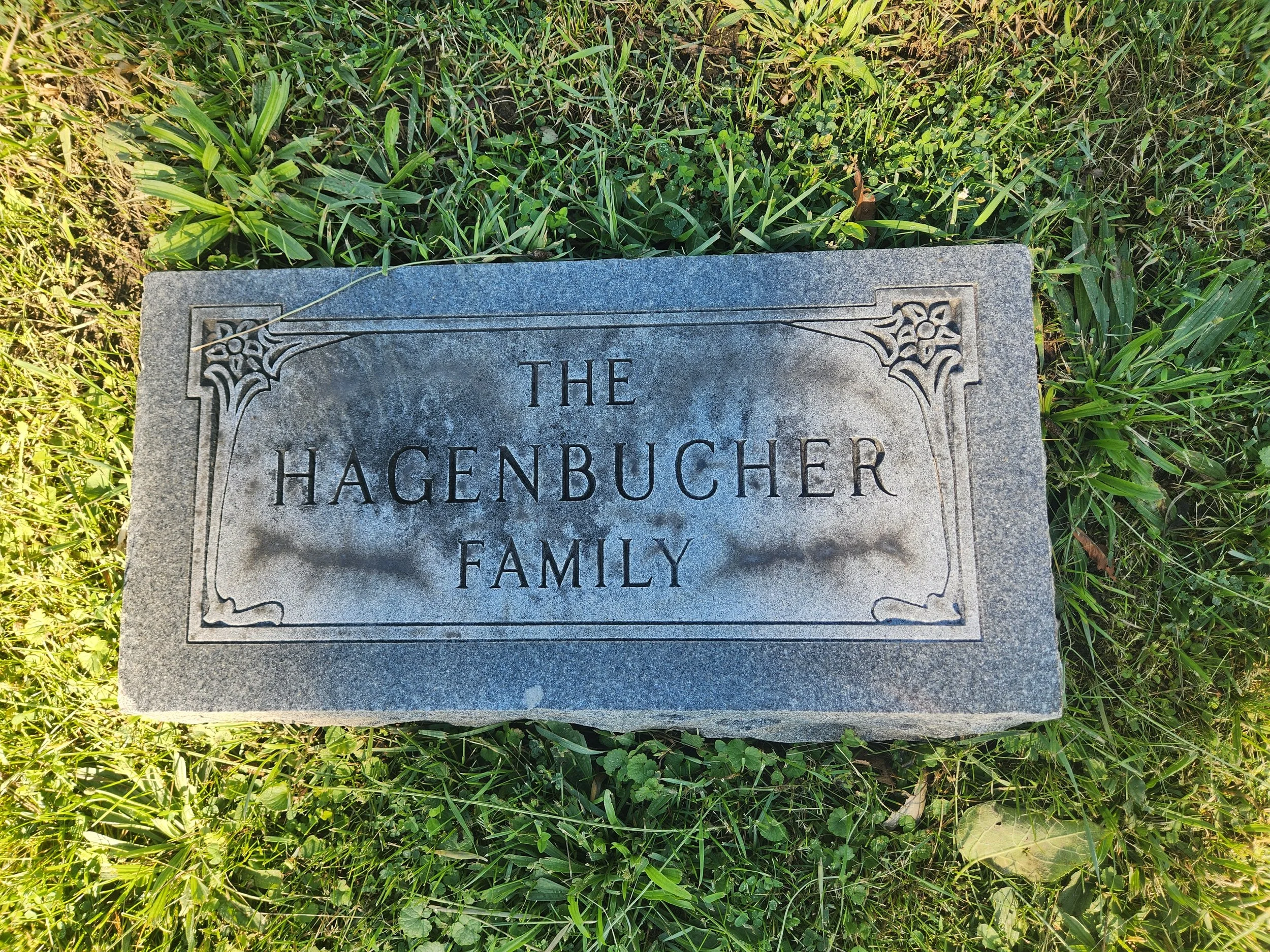
That post was about visiting the gravesite of my great-great grandfather and grandmother Hagenbucher. Afterward, rereading the information I already had, I realized there was more to the story than I'd first understood. My grandfather's brother and sister-in-law are buried there too. Five people, not three, all resting beneath a single flat granite stone. The stone carries no names and no dates. Just three words: The Hagenbucher Family.
I still don't understand it. Five people who made the journey from Germany to Chicago, who built a life here, who raised children and ran a milk business, and who rest together with nothing to mark that they were each individually here.
A few days later, I found myself looking at a photo of the Smith family monument, my other great-great grandparents, William and Sophie. Their stone is a behemoth by comparison, a full plot with a large shared marker bearing the Smith name, flanked by individual footstones for each family member. William. Sophie. Names and dates carved into stone for every person who rests there.
Here's what stopped me. All of them emigrated from Germany. Both ran businesses. Both raised children. Similar circumstances, similar era, likely similar means. And yet one family chose to carve every individual name into granite, and the other chose three words for five people.
I don't have an answer for why. Maybe it was cost. Maybe it was custom, brought over from a different region of Germany or a different church tradition. Maybe it was simply what felt right to whoever made the arrangements at the time, a decision made in grief that nobody thought to explain to the generations that followed. I've learned enough in genealogical research to know that the absence of an explanation is itself a kind of information. Someone chose "The Hagenbucher Family" over five names. That choice meant something to them, even if it no longer means anything to us.
What I keep coming back to is this: the stone doesn't just mark where someone is buried. It's the last piece of testimony a family leaves about how they saw themselves, individually and together. William and Sophie's descendants can walk up to that plot today and know exactly who is there and when they lived. The Hagenbucher descendants, myself included, have to go looking for the rest of the story.
That's true of more than headstones. It's true of the records we keep, the stories we tell at the dinner table, the things we assume the next generation will just know. We don't always realize what we're leaving out until someone downstream has to go dig for it.
So here's my call to action, plain and simple. If you've got family history sitting in a box, a Bible, a shoebox of photos, an old letter, don't assume it'll explain itself to whoever finds it next. Write the names down. Write down why it mattered. Somebody, three generations from now, riding a tractor in the heat of the day, just might go looking for it.

Team Work Makes Dream Work
Sunday morning the Swine Carcass Show was underway, and I'd put together an economic analysis using the ultrasound data for the 4-H kids. I walked in and dropped the paperwork off with the club leaders. The response made me uneasy. I left. Walked a short distance. Turned around.
The Allen County Fair wrapped up yesterday. This morning I woke up in my own bed for the first time in a week, sprawled out the way you can only do when you've been sleeping in an RV, and let the quiet settle in over coffee in the backyard. Somewhere between the first cup and the second, I started tallying the catch-up work waiting for me. And somewhere in there, I started thinking about what I'd just watched happen all week at the fairgrounds.
Sunday morning the Swine Carcass Show was underway, and I'd put together an economic analysis using the ultrasound data for the 4-H kids. I walked in and dropped the paperwork off with the club leaders. The response made me uneasy. I left. Walked a short distance. Turned around.
"Do you still need the carcass results printed?"
Deep down I already knew the answer. What followed in the next 45 minutes was a relay race nobody planned. I borrowed a computer from Extension staff. A 4-H Board member volunteered to drive the file off-site to get it printed. A second Board member made copies. The results hit the table with 15 minutes to spare.
Team work made dream work.
Later that afternoon, after the last PA announcement, the last awards ceremony, and with teardown in full swing, I started breaking down our campsite. Two fathers I barely needed to ask materialized and helped my son and me load a week's worth of cooking supplies, coolers, generators, and fuel jugs into the pickup. I had mentally planned two trips. We did it in one.
Team work made dream work.
I watched this happen dozens of times over the course of the week. You can credit the motto. You can invoke the Midwest Work Ethic or some higher calling. But I don't think any of that explains it. What I saw was simpler: people noticed something needed doing, and they did it.
No announcement. No assignment. No asking for credit.
Where in your life is something waiting on an extra set of hands? Step in. The dream doesn't work itself.
Ringside Coaching
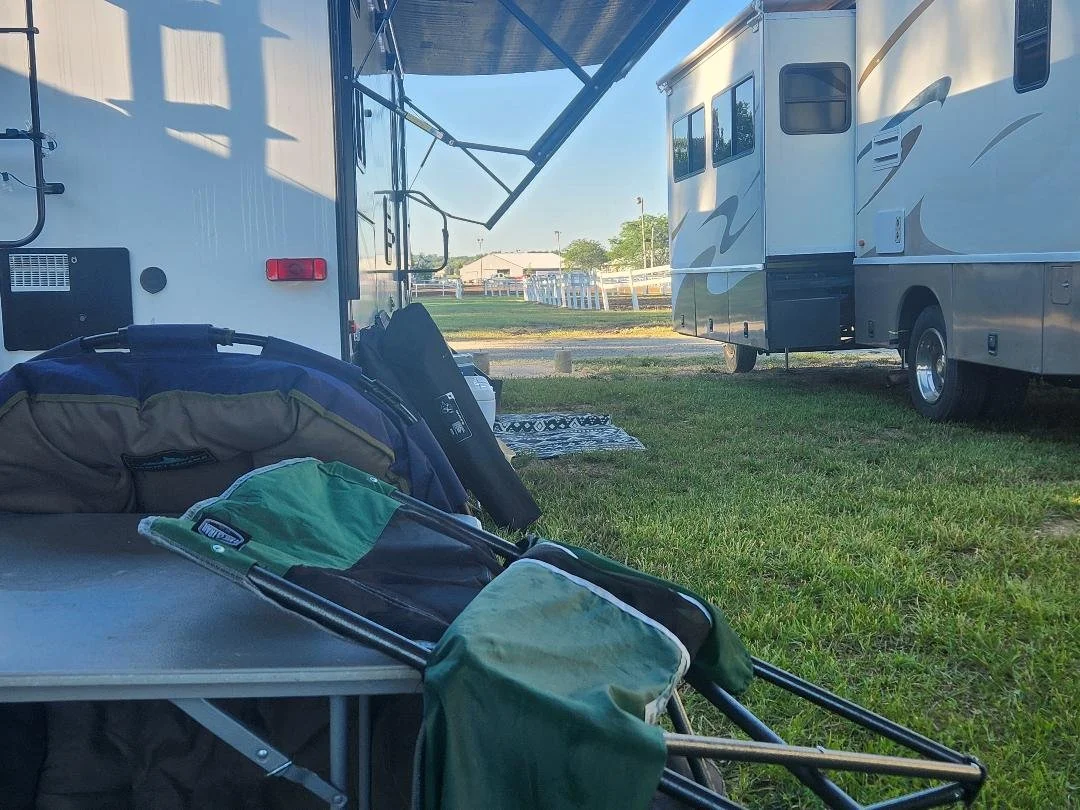
I woke to a wet Allen County Fairgrounds. Rain came overnight, though nothing like the forecast predicted. The moisture coupled with cool air makes it almost chilly as I step out of our camper and wrap both hands around my coffee.
As I sip, I'm thinking about something controversial I observed at one of our shows this week.
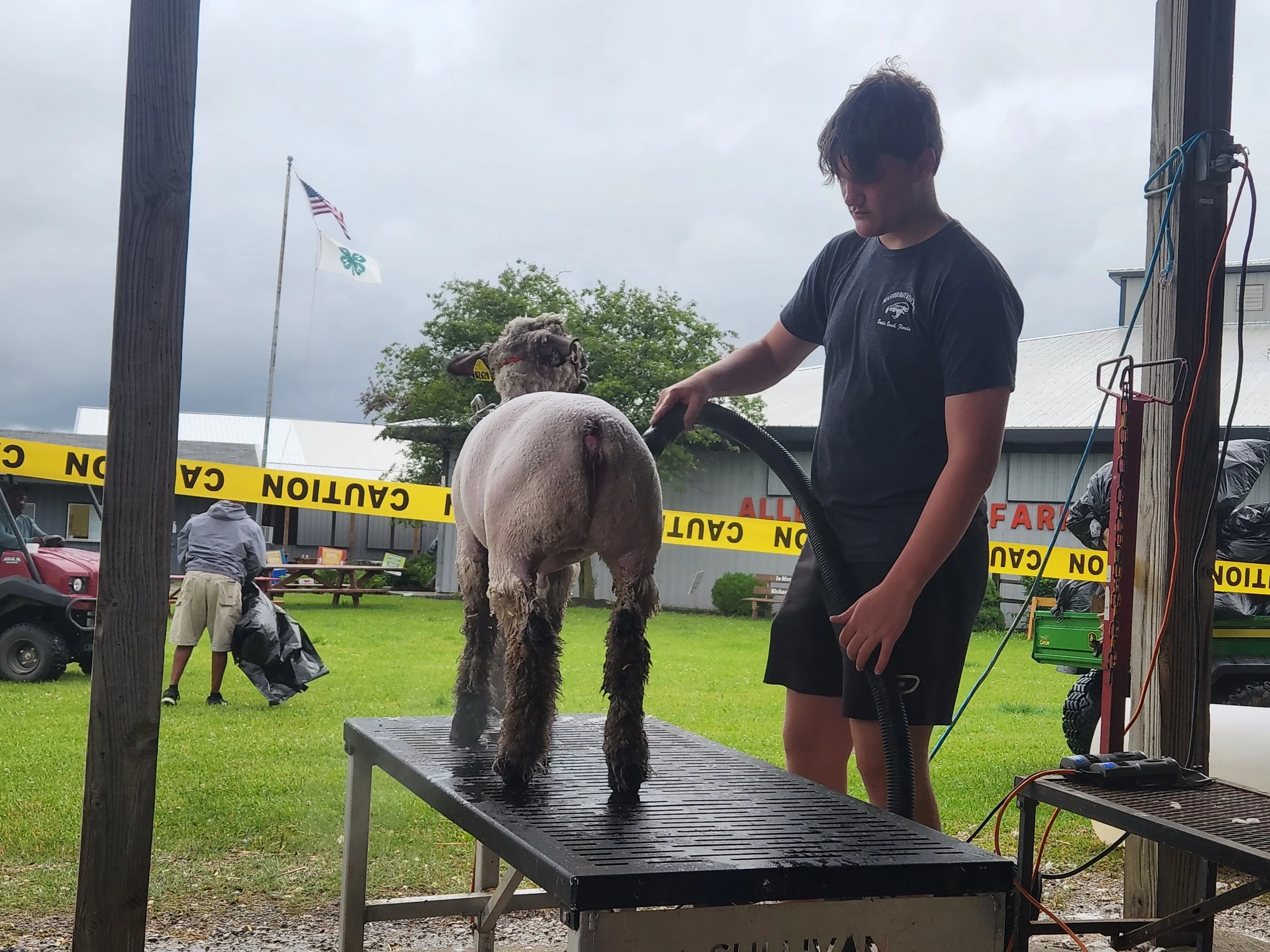
If you attend just about any county fair or junior livestock show throughout the USA, you see it: parents and others surrounding the show ring, giving instructions to a showman still in the ring. Sometimes the instruction is a subtle hand gesture or a nod of the head. In other cases, it's extreme arm waves that would make a third-base coach jealous.
The youth show world is split. Many dislike it. Many others don't see an issue. Some justify it with the baseball analogy — a base coach giving a sign to a batter. Those in disagreement counter that the work and training should have taken place at home before entering the ring. Personally, I'm not a fan, even though I've done it myself a time or two.
As I thought it through, I tried to apply the same logic to the business world.
How would a sales call be perceived if a sales manager stood in the back of the room giving signals to the rep during the presentation? What about a speaker at a business conference with a team stationed around the arena passing silent cues? Someone could argue that a teleprompter is ringside coaching, I suppose. But we don't let a teleprompter follow a salesperson into a prospect's office.
There's a question underneath all of this worth sitting with: are we so invested in the success of our children that we can't let them do their thing after we've trained them?
The ring is where the work shows up. Or it doesn't. Either way, that moment belongs to the kid.
Good Ideas Deserve Better
Unfortunately, over those same decades I've also heard: "We've tried sharing ideas, even volunteering and getting donations, only to hear words that give the 'we don't need your help' impression."
It is an absolutely beautiful June morning at the Allen County Fair. The sun is shining bright and I can hear the morning buzz in the barns above the constant drone of camper generators. As I sit here alone in our group campsite, I am thinking back to conversations last night that are repeats of conversations I've heard over the past 20 years as a 4-H parent and fairgoer. Ironically, my thoughts return to a Patio Pondering I wrote 18 months ago sparked by a Ted Lasso episode.
Last night, like so many nights over the past two decades, I heard several good ideas ranging from new committees to take over a neglected part of the fair to unique perspectives on leadership and community involvement.
Unfortunately, over those same decades I've also heard: "We've tried sharing ideas, even volunteering and getting donations, only to hear words that give the 'we don't need your help' impression."
Those deflections share in common the idea that only worthy ideas come from the inside. You can substitute Executive Team, Troop Committee, CEO's advisors — the deflection sounds the same regardless of the organization.
Rather than deflecting we should hear "tell me more," or "get that on paper for us," or "I'd love to talk about that but don't have time right now, let's connect." Maybe, just maybe those words from my previous essay about Ted Lasso's dart game — "Be curious, not judgmental" — apply well beyond the coach's box or the sales arena.
To the individuals: Don't give up on your ideas. Find that one board member who will be curious. Get a plan to make the "yes" easy.
To the organizations: You see decades-long leadership tenures as a strength. Outsiders see wagons circled around possessiveness and close-mindedness.
7,000 Exhibits
I often hear adults say, "Kids these days…" followed by some complaint about eroded skills or morals. But should we be surprised when enrollment in the activities that build those skills has fallen dramatically?
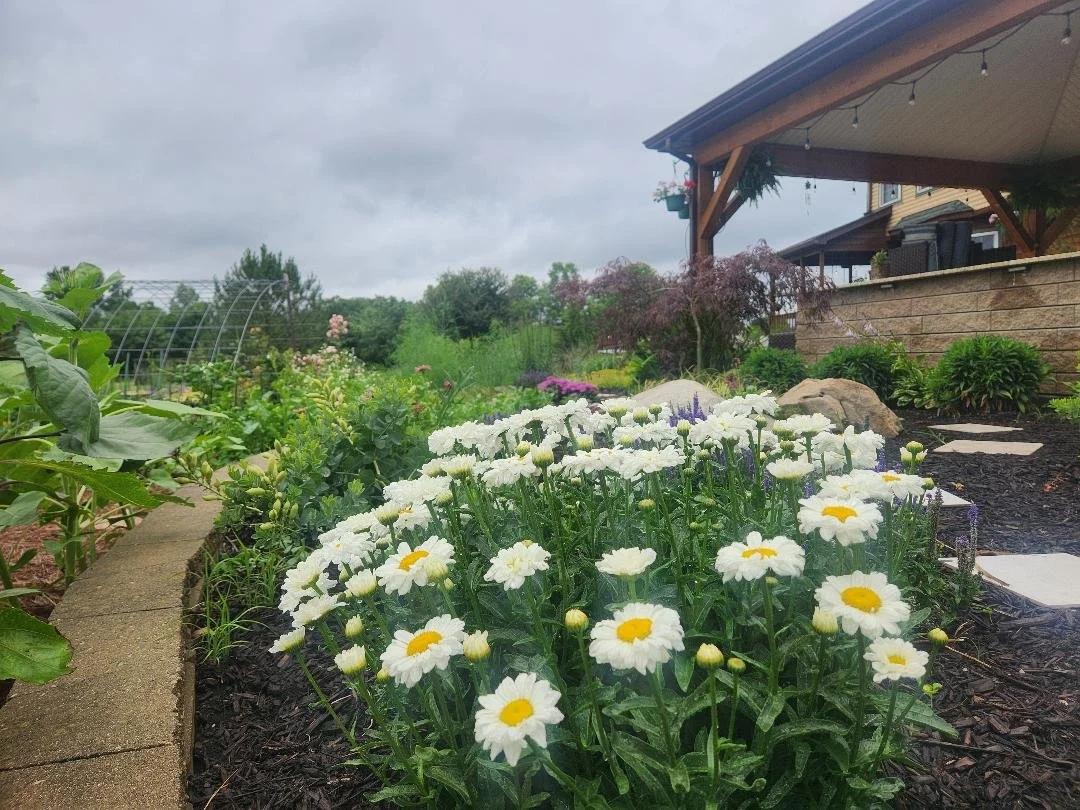
It is a cloudy, wet morning here in northeast Indiana. The rain forecasts were mostly correct — we received about an inch overnight. As I walked through the landscaping this morning with my coffee, you could see the plants bursting from the rain. The flowers seemed more vibrant. While sipping my coffee and enjoying the colors, I went through the list of things we need to finish today in preparation for this year's county fair, and I found myself thinking about the challenges 4-H and other organizations face.
Our county 4-H started a Flashback Friday where they post newspaper clippings from the past about 4-H or the Allen County 4-H Fair on social media. A few weeks ago the flashback was to 1967 with the headline: 7,000 Exhibits Ready For Fair Opening Today.
That headline hit me — hit me hard — on Saturday when I was helping enter my son's projects for judging, because the tables and racks in the building were bare, spread out to give the impression of being full.
My wife and I talked about the drop in enrollment in 4-H and Boy Scouts afterward. She said more people are involved in sports and travel teams. That got me thinking about the carrot at the end of the stick.
The carrot in sports, for many, is a college scholarship and fame.
The carrot in 4-H and Boy Scouts is preparing you for life and making you a better citizen.
Back when that headline in the Fort Wayne Journal Gazette celebrated 7,000 entries, the carrot of becoming a better person through practical lessons resonated. Learning to Make the Best Better — through baking, photography, sewing, livestock, and dozens of other projects — resonated with youth because it would help them function in the world. The same was true in Boy Scouts.
Both sports and 4-H teach teamwork, goal-setting, and how to handle wins and losses. But after that, the paths diverge. Sports replaces those shared lessons with the promise of victory and the faint shimmer of fame. 4-H and Boy Scouts replace them with something quieter — the mundane, durable skills that let a person actually show up in life.
I often hear adults say, "Kids these days…" followed by some complaint about eroded skills or morals. But should we be surprised when enrollment in the activities that build those skills has fallen dramatically?
My children are third-generation 10-year 4-H'ers and second-generation Eagle Scouts. I hope my grandchildren make it four generations. I do hope the lessons I learned, and that my children learned, find their way into the next generation — not through programs or enrollment numbers, but through the quiet example of people who still believe that making the best better is worth the work.
Valedictorian and Mouthpiece
Every graduation season, somewhere, a student gets pulled out of a ceremony for a silent protest, a flag, a pin, a sash, while another stage somewhere else hands a microphone to a speech that goes after a sitting governor by name.
It is a beautiful day here in northeast Indiana, quickly approaching the time of summer when you can watch the corn grow. I brewed an extra strong pot of coffee to kickstart my Friday, and the caffeine is kicking in as I walk through our backyard flower wonderland. As I walk, I cannot shake the words I heard from a valedictorian's speech.
Politics have no place in a high school commencement speech, unless those politics happen to agree with the people running the show.
I've sat through a lot of graduations over the years, and most commencement speeches follow the same well-worn formula. Every so often, though, one steps outside the lines. I recently watched the ceremony from my own high school alma mater, and the valedictorian spent a good portion of his time at the microphone going after the governor of Indiana and the Republican party by name, laying the state of public education at their feet.
I'll give him this much: I agreed with a fair amount of what he said, and I admire a young man willing to stand up with a conviction and say it out loud. His charge to his classmates, to get off the sidelines, get involved, and go make something change, was exactly the kind of call this laissez-faire generation needs to hear. That part I'll defend without hesitation.
But here's what I can't get past. At my niece's graduation last year, a different school, same state, a student was escorted out of the building for the crime of carrying a Palestinian flag. No words, no microphone, no audience held captive, just a flag. And hers isn't an isolated case. Every graduation season, somewhere, a student gets pulled out of a ceremony for a silent protest, a flag, a pin, a sash, while another stage somewhere else hands a microphone to a speech that goes after a sitting governor by name.
This was never really about politics having no place at graduation. It was the administration condoning politics that protected their own domain. That's not simple hypocrisy, hypocrisy at least implies they didn't notice the contradiction. This was amateurish political grandstanding, with a valedictorian handed the mouthpiece, even if every word out of his mouth was his own conviction and his own thought.
A flag never said a word. The microphone did. The difference wasn't whose voice was louder. It was whose voice the people in charge needed.

We Were Sold the Bearded Woman but Got the Girl Next Door
The models changed. The track shifted south, some of it as late as six hours before the event. That's meteorology — and I understand that. The storms were real, the damage was real, and for those in the path the warnings were warranted.
Today dawned with another sunny promise of a beautiful day in northeast Indiana. Yesterday we were under the threat of dangerous storms but today looks to be a pleasant June day. As my coffee was brewing I looked across the backyard and saw all the beautiful flowers reaching towards the sun and felt it was going to be a good day. I headed to my office with a plan for today's reflection but that topic was shelved after the response to last night's social media post pulled me in a different direction.
Yesterday was a stormy day through the Midwest, starting with storms in Iowa that only strengthened as they moved into Illinois and southern Indiana. My weather app kept pushing warnings of thunderstorms and tornadoes, and the radar looked menacing. But for us we only received 35 hundredths of an inch of rain and no wind.
I made a short social media post last night about the fact that we only received 35 hundredths when only 48 hours before, forecasters were warning of upwards of four inches of rainfall and dangerous, life-threatening winds. The National Weather Service even had us under a flood warning. I posted about how those warnings had some of my neighbors in a panic. I had neighbors scrambling to find storm shelters in preparation for this massive storm — honestly fearful for their lives and belongings because of the assurances that a catastrophic storm was coming. A storm that missed us.
Now I need to be careful here, because the storm did end up being massive — dangerous tornadoes, significant winds, serious rainfall. But the models changed, the track moved south, and our area received very little.
There is a line between Walter Cronkite and P.T. Barnum. Cronkite believed in the discipline of the fact — here is what we know, here is what we don't, here is the margin for error. Barnum believed in the crowd. Give them the bearded woman. Give them something to gasp at.
Modern weather coverage — and particularly social media weather coverage — has wandered a long way from Cronkite's desk.
A friend pushed back on my post last night. Said I could simply choose not to read the forecasts if they bothered me, that they just wanted to be prepared. That's a fair point and I respect it. Preparedness is a virtue, especially in agriculture where the sky is always a variable. But preparation built on amplified fear is a shaky foundation. You can tell someone a significant storm is possible, that models show a concerning track, that they should watch conditions and have a plan — and do all of that without manufacturing panic. The facts, stated plainly, are usually sufficient.
The models changed. The track shifted south, some of it as late as six hours before the event. That's meteorology — and I understand that. The storms were real, the damage was real, and for those in the path the warnings were warranted.
My frustration isn't with the science. It's with the certainty. Days of amplified, unqualified predictions with no disclaimer, no margin of error, no acknowledgment that the track could shift. I pay a not insignificant amount each year for a professional weather service. I expected someone to tell me here's what we know, here's what we don't, here's what to watch for. Instead I got a carnival barker selling certainty with "trust the app."
What my neighbors needed was a clinician with a decent bedside manner. Just the facts. Joe Friday had it right all along.
Stupid Enough to Open My Mouth
There was no feeling of cooperation, no pulling the same wagon. There was fear of someone watching over your shoulder and criticizing, quietly threatening employment even though there were no firings or restructures.
Today dawned with a clear sky and strong sun, hiding the potential for severe weather later. I am enjoying the sun and my coffee, thinking about being the one "stupid enough" to say out loud what everyone is thinking but doesn't say.
Recently I've written about the local fire protection funds and local politics. Many people talked about it, but I was the only one to write about it, to raise the hidden voices to the fore. This morning while enjoying the summer flowers shout their beauty with their blossoms, I thought about times in my work career where I said what was unpopular because others didn't want to, or were fearful to speak.
When I think back to those times, it is now obvious that the reason for the fear was the environment built by leadership, an environment where the CEO led with micromanagement and intimidation. I remember my supervisor saying to me, "I think I just lost my job for speaking the truth in an Executive Meeting because it disagreed with the CEO." This trickled down to the detriment of the company. Most adopted an "I'm just doing my job, keeping my head down" mentality.
In retrospect I see with better clarity how damaging this leadership was. It wasn't the lack of employees speaking up that caused the problems — it was the leadership.
There was no feeling of cooperation, no pulling the same wagon. There was fear of someone watching over your shoulder and criticizing, quietly threatening employment even though there were no firings or restructures.
In the workplace, perception becomes reality.
While the management team had no plans for workforce changes, the message from them and the CEO manifested as fear — fear of firings. That perception became reality and cost the company more than they ever knew. All because of the environment cultivated by leadership.
As you work with your teams, how do you react when someone is "stupid enough" to say out loud what others are thinking? Maybe instead of criticism, the response should be an inquisitive one — if they said it, what are others thinking? Especially when it doesn't come from the persistent contrarian.
Waiting for Someone Who May Never Come
What happened?
How do my ancestors who crossed an ocean, built a business, raised a family, became citizens, voted, joined civic organizations, and helped build a city end up remembered by nothing more than a small family marker?
This is a bonus Patio Pondering on a Sunday afternoon. I am actually writing this from the patio after eating lunch while watching the radar and waiting for today’s “popup” rain. Most of this weekend my thoughts have gone back to a side trip I made after working with some of my Chinese clients in Chicago, a side trip I did not plan but had me anxious as I drove across Chicago last Friday morning.
As some of you know I am an advanced novice genealogist, my family tree has almost 7,000 people in it. I am past the “who is your grandmother” stage and into the dead ends in Aixheim, Wurttemberg, why did they leave Sulzfeld, Baden, and was he really a captain in the English Army phase. My searches regularly end in brick walls or revelations of facts I already have in my records. Many of my searches now are punctuated with more “why’s” coming from facts.
Now back to Chicago. You better tighten your seatbelt; this could be a bumpy ride back to the 19th century.
In the 1980s my grandmother corresponded with Forest Home Cemetery, formerly Waldheim, to get lots for burial of several Hagenbucher relatives, including my great-great-grandparents. She shared those letters with her family; I have my own copies. Since I was already in Chicago, I made the trip to Forest Home with nothing more than lot numbers and unknown expectations.
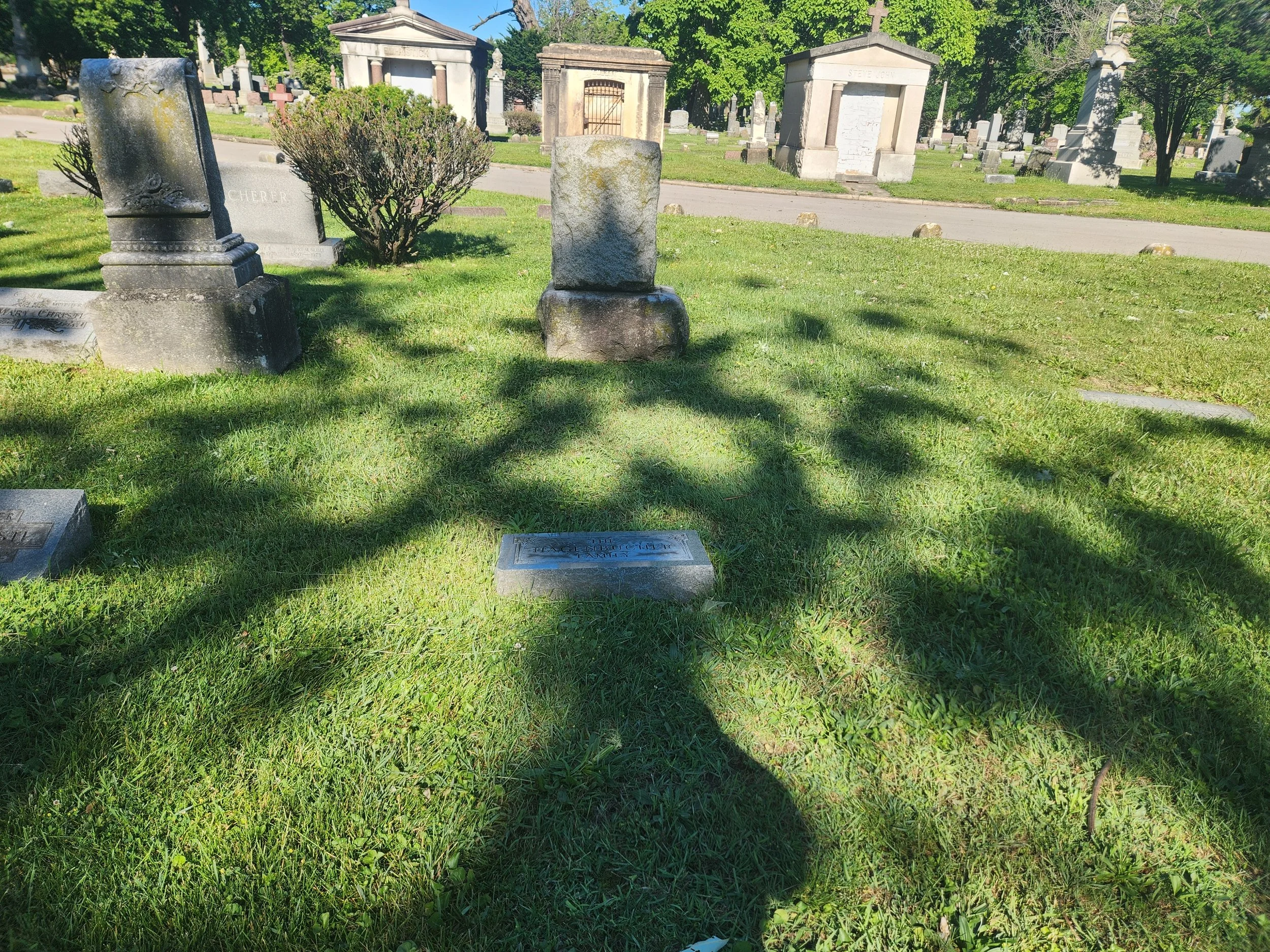
I found the plot in Section N where my great-great-grandparents Hagenbucher and step great-great-grandmother were buried and I was crestfallen. The three plots where my ancestors who braved the trip from Baden to the United States to build a life were marked with only a small marble marker engraved simply with “The Hagenbucher Family.”
Nothing for Tobias.
Nothing for Karolina the elder.
Nothing for Karolina the younger.
The Hagenbuchers are my great-great-grandparents on my paternal side (my grandmother Smith’s grandparents.) They emigrated from Baden, a part of the newly formed German Empire, to the United States in 1882. They were just six of the many that made up the great wave of Germanic people escaping economic and social challenges.
In Baden, Tobias and Karolina the elder knew each other from a young age, they had to since they were first cousins; their fathers were brothers. They were baptized as Lutherans in Sulzfeld Baden, a small village in what is now southwest Germany. After their marriage in 1874 they had four children: Caroline, Rose (my great-grandmother), Louis, and Louise. Two years after the birth of the youngest child they left their small village and traveled to the United States on the ship Price Frederick Wilhelm, arriving in New York on April 30, 1882.
Regardless of the family legend that Tobias attended Heidelberg University with Kaiser Bismarck, the fact remains that he was a gardener and not the eldest son. As one of my German cousins said “Hagenbuchers were poor farmers, there’s no way any of them attended university.” He would inherit nothing and his work as a gardener would not be high paying. This statement gives me insight as to why the young Hagenbucher family left Baden.
After moving to Chicago, Tobias and Karolina the elder opened a Confectionery and Milk Depot at 72 Canalport St. in Chicago. This is where Tobias built the massive forearms my grandmother mentioned, carrying 100 plus pound milk jugs every morning. I know little of this store other than a photo recently shared with me of Karolina and her children gathered on the front steps around 1890.
In my grandmother’s reminiscence she tells that Tobias was a member of the Turn Verein Vorwaerts along with a singing group that performed at the 1892 Chicago World’s Fair. I found online Tobias’ naturalization documents as well as his voter registrations and voting records. This was not just a man existing in his new life in Chicago, he was involved as a contributing member of society.
As with so many families in the not-so-distant past, tragedy struck when Karolina the elder died in November of 1890. I can find no records of her death outside of burial records and an official death announcement listing Ph Young as the funeral home and Waldheim as the interment site. Nothing else.
Charged with running a store and milk depot, meeting milk transports every morning, Tobias sent to Germany for help, Karoline Himmel left Sulzfeld and moved to Chicago. Not only was Karolina Himmel the now-deceased Karolina the elder’s niece, she was also Tobias’s first cousin once removed. Tobias and Karolina Himmel married in just five months after the death of Karolina the elder. My family stories say they tried to have children but all pregnancies ended without living children.
Tobias and Karolina the younger continued the store and milk depot until the early 1900s when they moved to Northwest Indiana and owned and operated an almost 150-acre farm in St. John, Indiana. Karolina the younger died in 1934 and Tobias in 1937 as a patient at the Elgin State Hospital in Elgin, Illinois. Another why for me: How did he get from St. John, Indiana to Elgin, Illinois?
I have searched for more information on these ancestors, I cannot find church records in Chicago, no obituaries for any of them, just an official death record for Karolina the elder from 1890. I am left with two pages of information written by my grandmother along with four letters from Forest Home Cemetery with vital and burial records.
Now back to my side trip in Chicago last week.
I stood a short distance from the family headstone trying to imagine the scenes from so many years ago when each of my three ancestors were interred, trying to imagine the mourners in attendance, the weather, the memories they were sharing with others and trying to imagine the cemetery as a new resting place without the wear and tear of years of weather and unintended neglect. I stood there trying to imagine my twenty-four-year-old grandmother as one of the mourners even though she never mentioned in her writing she attended.
I am also thinking about the forgottenness of these ancestors. Their headstone is not level and there were no signs of any memorials, just a plain gray stone sitting akimbo in the green grass. Nothing to signify the struggles, joys, love, successes and failures of these three people.
The fact that Tobias was a business owner, politically active, and a member of at least two German societies makes the question of why there is no headstone for him and his wives separately stronger.
What happened?
How do my ancestors who crossed an ocean, built a business, raised a family, became citizens, voted, joined civic organizations, and helped build a city end up remembered by nothing more than a small family marker?
I sit here on the patio as the rain falls on this cloudy Sunday lamenting that the lives of my great-great-grandparents are marked only by a simple family headstone. No larger, personalized memorial to the hard life they lived or their legacy. How many stories and legacies get neglected like that headstone in Chicago, sitting there unlevel, waiting for someone who may never come?
Baking Soda in the Flour Jar
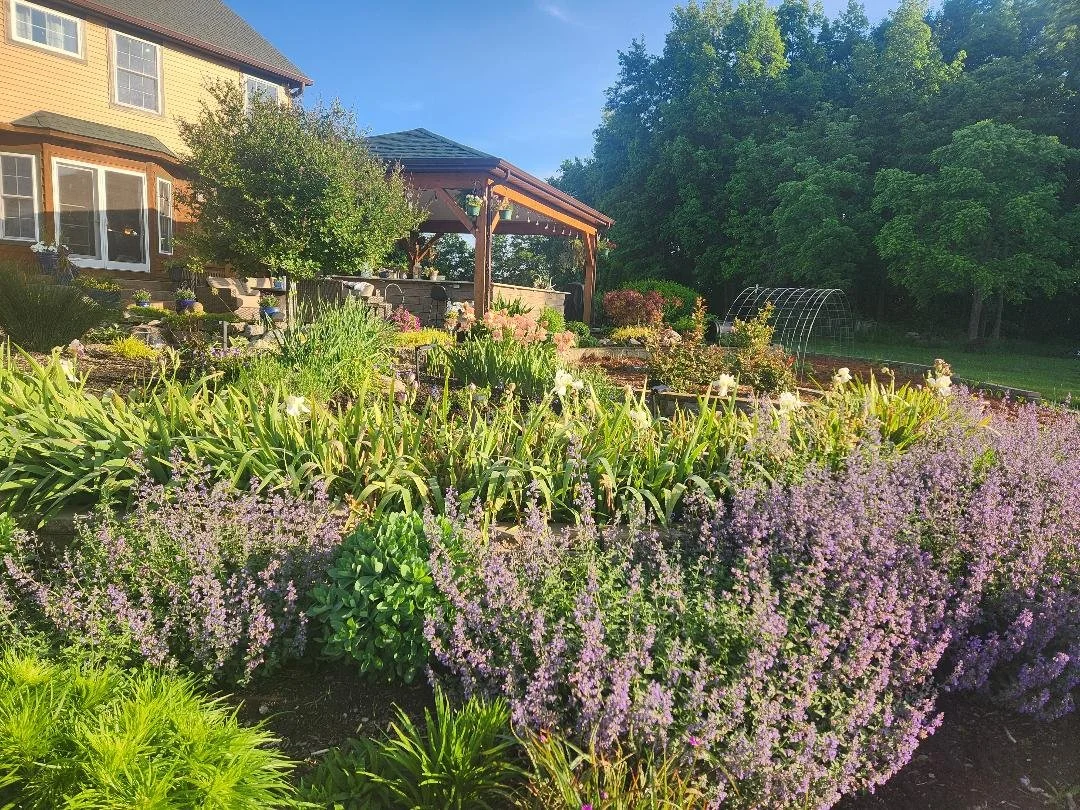
In our specialized world we tend to pigeonhole people, throwing them into canisters like those on grandma's counter filled with baking ingredients. Separated and not to be mixed unless needed.
This Friday morning is dawning with clear skies and the day promises to be a great end of the week. I am enjoying my coffee as I listen to the birds around the patio while my wife and son skitter about in the house preparing for their day. As I sit here with the warm mug in my hand on a chilly morning my thoughts turn to a conversation I had with my wife last night relating to silos and how we pigeonhole people.
Last week I attended a public meeting of the plan commission in a county where we own land and farm. The commission needed input on altering regulations for "small commercial" livestock operations, the ones that fall below the state-regulated CFOs. My experience in the commercial swine industry throughout the Midwest, coupled with being a landowner, taxpayer, and farmer in the county, put me in a unique position.
As I sat there watching and listening I quickly realized the public commenters were not answering the questions asked by the plan commission, and the commission was led by both elected and non-elected officials who had no idea what they were doing. Most of the public complained about smell, threw out that they had lived in their homes for 25 years, and offered no input on the setbacks proposed. They offered nothing the plan commission could use to better their proposal.
I was the last speaker. I had the opportunity to listen and watch the commission blanch at unconstructive comments. I started by sharing my experience as an international swine production consultant and how I have worked with these types of operations throughout the Midwest. I was not just another citizen there to complain.
My suggestions were twofold: around property lines and the potential to use windbreaks to help with neighborly relations and reducing odors leaving the farm sites. When I offered potential solutions I saw the telltale signs of understanding with the head nods, eye contact, and note taking. They were listening to me because I was not offering the same "these barns are bad," "they are poisoning our water," or "I don't want them in my backyard" comments they had heard for the twenty minutes before I took the lectern.
Then last night I attended a local park board meeting simply as an interested taxpayer. The talk was similar to the public comments at the plan commission meeting, opinions and perspectives limited by the participants' geographic experience around our area. There were two discussions where I was able to add potential solutions that were outside of our community, solutions I was able to offer because of my experience outside of the community. After the meeting, two members asked me for more information on what I suggested. Maybe my contacts will help the park.
As I shared this with my wife she said, "Too bad those skills and experiences were not highlighted in your past jobs."
She was right. She saw my public speaking, my interviewing, my experiences — all things not related to swine nutrition. She saw that they were benefits ignored in the past.
In our specialized world we tend to pigeonhole people, throwing them into canisters like those on grandma's counter filled with baking ingredients. Separated and not to be mixed unless needed.
I see this all the time. You're the salesman, we don't need your input on trucking. You're the tech manager, we don't need your input on sales. You're the plant manager, we don't need your thoughts on product development.
As you look over your teams, who are the people you see sealed off in the wrong canister — baking soda in the flour jar — that could add perspective and vibrancy to other parts of your business?
We Permitted It. Now We're Protecting It.
Calling out the full truth of a person's life is not victim blaming. It is not cruelty. It is the only honest accounting available to us. A truthful picture includes the parts that are hard to look at. That is not an attack on someone's memory. It is a refusal to trade reality for comfort.
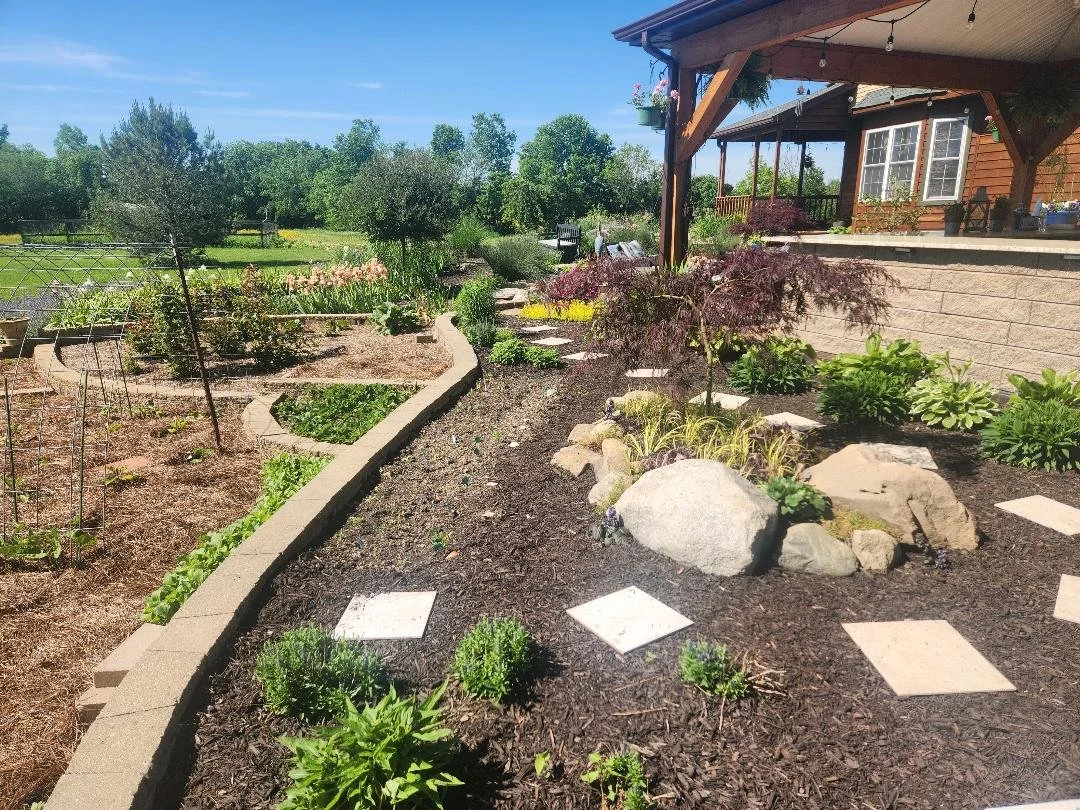
This morning, I had to register a vehicle at the local BMV office, so I didn't have time to enjoy my coffee on the patio as I normally do. I did enjoy the sunny sky as I drove through our neighborhood, seeing hay ready to dry and some crops popping through. As I drove, I thought about the rabbit hole I had allowed myself to fall into with the recent social media and television discussion surrounding the Mackenzie Shirilla murder case.
I made the mistake of either clicking or lingering too long on a post, and my feed almost instantly filled with content about the crash from nearly two years ago, fueled now by a recent Netflix documentary. Legitimate podcasters, casual commentators, and self-appointed internet experts are all weighing in. Some are scrolling through more than 30,000 pages of text messages, offering detailed opinions on relationships and events. It is a lot to absorb.
As I watched the discussion unfold, two things struck me.
The first is the normalization of things that are not normal, things that do not fit the Midwest goodness most of us expect from this part of the country. The case has pulled back the curtain on a pattern of behavior that should have raised alarms long before that July morning. Marijuana use among teenagers, cohabitation between minors and young adults, plans to use psychedelic mushrooms, parents choosing friendship over accountability, a quiet absence of boundaries. All of it treated as unremarkable. All of it nodded past.
The second is the whitewashing of the victims' lives. The two young men who died did not deserve their deaths. That is not in question. But their deaths do not erase their histories. One of the victims appears to have been dealing both marijuana and mushrooms to teenagers, activity described in coverage as "crypto trading." There is video evidence of breaking and entering, shared around as teenagers just having fun. When anyone attempts to discuss these realities, they are quickly labeled as victim blamers and shouted down. Friends who refused to speak with police became remarkably forthcoming once documentary cameras arrived, offering accounts that do not always square with what unbiased observers can plainly see.
Here is what strikes me about those two observations: they are not separate problems. They are the same problem at different points on the timeline. We normalized the behavior while it was happening. Nobody stopped it. Nobody named it. Then tragedy struck, and we are doing the same thing again, only in the opposite direction. First, we looked away. Now we are repainting.
Last week I wrote about a young man taken way too soon. A young man with promise, with goals, with nothing to hide. I celebrated the truth of his life because that is what he deserved. This week I am writing about the same obligation from the opposite direction. When the truth is good, we tell it gladly. When the truth is complicated, we bury it, rename it, and attack anyone who tries to dig it up. The standard should not change based on what the truth turns out to be.
I've watched this pattern before. Not on a screen. People who knew the truth sat with it quietly, out of respect for the living. I understood the silence. I never stopped thinking about what it cost.
Calling out the full truth of a person's life is not victim blaming. It is not cruelty. It is the only honest accounting available to us. A truthful picture includes the parts that are hard to look at. That is not an attack on someone's memory. It is a refusal to trade reality for comfort.
Comfort carries a cost. When we permit bad behavior we send a signal that it is acceptable. When tragedy strikes and we then protect the reputations of those involved, we send that signal again. Same instinct, different moment, same failure.
The next family is already out there somewhere. Living inside the same patterns. Surrounded by the same silence. Waiting for someone to say something.
We permitted it. We are protecting it. And somewhere right now, we are permitting it again.

Crying Wolf with the CC Line
The CC'ing of someone's boss is a huge Red Flag that says "The receiver of this message is NOT doing their job." It is a maneuver that should be reserved for when necessary.
It is summer in NE Indiana, at least it is after Memorial Day that is. Our landscaping is exploding with flowers and insects are taking advantage of the blossoms. I enjoyed my coffee watching the sun cast its rays over everything, giving the promise of a great day. As I sat with my hot coffee, I thought about podcasts I listened to recently.
Just yesterday I listened to one of those "business" podcasts, the one promoted as giving lessons to make you a better employee and leader. In reality it was full of the typical suggestions that can be summed up as just being a good person.
There was one topic that did hit home though: CC'ing someone's boss when not necessary.
The CC'ing of someone's boss is a huge Red Flag that says "The receiver of this message is NOT doing their job." It is a maneuver that should be reserved for when necessary.
I've experienced this in the past when someone did not reserve this for special occasions; they CC'd supervisors in every email.
As I thought about my experience after finishing the podcast, I realized the people CC'ing the world were covering their rear ends by transferring responsibility for their job to others. Even when the situations were shared with management, supervisors said "Just do what's needed." The message was not protecting their teams; it was to cover for the one screaming wolf.
This occurred with almost every email, the transfer of workload by subtly complaining that others were not doing their jobs with the CC. The CCs were known throughout the company and regularly discussed. While the objective of the copying was to help the customer, in reality it eroded the support and effort put into helping.
The bees flitting from flower to flower in our patio landscaping don't announce their work. They just do it. Teams function the same way, quietly, collaboratively, trusting that everyone is handling their piece. The moment every email becomes a paper trail, something shifts. People stop working toward the goal and start working toward protection. And somewhere in that shift, the customer, the whole reason the team exists, gets less than their best.
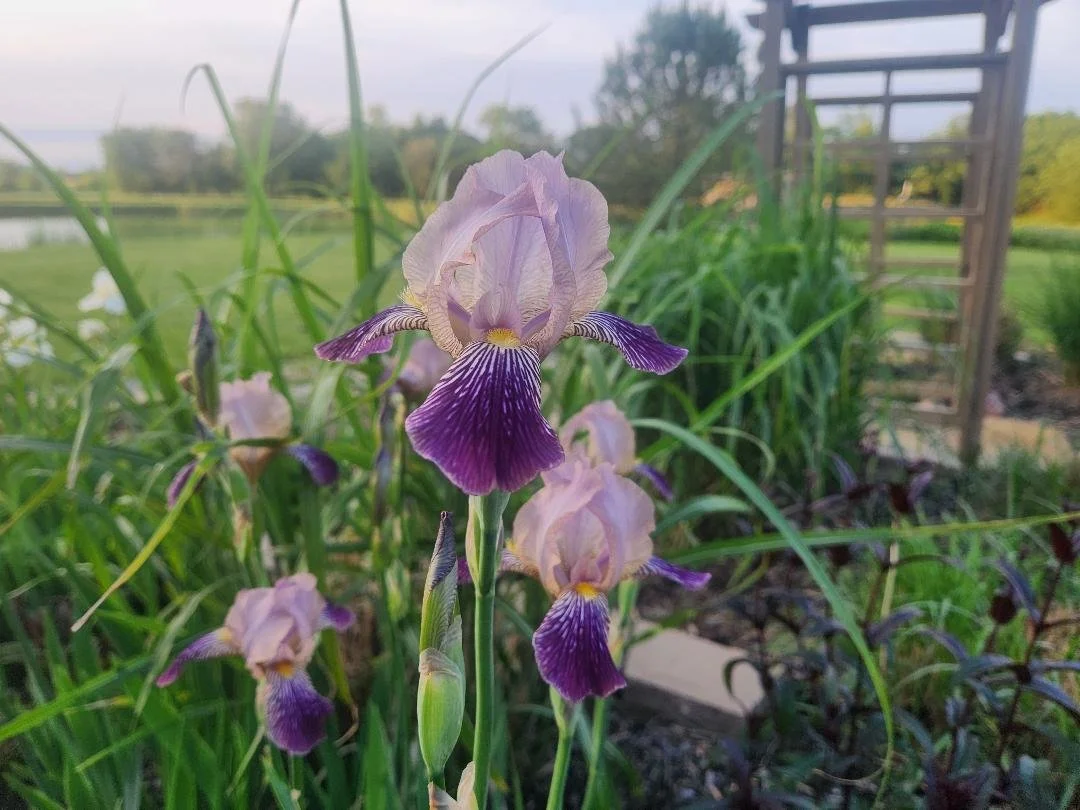
The Last Walk Across the Floor
Grief does not respect the calendar. That father posting a video nearly a year later is not falling apart. He is holding on. He is making sure his son is not forgotten, that the walk across that gym floor still counts for something, that the world knows Donovan was here and that he was extraordinary.
This morning is dawning with a clear sky and the promise of a great start to planting season for us. We have some ground fit for planting and we are gathering the troops to begin dropping seeds in the ground. I am enjoying a new roast of coffee this morning, bolder and darker than usual. The new brew matches the heaviness of what my mind is grappling with this morning as the sun rises over the horizon as I sit on the patio.
Yesterday I was deep into working on my computer, posting and sharing to my various platforms, when I was stopped in my tracks, hit with a baseball bat to the forehead by a post from a mourning parent.
A father had shared a short video, maybe twenty seconds long, of his son walking across a gym floor to receive a high honors certificate. Consecutive semesters. The caption said this was the last accomplishment his son had in 2025 before he passed two months later. The final line read: "Father misses you terribly."
I know that boy.
His name was Donovan. He was one of my Webelos Scouts. I was his Den Leader for two years and helped him cross over into his Boy Scout troop. I wrote about him last July, not long after my fifteen-year-old came home and told me one of his troop mates had died. That news hit hard. What came next hit harder. The young man about to start his sophomore year was one of mine.
In one of our last conversations, Donovan told me he wanted to be a nuclear engineer. It was the kind of goal you hear from a kid and you just nod and think, yes, that one will do it. He had that kind of mind and that kind of drive. I was looking forward to watching him grow into it.
I had also hoped to see him this fall at a marching band competition. He marched with the Snider High School band. With my own son in the Leo band, I figured our paths might cross at some point. I had already pictured it, scanning the sea of black and yellow in the stands, looking for that familiar face. That moment is not going to happen.
What stopped me cold about that father's post was not just the grief in it, though the grief is immense. It was the word last. That gymnasium was just a school night. Parents in folding chairs, somebody running a camera on a phone, kids walking across the floor in a line. Nobody in that room knew it was the last time. Donovan did not know. His father did not know. It was just Tuesday.
Now that Tuesday is everything.
The father wrote that Donovan had an incredible résumé, not just on paper, but as a human being and what he stood for. That line stayed with me. Most of us spend a lot of energy building the paper résumé, the credentials and the accomplishments and the titles. Donovan was building both, and he was doing it at fifteen.
Grief does not respect the calendar. That father posting a video nearly a year later is not falling apart. He is holding on. He is making sure his son is not forgotten, that the walk across that gym floor still counts for something, that the world knows Donovan was here and that he was extraordinary.
He was.
Hug your kids tonight. Call your parents. Tell the people in your life what they mean to you before Tuesday becomes everything.

Uncomfortably Comfortable
The cloudy weather matches my mood this morning, a feeling shared by many farmers in our area. I put an extra scoop of coffee grounds in the coffee maker this morning so my coffee is a bit stout as I look out over the dreary landscape in our backyard. As my coffee jolts me awake I am thinking about how I described my feeling to a good friend.
In a phone call lamenting about our lack of field work I described my feeling as "Uncomfortably Comfortable."
I think this is a perfect description of my feelings. I am uncomfortable that we have nothing planted and the weather forecast is not looking great, but I am comfortable with that because we are prepared to plant quickly when conditions change. Plus we in Northeast Indiana and Northwest Ohio have been here before, too many times before in reality, with too much rain in April and May.
Maybe it is because of experience, or maybe I am just becoming numb, but being Uncomfortably Comfortable is a new feeling. In the past I would have been lashing out at my family because Mother Nature was not cooperating or a maintenance item was not yet completed. I would be drowning my frustration in finger after finger of bourbon, letting the burn of that dark devil's water soothe away my frustrations but not fixing them.
But here I sit, Uncomfortably Comfortable in May 2026, instead of stewing in a broth of depression and frustration.
When Excellence Becomes Mundane
But as I sat there with a few tears streaming down my cheek I realized that this type of performance is exactly what I've come to expect from the students led by Mr. Colby Stackhouse. He has made excellence in performance mundane because it is now expected, anticipated.
It is a sunny day on the patio this morning, I am enjoying my coffee with my wife to celebrate her birthday. The weather forecast looks bad for our area so we are adjusting our plans for the day. As I sipped my second cup of hazelnut brew from Kauai Coffee and enjoyed bantering with my wife of almost 28 years, the topic of today's Patio Pondering hit me like the thunderstorms predicted to hit our area this afternoon.
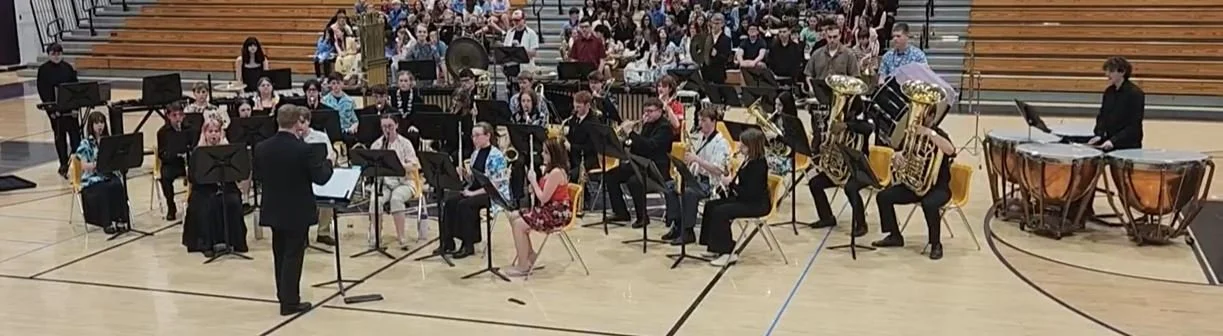
Last Friday night was the end-of-year Pops Concert for the band program at Leo Jr-Sr High School where the elementary, jr. high, and high school bands all performed three pieces.
On the surface this event is the same as all other end-of-year concerts where the director extolls the virtues of band and arts programs in education, celebrates the growth of the musical abilities of the students, then leads each band. Nothing special at all. Except in the case of Mr. Colby Stackhouse.
I've written about Colby Stackhouse before. I'll write about him again. Some things deserve repeated celebration.
First, the elementary band made up of sixth graders who chose to take time from their class schedule to play in the band performed. Their performance was wonderful. When I talked with my wife about it her retort was "Yeah, they didn't play Hot Cross Buns!" No they didn't. Hot Cross Buns isn't worthy of even warm-up music for these youngsters.
Then the combined seventh-eighth grade band performed. The combined groups eclipsed the size of the high school band and filled the makeshift orchestra pit on the gym floor. Not only did the size impress but the music they played blew me and the audience away with their skill and the difficulty of the selections. Their performance of The Addams Family and Jurassic Park theme songs along with Critical Impact rivaled what is deemed successful by high school bands, outperformed even.
Then the high schoolers took the stage, and take over they did!
The concert band played three pieces, theme songs from Pirates of the Caribbean and Les Misérables along with To the Summit. Those three songs held our attention for a collective 24 minutes, 24 minutes of almost flawless music. I admit I am biased, but the sound, skill, musicianship, and tone of this group of high schoolers was nothing short of phenomenal. There were no squeaks from the reeded instruments, no off-tune squeals from the brass, and the percussion section kept beat while enhancing the sound with the minor percussion instruments.
But as I sat there with a few tears streaming down my cheek I realized that this type of performance is exactly what I've come to expect from the students led by Mr. Colby Stackhouse. He has made excellence in performance mundane because it is now expected, anticipated.
In four short years Mr. Stackhouse has driven the Leo High School program from last place at marching band competitions to sixth place winner at state finals, increased participation from a handful of dedicated musicians to a program that touched over 175 students this school year. More importantly, he is stoking the fire of musical passion that rounds out a child's education, inspires parts of the brains that only music can touch, to help each student be just a bit better.
Friday night lights get the headlines in most high schools. Touchdowns fill the trophy cases and the sports pages, and that's fine. But last Friday night, in a gymnasium that doubled as a concert hall, something just as remarkable happened, and it didn't require a scoreboard. In a culture that too often treats the arts as an extracurricular afterthought, Mr. Colby Stackhouse is quietly building something extraordinary in our little corner of Northeast Indiana. That deserves more than a footnote. It deserves a standing ovation.
The Last Five Percent
The lesson I am taking from my patio this morning is simple: declare victory after the walk-through, not before it. A finished project is not the one where the list runs out. It is the one where the list runs out and you went back through and nothing jumped out at you.
It is a beautiful morning here in northeast Indiana. The sun is coming up over the neighbor's farm and I am on the patio with my coffee, watching the light change and letting the caffeine do its work. It is the kind of morning that makes you feel like it is going to be a great day.
I needed that feeling this morning, because yesterday things did not go quite as planned.
I have been working on a project for several weeks now. Nothing exotic, but it is a big one. Lots of moving parts, lots of lists, lots of coordination with the people helping me pull it together. Over the past few weeks the items on that list started disappearing, sometimes one at a time, sometimes in small clusters. It felt good every time another line got crossed off.
Yesterday I crossed off what I thought was the last one.
Then I went back through the materials one more time and found a couple of things my team and I had overlooked. Neither one is a crisis. One is a quick fix. The other requires a little research before we can close it out. But they were there, hiding in plain sight, waiting to be found.
I had planned to present the finished project today. That is now pushed to next week.
Here is what I keep coming back to on this sunny morning: the last five percent of any project is where the work gets honest with you. The first ninety-five percent is planning and momentum and checking boxes. The last five percent is where the checklist stops lying. Every project has a couple of those items. The loose connection you walked past a dozen times. The thing that seemed fine until you looked at it one more time. They are not signs that you did the work wrong. They are signs that you did the final walk-through right.
The lesson I am taking from my patio this morning is simple: declare victory after the walk-through, not before it. A finished project is not the one where the list runs out. It is the one where the list runs out and you went back through and nothing jumped out at you.
Next week, that will be this project. This week, I am grateful the coffee is hot and the checklist is honest.