Patio Pondering The Written Collection
What started as my daily coffee-and-keyboard ritual has grown into a collection of reflections on agriculture, leadership, and rural life.
From quiet mornings on my backyard patio to the lessons learned in barns, fields, and boardrooms — these writings capture the stories, ideas, and questions that keep me curious.
Take a moment to explore, and maybe you’ll find a thought or two that sparks your own reflection.
Clear thinking for complex agriculture. I’ll send a note when it’s worth sharing.
Scroll down to discover the stories and reflections from the patio.

𝐏𝐚𝐭𝐢𝐨 𝐏𝐨𝐧𝐝𝐞𝐫𝐢𝐧𝐠: 𝐌𝐢𝐬𝐬𝐞𝐝 𝐒𝐢𝐠𝐧𝐚𝐥𝐬 𝐚𝐧𝐝 𝐌𝐨𝐝𝐞𝐫𝐧 𝐓𝐨𝐨𝐥𝐬
I missed yesterday’s Patio Pondering with a full Monday schedule. This morning, as I sip my coffee and listen to an episode of 𝘛𝘪𝘵𝘢𝘯𝘪𝘤: 𝘚𝘩𝘪𝘱 𝘰𝘧 𝘋𝘳𝘦𝘢𝘮𝘴, I find myself reflecting on how fortunate we are to live in the 21st century.
Late last night, while planting soybeans ahead of today’s rain, I listened to an earlier episode that discussed the part-time nature of the Marconi wireless operators aboard ships in 1912. The location of ships back then could be misjudged by assumption or tricks of the eye. It’s a far cry from 2025, where we can pull up an app to see ship and aircraft positions in real time.
Today’s episode covers the final moments of the Titanic: the confusion, the cries, and the cruel silence that followed as victims either drowned or succumbed to hypothermia in the frigid North Atlantic.
What struck me most was the bitter irony: the freighter 𝘊𝘢𝘭𝘪𝘧𝘰𝘳𝘯𝘪𝘢 sat just 12 miles away. Its captain saw the distress rockets but didn’t interpret them as a call for help. Had this happened today, the world would know instantly. Satellites would capture images, aircraft would be deployed, rescue ships would chart their course with pinpoint accuracy. The fate of the Titanic might have been very different.
Some folks claim modern conveniences have made us soft. Maybe. But I prefer to think of our technology as a toolbox; one that, when used wisely, saves lives, improves efficiency, and connects us in ways our ancestors couldn’t imagine. The trick is not in having the tools, but in knowing when and how to use them.

𝐏𝐚𝐭𝐢𝐨 𝐏𝐨𝐧𝐝𝐞𝐫𝐢𝐧𝐠: 𝐖𝐡𝐚𝐭 𝐓𝐡𝐚𝐭 𝐏𝐚𝐢𝐧𝐟𝐮𝐥 𝐒𝐩𝐫𝐢𝐧𝐠 𝐓𝐚𝐱 𝐏𝐚𝐲𝐦𝐞𝐧𝐭 𝐑𝐞𝐚𝐥𝐥𝐲 𝐌𝐞𝐚𝐧𝐬
Warning: I am going to be THAT parent for a few lines of ranting.
Like many Indiana property owners, we paid our spring tax bill this week, and it was the highest we’ve ever received. The portion allocated to East Allen County Schools jumped by $1,111.59, a 31.56 percent increase. This year alone, our household will contribute $4,633.66 to the school system, which now receives nearly 60 percent of our total property tax payment.
My rant is for my son in the marching band. Our taxes are skyrocketing, yet the Leo Marching Band has no lights for their practice area, no sprinklers to soften the ground, and their designated space is being overtaken by an athletic clubhouse. I also wonder why they are prevented from accessing the million-dollar turf field, except when receiving special dispensation to practice where lights, missing grass, or unlevel footing are not an issue.
I didn’t care about the marching band two years ago, before my son joined. I haven’t attended a school board meeting to raise concerns, and I haven’t talked to anyone about this, except the voices in my own head.
I have a lifelong friend on the school board, and I haven’t spoken to her about this. I also know the board appreciates musical achievement. My son, along with several others, was recognized for participating in this year’s Regional Honor Band. This isn’t about neglect or bad intentions. It’s about asking whether we are backing up our praise with real, tangible support.
As I write this, I am on the outside looking in. These words are my own, not part of any organized effort. I’m just a taxpayer, a parent, someone who sees an opportunity for us to use our tax dollars better, more equitably, to promote an already successful program.
This also isn’t a rant against athletics. My other son played football his entire academic career. Without the Friday night lights of fall, it would be difficult for the marching band to practice, perform, and perfect their craft in a competition-like setting. And that is in addition to setting the mood in the stands, trying to gin up enthusiasm and cheer for the Lions on the gridiron. This is a swipe at equity—equity that should be awarded to success.
I’m frustrated for the 10 percent of Leo High School’s student population who are in marching band. They’ve had more competitive success than all but one athletic team, yet they keep getting the short end of the stick.
And I’m frustrated with myself. I haven’t been civically active, haven’t attended meetings, and haven’t even read the minutes. I haven’t spoken up for the often-overlooked “band nerds” who wear the label proudly and have case after case of hardware to show for their musical success.
Maybe it’s time more of us, myself included, started paying attention. Not just to the tax bill, but to where the spotlight shines, and who is still standing in the dark.

𝐏𝐚𝐭𝐢𝐨 𝐏𝐨𝐧𝐝𝐞𝐫𝐢𝐧𝐠: 𝐍𝐨𝐭 𝐄𝐯𝐞𝐫𝐲 𝐀𝐧𝐬𝐰𝐞𝐫 𝐢𝐬 𝐘𝐞𝐬 𝐨𝐫 𝐍𝐨
Before I even poured my first cup of coffee this morning, a friend sent me a TikTok that stirred up a hornet’s nest in the ag world. So I grabbed my mug and settled in to watch the rebuttal videos—some thoughtful, some fiery—and got my thinking muscle fired up.
The original post lamented the growing size of farms. The creator shared how tough it is for his kids to come back to the family operation when a few large row-crop farmers dominate the neighborhood. The follow-up videos fired back with words like 𝘤𝘢𝘱𝘪𝘵𝘢𝘭𝘪𝘴𝘮, 𝘦𝘧𝘧𝘪𝘤𝘪𝘦𝘯𝘤𝘺, 𝘭𝘰𝘸𝘦𝘴𝘵 𝘤𝘰𝘴𝘵, 𝘯𝘰𝘴𝘵𝘢𝘭𝘨𝘪𝘢, 𝘮𝘰𝘳𝘢𝘵𝘰𝘳𝘪𝘶𝘮, 𝘢𝘯𝘥 𝘤𝘰𝘮𝘱𝘦𝘵𝘪𝘵𝘪𝘰𝘯. Some called it whining. Others called it truth.
But here's what I think both sides are missing: this isn’t a yes-or-no issue. It’s messy. It’s layered. And it’s deeply personal.
The discussion around a complex topic like farm size requires more than soundbites. Both sides bring important truths, but the answer isn’t binary.
Yet sometimes, in our daily work, we do need a yes or no. We have to make go or no-go decisions. So how do we take the time to wrestle with nuance while still moving at the speed of business? How do we acknowledge complexity and still lead decisively?

𝐏𝐚𝐭𝐢𝐨 𝐏𝐨𝐧𝐝𝐞𝐫𝐢𝐧𝐠: 𝐖𝐡𝐞𝐧 𝐖𝐡𝐢𝐬𝐩𝐞𝐫𝐬 𝐒𝐡𝐚𝐩𝐞 𝐑𝐞𝐚𝐥𝐢𝐭𝐲
I’ve wrestled with how to write this for a long time. When I first started Patio Pondering, this topic was on my original list. It’s one of only two that remained in reserve for the right time and the right words. Until now.
After recently reflecting on the dangers of self-editing and the importance of not staying quiet, it feels like time to finally say it.
Many years ago, I worked alongside a manager who had a habit of talking about team members behind their backs. Often, it was framed as a question: “How do you work with so-and-so?” But over time, it became clear these weren’t efforts to build understanding. They were feelers, testing for weaknesses, collecting grievances.
What I thought were constructive conversations were later used as ammunition. Things said in confidence were twisted or repeated out of context.
One moment stands out. I had already begun limiting what I shared, and this manager was venting about a colleague’s behavior. And it hit me: the very behaviors they were complaining about were ones they had encouraged, supported, or ignored when it suited them.
That realization shifted my approach. I started offering quiet counterpoints to others across the company, trying to provide a fuller picture. But I heard the same refrain over and over: “𝘞𝘦𝘭𝘭, 𝘵𝘩𝘢𝘵’𝘴 𝘫𝘶𝘴𝘵 𝘵𝘩𝘦 𝘸𝘢𝘺 𝘵𝘩𝘦𝘺 𝘢𝘳𝘦.”
And here’s the hard part: Most employees genuinely care about their company. They want to see it succeed. They don’t want to rock the boat or seem like they’re pointing fingers. But silence in the face of dysfunction can carry a cost, too.
The problem is, when no one pushes back on false narratives, they harden into truth. They influence performance reviews. They affect team morale. They shape careers.
Even after this manager retired, the impact of that dysfunction remained: like a coffee cup with a permanent stain, no matter how many times it was washed. The stain remained, like the whispers spoken behind closed doors.
I left that organization years ago, but the memory sticks. Not as a grudge, but as a reminder of how easily culture can be undermined from within.
I’m not sharing this to settle old scores. I’m sharing it because I’ve learned how fragile reputations can be. How words, especially when they are not the truth, can shape reality.
These are the questions I still ponder. And I think they matter more than ever.

𝐏𝐚𝐭𝐢𝐨 𝐏𝐨𝐧𝐝𝐞𝐫𝐢𝐧𝐠: 𝐔𝐧𝐬𝐜𝐫𝐢𝐩𝐭𝐞𝐝
There’s a consistent theme running through the podcasts I record: we don’t follow a script.
I always come in with a general direction and a loose plan, but aside from the five signature questions I ask every guest, the rest of the conversation is wide open. That unscripted nature has led to some of the most unexpected, honest, and thought-provoking moments.
Lately, I’ve been reflecting on how this mirrors life itself.
Sure, there are some hard and fast rules to follow—but most of life doesn’t come with a script. The ability to zig when the path zags, to adjust and pivot, might be one of the most valuable skills we can have. One guest recently shared how they evaluate job offers by trusting their gut. That’s not something you can teach; it’s something you learn through experience.
Flexibility works the same way. You can’t hand someone a manual on how to bend without breaking. You expose them to life, to wind and weather, to change and challenge. Even the tallest oak in the forest must bend in the wind or risk snapping in the storm.
So how do we help others learn to bend, to adapt, to parry when life’s foil tries to skewer them?
Maybe we start by embracing the unscripted moments in our own lives—and letting others see how we handle them.

𝐏𝐚𝐭𝐢𝐨 𝐏𝐨𝐧𝐝𝐞𝐫𝐢𝐧𝐠: 𝐓𝐡𝐞 𝐏𝐨𝐰𝐞𝐫 𝐨𝐟 𝐚 𝐏𝐚𝐭 𝐨𝐧 𝐭𝐡𝐞 𝐁𝐚𝐜𝐤
This morning, I didn’t know what today’s Patio Pondering would be. Not until I crossed the St. Joe River north of Grabill and got a phone call from a friend.
It started with a lighthearted question: “Guess who followed you out of Leo today?”
“You followed me?” I asked.
“Yep,” they said. “From the 4-way stop until you turned off on Roth.”
Then they added something that stopped me in my tracks. “There’s a lot of symbolism in me following you for that short stretch because today I start my brand-new job. And honestly, your Patio Ponderings helped me get through some rough patches during my unemployment.”
Talk about humbling. That comment landed hard in the best possible way.
A few weeks ago, I wrote about hitting a wall with my writing. The vain side of me, the selfish and very human part, was frustrated. I wasn’t getting many pats on the back or words of encouragement. But what bigger compliment could there be than that quiet, honest moment from a friend who said my words mattered?
We’ve all been there. Struggling. Worn out. Hoping someone sees us and says something that helps. And just when we need it, it happens. A phone call. A kind text. A message that lifts the weight, even if only a little.
I still have on my calendar a prompt I added after attending a Pig Improvement Company (PIC) - North America Swine training session several years ago titled “PIC Encouragement Day.” It’s meant to remind me to take a moment on that day to encourage someone. We shouldn’t need calendar reminders to pat someone on the back; but we do. Consider this your reminder to reach out to someone and give them an attaboy today.
So take a moment and think back. When were you in that place, and who reached out to you? Now think forward. Who in your life might need that same kind of nudge; a quick attaboy, a heartfelt pat on the back, or even a simple “how are you doing?”

𝐏𝐚𝐭𝐢𝐨 𝐏𝐨𝐧𝐝𝐞𝐫𝐢𝐧𝐠: 𝐓𝐡𝐞 𝐋𝐞𝐟𝐭 𝐓𝐮𝐫𝐧 𝐓𝐡𝐚𝐭 𝐋𝐞𝐟𝐭 𝐌𝐞 𝐅𝐮𝐦𝐢𝐧𝐠
This morning, during my drive as a Drop-Off Dad at my son’s high school, I found myself growing increasingly frustrated. Despite clearly marked “Right Turn Only” signs at the exit of the parking lot, which were put in place to ease congestion during nearby road construction, some drivers, mostly Soccer Moms in mini-vans and Suburban Dads in oversized pickups or SUVs that never leave pavement, chose to ignore them.
Earlier this school year, the traffic pattern changes were a bit chaotic. But by now, there’s a clear system in place. It may not be perfect, but it works. The right-turn restriction is there for a reason; it keeps traffic moving during the morning rush and prevents further backups.
What gets under my skin is not just the disregard for a simple rule, but the ripple effect it causes. These left-turn rebels slow down the entire line, add confusion to an already tight traffic situation, and introduce unnecessary stress for those of us trying to follow the pattern. It is not just about rules; it is about respect for the flow and for one another.
And maybe that’s the deeper issue. Am I annoyed because they aren’t following the rules, or because their selfishness is causing problems for everyone else? Either way, it’s a stress point that sticks with me longer than it should.
So here’s my question:
How do you handle the stress of watching others ignore the rules and disrupt the flow? And more importantly, how do you respond when selfishness slows everything down for the rest of us?

𝐏𝐚𝐭𝐢𝐨 𝐏𝐨𝐧𝐝𝐞𝐫𝐢𝐧𝐠: 𝐒𝐚𝐭𝐢𝐫𝐞, 𝐒𝐞𝐥𝐟-𝐄𝐝𝐢𝐭𝐢𝐧𝐠, 𝐚𝐧𝐝 𝐭𝐡𝐞 𝐂𝐨𝐮𝐫𝐚𝐠𝐞 𝐭𝐨 𝐒𝐩𝐞𝐚𝐤
In 2013, I made a lighthearted post on Facebook during the conclave that eventually selected Pope Francis. It was just a silly bit of writing that made me laugh. That one post turned into a satirical, multi-part commentary on the conclave, none of it based on any actual news from the Vatican. It was just for fun, and my friends enjoyed following along.
With the start of the current conclave to choose the next successor of Peter, I decided to dust off those satire muscles I flexed twelve years ago. Once again, I’m adding a little humor to the mystery unfolding behind the closed doors of the Sistine Chapel.
But as I write these posts, I find myself constantly self-editing. I work hard to keep the satire “safe,” and that self-censorship has me thinking: how often do we edit ourselves out of sharing something important? How many times have we held back a meaningful observation, a strong opinion, or even a life-changing truth, simply because we were afraid? Afraid of offending someone, afraid of sounding foolish, or afraid of how others might react.
It takes guts to say what you really think. Some people seem to be born with that boldness, even if it sometimes gets them into trouble. But what about those who aren’t naturally outspoken? How can they work up the courage to share thoughts that are difficult or unpopular?
And maybe the bigger question is this: how can leaders create an environment where even the quietest voices feel heard, valued, and safe to speak up? It is not just about open-door policies or anonymous feedback forms. It is about trust, respect, and the consistent invitation to contribute.
Have you ever self-edited something important out of fear or hesitation? What helped you find the courage to speak up, or what held you back?

𝐏𝐚𝐭𝐢𝐨 𝐏𝐨𝐧𝐝𝐞𝐫𝐢𝐧𝐠: 𝐓𝐡𝐞 𝐒𝐢𝐦𝐩𝐥𝐞 𝐓𝐡𝐢𝐧𝐠𝐬 𝐖𝐞 𝐒𝐤𝐢𝐩
This morning’s Patio Pondering is a little late. I got caught up rebuilding a spreadsheet I did not save correctly. Thankfully, the details were still fresh in my mind, so I managed to recreate it—without even asking ChatGPT for help!
As I worked through it, I kept circling back to one thought: this whole mess could have been avoided if I’d just backed up my hard drive. A simple task. One I’d postponed.
We rely on OneDrive now for automatic backups of key folders, and I regularly save critical files to an external hard drive. But that wasn’t always the case—and this morning was a reminder of how easy it is to overlook the simple things until they become big problems.
Whether it’s backing up a file, greasing a bearing, or checking a loose connection, the little tasks we skip often do not feel urgent—until they suddenly are. And then we’re left cleaning up a mess that could have been avoided in five minutes.
Maybe it’s worth asking: What “simple thing” have you been putting off that might save you from a bigger problem later?

𝐏𝐚𝐭𝐢𝐨 𝐏𝐨𝐧𝐝𝐞𝐫𝐢𝐧𝐠: 𝐋𝐞𝐚𝐝𝐞𝐫𝐬𝐡𝐢𝐩 𝐢𝐧 𝐀𝐜𝐭𝐢𝐨𝐧
At last night’s Boy Scout meeting, I took the opportunity to just sit back, not as a volunteer with a checklist but in my quiet role as an Adult Reserve. No clipboard, no duties, no expectations.
Like many parents, I could have buried my face in my phone. But after months of writing and reflecting on leadership, I have developed a habit of watching more closely. So instead, I observed: eyes and ears tuned to the quiet dynamics that often go unnoticed. I took in the steady hum of a troop at work; the sounds, the handshakes, the problem-solving, and the subtle stepping up.
Earlier this week, I wrote about stepping up to lead even when you are not the one officially in charge. I saw that idea play out again last night. Parents were huddled over plans for upcoming excursions, including next year’s Philmont trip. Older Scouts worked with brand-new recruits, fresh out of Webelos, guiding them through the rhythm and structure of troop life. Others sat with merit badge counselors, quietly working through requirements one step at a time.
The meeting wrapped up with the usual announcements and Scout prayer. Mixed in were two special moments: the recognition of a new Star Scout and the announcement of a brand-new Eagle. But for me, the real highlight was watching all the so-called “non-leaders” quietly step up to make it all happen.
Have you ever sat back and watched the inner workings of your workplace, a volunteer group, or even your family? Did anything surprise you? And if you spotted a gap, did you step in or wait for someone else to?

𝐏𝐚𝐭𝐢𝐨 𝐏𝐨𝐧𝐝𝐞𝐫𝐢𝐧𝐠: 𝐋𝐞𝐚𝐝𝐞𝐫𝐬𝐡𝐢𝐩 𝐖𝐡𝐞𝐧 𝐘𝐨𝐮’𝐫𝐞 𝐍𝐨𝐭 𝐭𝐡𝐞 “𝐋𝐞𝐚𝐝𝐞𝐫”
So many times I hear people lament their ability to lead or influence because they’re “just” a team member—not the manager or designated leader.
Whenever I hear that, my mind goes back to 2017, when my eldest son and I trekked Philmont with his Scout troop. I was one of three non-leader adult advisors accompanying the designated Crew Leader. For the most part, we were just along for the hike.
Unintentionally, I became the First Aid officer—mostly dealing with blisters and hot spots. Maybe some of my wife’s veterinary skills rubbed off on me. Outside of that, and my occasional “let’s get moving” nudges, we adults did little to influence the group of eight teenage Scouts.
That changed on the day we summited Baldy Mountain.
If you’ve taken the southern approach, you know it’s a challenge. The final stretch is covered in slate-like scree that shifts underfoot, forcing many to crawl or slide their way to the summit. Add in the congestion from other crews, and it becomes a test of patience and grit.
As our crew made the final push, we began to spread out—really spread out. It became clear that some were struggling.
Something stirred inside me, like the old Incredible Hulk transformation we Gen X’ers remember from Saturday nights on CBS. I found a reserve of energy and agility, making multiple trips up and down the scree to support our crew. I’d mastered the slide-walk on the loose rock, offering encouragement and support to anyone faltering.
It was fascinating to watch. Some of the most athletic struggled, while others who were less fit, like me, found their stride. Regardless of fitness or title, I stepped up. I encouraged, I pulled, and I helped move us forward.
What stands out to me now is that I wasn't the designated leader. I had no official authority—only presence, age, and a willingness to act. I had no "right" to take charge, but I did it anyway.
Because when the trail gets steep and the footing turns loose, leadership doesn’t always wear a title. Sometimes it’s just someone who refuses to look around and say, “that’s not my job.” When the team starts to falter, it’s the ones who step forward—without being asked—who help everyone reach the top.
So I’ll ask:
When was the last time you ignored the job description and did what needed to be done anyway?
And what happened because you did?

𝐏𝐚𝐭𝐢𝐨 𝐏𝐨𝐧𝐝𝐞𝐫𝐢𝐧𝐠: 𝐇𝐢𝐭𝐭𝐢𝐧𝐠 𝐂𝐭𝐫𝐥 + 𝐀𝐥𝐭 + 𝐃𝐞𝐥𝐞𝐭𝐞
While finishing yesterday's Patio Pondering, I noticed my computer acting glitchy. It lagged as I typed, dropped letters, and switching between windows wasn’t as seamless as it should be. It hit me: my computer needed a reset, a restart, a good old Ctrl + Alt + Delete.
And that got me thinking: how often do we need to hit that same reset in our own lives? Are we paying close enough attention to our mental state or physical wellness to recognize when we’re lagging, freezing up, or running too many tabs at once?
Recently, a friend of mine found themselves in that exact situation. They had been in the same role for years and were great at it. But over time, the stress piled up, their energy shifted, and the spark was gone. Conversations with colleagues didn’t flow like they used to, and their patience with customers began to wear thin. Eventually, they realized it was time for a reset because they no longer had the enthusiasm to serve their customers the way they expected of themselves. Their version of Ctrl + Alt + Delete was stepping away, leaving behind the steady routine and paycheck to find something that would help them thrive again. It took guts. But through honest reflection, they knew they couldn’t keep going the way things were.
I also think about a company I know that’s going through a different kind of reset: an organizational one. Leadership made the difficult decision to shift direction, restructure teams, and, unfortunately, eliminate some positions. It’s a tough Ctrl + Alt + Delete, and it’s impacting teammates across the organization. These resets are painful, especially when people are affected, but from the company’s perspective, it’s the restart they believe is needed to bring a new vision to life and move forward.
These moments are never easy. But they’re often necessary.
So the next time life starts lagging, ask yourself: is it time to hit reset? You don’t have to crash to reboot. And if you're stuck staring at the screen, unsure of what to do next, reach out. Sometimes, all it takes is a friend to help you press the right reset buttons to refresh.

𝐏𝐚𝐭𝐢𝐨 𝐏𝐨𝐧𝐝𝐞𝐫𝐢𝐧𝐠: 𝐖𝐫𝐢𝐭𝐢𝐧𝐠 𝐌𝐲 𝐎𝐰𝐧 𝐒𝐢𝐥𝐯𝐞𝐫 𝐋𝐢𝐧𝐢𝐧𝐠𝐬 𝐏𝐥𝐚𝐲𝐛𝐨𝐨𝐤
This morning, I’m thinking about silver linings; those moments of positivity that shine through the troubled waters of challenges or setbacks.
Several friends of mine are in various stages of job searches or job frustration journeys. Every so often, they share both their struggles and the small, positive moments that surface along the way. As I work to sharpen my own interviewing and conversation skills, I find myself trying to tease out those silver linings, those unexpected nuggets that offer something better than what we anticipated.
One friend, who I wrote about earlier this week, is nearing the downhill side of their job search. During their time away from full-time work, they used the opportunity to complete long-delayed home remodeling projects. These were projects that likely wouldn’t have been finished had they still been working their old schedule. While the job loss came with financial strain, the silver lining was a restored sense of order and peace at home. That peace had been missing amid the chaos of unfinished work.
Another friend, just beginning their own unemployment journey, shared that they’ve finally had time to spend more time tending to their favorite hobby: gardening. For them, it's not just about planting vegetables and caring for the perennial flowers, it's about reconnecting with family memories tied to the land. Many of the flowers in their yard, the irises and peonies, came from their grandparents' homeplace. With more time to be present, they’re not just tending a garden, they’re tending memories. Each bloom brings back moments spent with loved ones who once enjoyed the same blooms.
Yet another friend is searching for a new role in the swine industry. Between resume revisions and interviews, they’ve been catching up on long-overdue maintenance around their home and farm: fixing fences, hanging gates, and making daily chores more manageable. These are the kinds of projects that are hard to tackle for someone farming around a full-time job. They are nearly impossible when weekdays are spent off the farm and weekends are already too short.
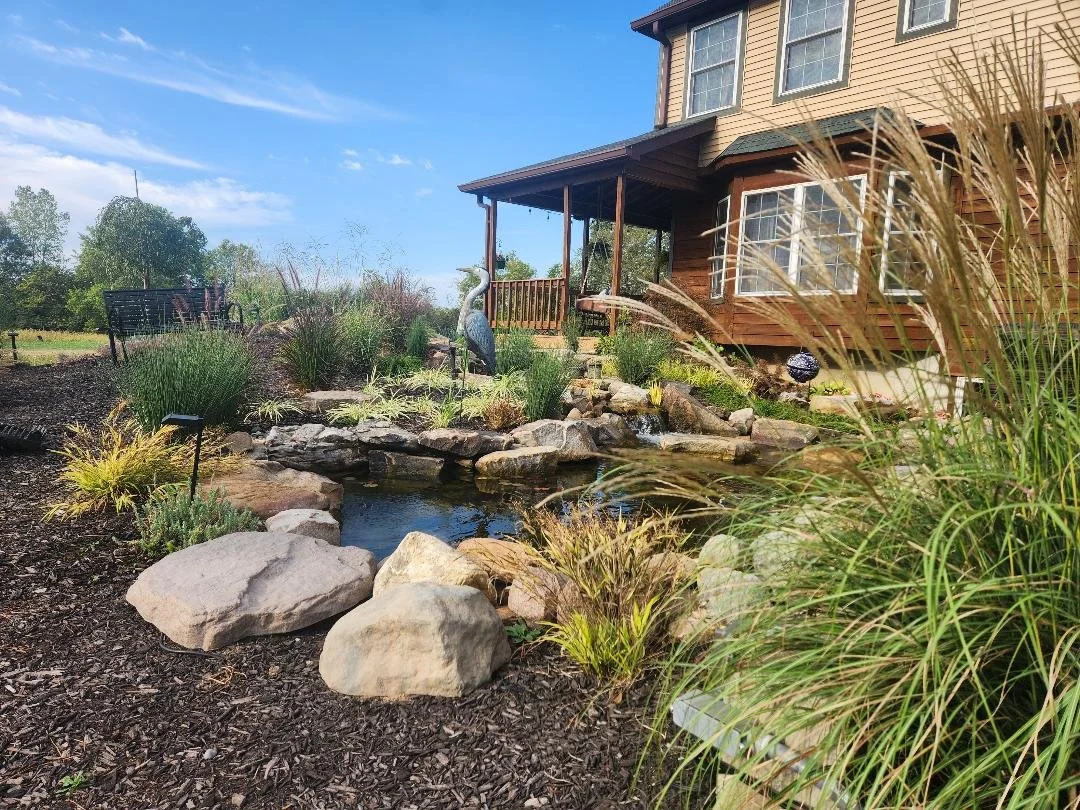
In my own life, a silver lining of this job search has been the time to enjoy the changing seasons as I document them through my daily Patio Pondering posts. The photos I share offer a moment of artistic license each day as I step outside, take in the view, and witness the subtle shifts happening just beyond our back door.
As we all move through life’s challenges, the moments when plans fall apart or outcomes don’t meet expectations, we’d do well to slow down and search for the good in the disruption. What nuggets of hope can we find? Not just in major upheavals like job loss, but in the small, frustrating moments that dot our daily lives.

𝐏𝐚𝐭𝐢𝐨 𝐏𝐨𝐧𝐝𝐞𝐫𝐢𝐧𝐠: 𝐅𝐫𝐨𝐦 𝐭𝐡𝐞 𝐀𝐧𝐧𝐞𝐱 𝐏𝐚𝐭𝐢𝐨, 𝐀 𝐑𝐞𝐚𝐬𝐨𝐧 𝐭𝐨 𝐊𝐞𝐞𝐩 𝐖𝐫𝐢𝐭𝐢𝐧𝐠
The past couple of weeks, I’ve struggled to find the energy, or maybe the heart, for my daily Patio Ponderings. Things outside my creative space have been weighing on me, and I’ll admit, my vanity wasn’t helping either. The lack of interaction from readers made me wonder if these reflections still mattered.
But this morning feels different.
Different because I learned that my words 𝘩𝘢𝘥 mattered. They had helped someone I respect; someone who had never shared their own struggle; someone who quietly read my posts and drew strength from them during a difficult season.
Last night, a friend pulled me aside for a quiet conversation. They opened up about the elimination of their position, their frustrations with today’s hiring process, and the clunky, impersonal world of unemployment systems. I wish I could say I was surprised, but their story mirrored much of my own: ghosting, false enthusiasm, and job postings that lead nowhere.
In the midst of it all, they kept moving forward. They tackled much-needed home remodeling projects while continuing their job search; projects that had been started before the job elimination, ones that left their home in disarray and had to be completed for their own sanity.
Our conversation ended with good news. They’ve accepted a new position with a great local company. But what struck me most was when they said my writings, shared on LinkedIn and Facebook, had helped them stay grounded. Helped them keep going.
That small note of impact was enough to bring me back to the keyboard this morning; that, and the beautiful spring flowers popping out of their winter slumber.
So here I sit at the Annex Patio (my terra-level executive suite), tapping out another Patio Pondering. Maybe these few words will help someone else get through their day. Maybe they won’t. But today, I’m reminded that it’s worth the effort, because sometimes the quiet readers are the ones who needed it most.

𝐏𝐚𝐭𝐢𝐨 𝐏𝐨𝐧𝐝𝐞𝐫𝐢𝐧𝐠: 𝐈’𝐦 𝐍𝐨𝐭 𝐆𝐞𝐭𝐭𝐢𝐧𝐠 𝐈𝐧𝐯𝐨𝐥𝐯𝐞𝐝
My coffee this morning is not as satisfying as usual.
Maybe it’s the weather and the incoming rain; maybe it’s the midnight text that still lingers in my mind.
Or maybe it’s the slow surfacing of thoughts I’ve wrestled with for months.
𝐈’𝐦 𝐧𝐨𝐭 𝐠𝐞𝐭𝐭𝐢𝐧𝐠 𝐢𝐧𝐯𝐨𝐥𝐯𝐞𝐝.
I know the data they’re using is wrong; but I’m not getting involved.
I know the truth about the interaction; but I’m not getting involved.
I have a solution; but I’m not getting involved.
I was in a conversation where I could’ve told the truth; but I’m not getting involved.
We’re supposed to be a “team”; but I’m not getting involved.
We’ve been friends for over twenty years; but I’m not getting involved.
Where do we draw the line in the sand?
When do we speak up: for truth, for integrity, for our relationships?
Have we become so focused on self-preservation that we’ve forgotten how to get involved when it matters most?
This morning, the coffee just tastes… muted.
Maybe because my conscience isn’t.

𝐏𝐚𝐭𝐢𝐨 𝐏𝐨𝐧𝐝𝐞𝐫𝐢𝐧𝐠: 𝐓𝐡𝐞 𝐆𝐚𝐫𝐥𝐢𝐜 𝐈 𝐅𝐨𝐫𝐠𝐨𝐭
Some of you know that when I am home, I make my own salads for lunch. And not the dump-a-bag-of-lettuce-and-drench-it-in-ranch kind. I start from scratch—olive oil, vinegar, fresh garlic, a little sugar—then layer in vegetables and meat until it feels like a masterpiece. Since it’s made from scratch, no two are exactly alike.
Today, something was off.
The texture was good, the crunch was there, but the flavor did not hit right. After a few bites, I figured it out: I forgot the garlic. And the sugar. The base was missing. The part that sets the whole thing up.
Then it hit me again.
While making my salad, I had been on the phone with a friend. It was a deep, intense conversation—the kind that pulls you in and stirs your thoughts. And in the middle of that meaningful conversation, I skipped the most essential part of my routine: crushing the garlic.
Some days, we can multitask just fine. Today wasn’t one of them.
It made me wonder: how often do we miss the base layer in our work or relationships because we’re distracted—even by something important? How often do we forget the garlic?